Talk to the real world with Factori MCP - Get Started Now

Read The Latest
Data Insights

Explore our latest publications, from industry insights to in-depth tech analysis

No posts found for this category.

High street vs mall_ Retail Opportunities and Risks

High street vs mall: Retail Opportunities and Risks

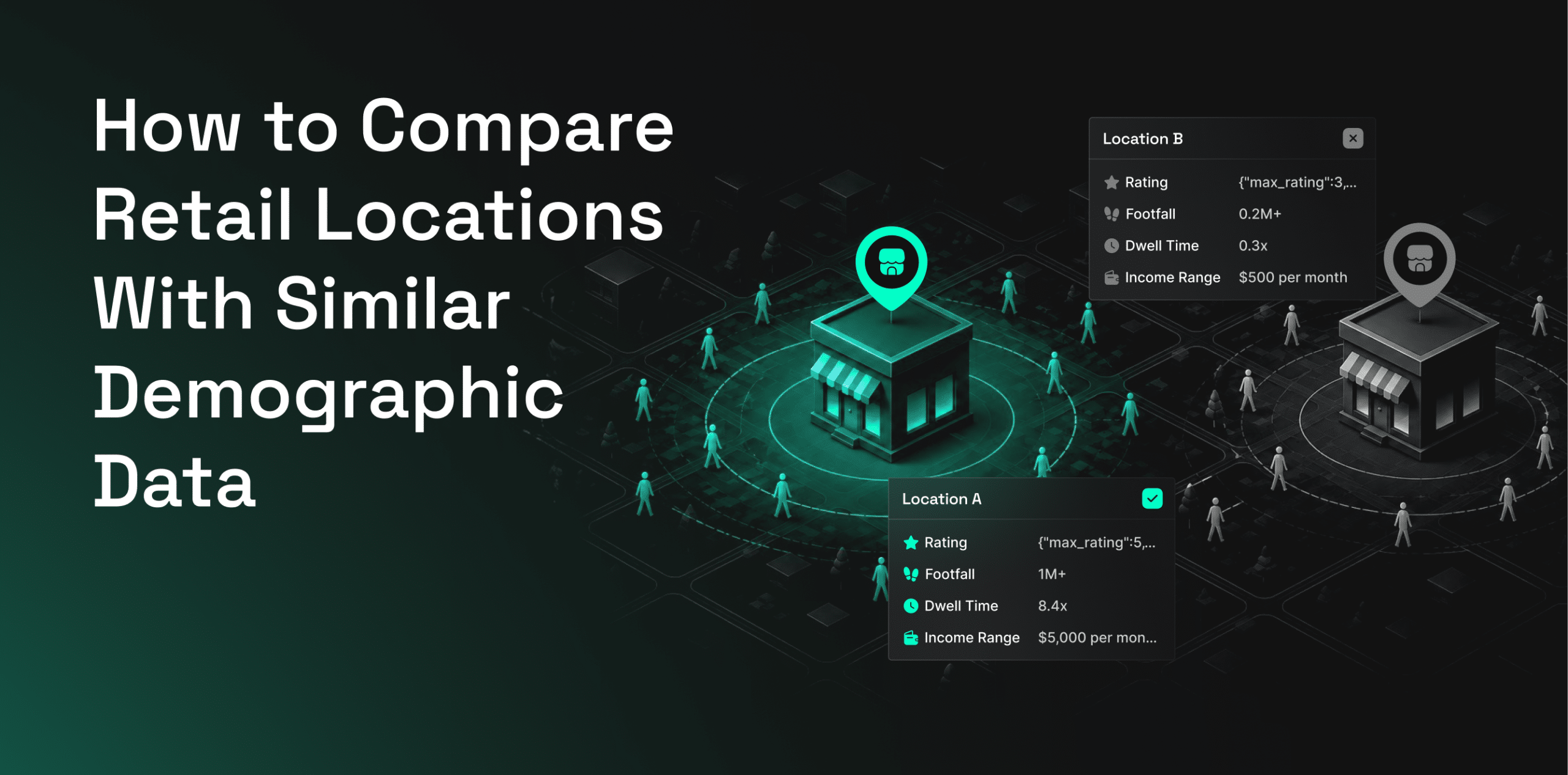
The high street vs mall decision helps retailers choose locations that best match their customers, store format, cost structure, and growth goals. By comparing footfall quality, visibility, accessibility, surrounding businesses, audience fit, and profitability potential, retailers can reduce site risk and make more confident location decisions.

What Is Cross Visitation Data? How Customer Movement Supports Smarter Planning

Cross visitation data helps businesses understand how customers move between locations, brands, and categories. By revealing shared audiences, competitive overlap, movement patterns, and connected customer journeys, it supports smarter decisions across marketing, expansion planning, customer analysis, partnerships, and demand forecasting.
Real Estate Site Selection_ A Practical Guide to Choosing the Right Location

Real Estate Site Selection: A Practical Guide to Choosing the Right Location

Real estate site selection helps investors choose stronger locations by analyzing demand, accessibility, foot traffic, mobility, nearby businesses, demographics, and competition. By using real-world data instead of assumptions alone, teams can compare sites more confidently, reduce investment risk, and identify locations with stronger long-term potential.
Retail Location Analysis: A Data-Driven Guide to Site Selection

Retail Location Analysis: A Data-Driven Guide to Site Selection

Retail location analysis helps businesses choose stronger store sites by combining foot traffic, mobility, demographics, POI, competitor, and trade area data. By moving beyond static market reports and using real-world behavior signals, retailers can better understand local demand, reduce site selection risk, and make more confident expansion decisions.
Factori Is Now Available on Snowflake Marketplace

Factori Is Now Available on Snowflake Marketplace

Factori is now available on Snowflake Marketplace, giving Snowflake customers direct access to real-world data on people, places, movement, visits, POIs, and audiences. Teams can discover, evaluate, and activate Factori datasets inside Snowflake to accelerate analytics, forecasting, enrichment, and decision-making without complex integrations.
Retail Store Cannibalization

Retail Store Cannibalization: Why New Store Openings Drain Sales and How to Stop It

Retail store cannibalization happens when a new location shifts visits and sales away from nearby stores instead of creating new demand. By using mobility and location intelligence to measure catchment overlap, simulate expansion scenarios, and track post-launch demand shifts, retailers can reduce expansion risk and protect network performance.
Customer Shopping Behavior Across Locations

Customer Shopping Behavior Across Locations: What Transactions Miss and How to Measure It

Customer shopping behavior data helps retailers understand how people visit, move between, and engage with physical locations over time. By combining privacy-safe people and visit data, businesses can uncover visit frequency, dwell time, cross-shopping, repeat behavior, and location-level differences that transaction data alone cannot explain.
How to Use Aggregated Mobility Data to Improve Demand Forecasting

How to Use Aggregated Mobility Data to Improve Demand Forecasting

Aggregated mobility data helps businesses improve demand forecasting by revealing real-world activity before it appears in sales, bookings, or orders. By using privacy-safe movement trends as early demand signals, teams can adjust forecasts, inventory, staffing, and capacity decisions with greater speed and confidence.
Micro-Catchment Footfall: How Retailers Can Spot Shifting Demand at a Street-Block Level

Micro-Catchment Footfall: How Retailers Can Spot Shifting Demand at a Street-Block Level

Micro-catchment footfall helps retailers understand demand at the block, street, and intersection level. By identifying where foot traffic is rising, weakening, or shifting around each store, retailers can improve hyper-local marketing, staffing, inventory planning, site selection, and competitive response.