Talk to the real world with Factori MCP - Get Started Now
Talk to the real world with Factori MCP - Get Started Now
Factori helps your team match inventory to real‑world demand by adding external signals—movement, events, local economics and spend on top of your existing sales and forecast data.
Trusted by





Trusted by
Most inventory plans assume tomorrow will look like yesterday. That breaks down when:
Factori gives you simple, geo‑level datasets that explain why demand changed, so you can:
Good inventory management starts with knowing what's actually driving demand at each location. Foot traffic patterns, local spend signals, and economic data help teams stock smarter, not just based on what sold last month.

Event calendars, market interest signals, and retail spend trends give inventory management systems the context they need, so teams can order the right quantities at the right time.

Over-ordering perishables is expensive. Under-ordering loses sales. Local affluence, daytime population, and foot traffic help teams make sharper calls on how aggressively to stock short-life categories, store by store.

Smarter inventory management means setting reorder points that reflect how volatile a location actually can be, because a single rule rarely works across an entire network.

Launching into the wrong markets wastes budget and skews your read on performance. Foot traffic trends, retail spend, and market interest signals help identify where demand is already building, so you commit with more confidence.

You keep your existing inventory system and forecasts. Factori just feeds them better context.



Search and commerce signals: which brands, products, and categories are gaining attention across markets.


Privacy‑safe consumer graph covering demographics, income bands, lifestyle and interest indicators.


Clean, consistent details about stores, restaurants, venues, points of interest, and their surroundings.
Adjust base demand by local footfall, economic strength, and market interest.
Stop treating all locations the same; group stores by real‑world context, not just historical volume.
Build simple rules like “when events of this type happen nearby, we lift stock by X% for these categories.”
Test “what if demand softens in these markets?” or “what if we push a new range into these ZIPs?” before committing.
When you miss, quickly see whether the issue was demand, supply, or local conditions.
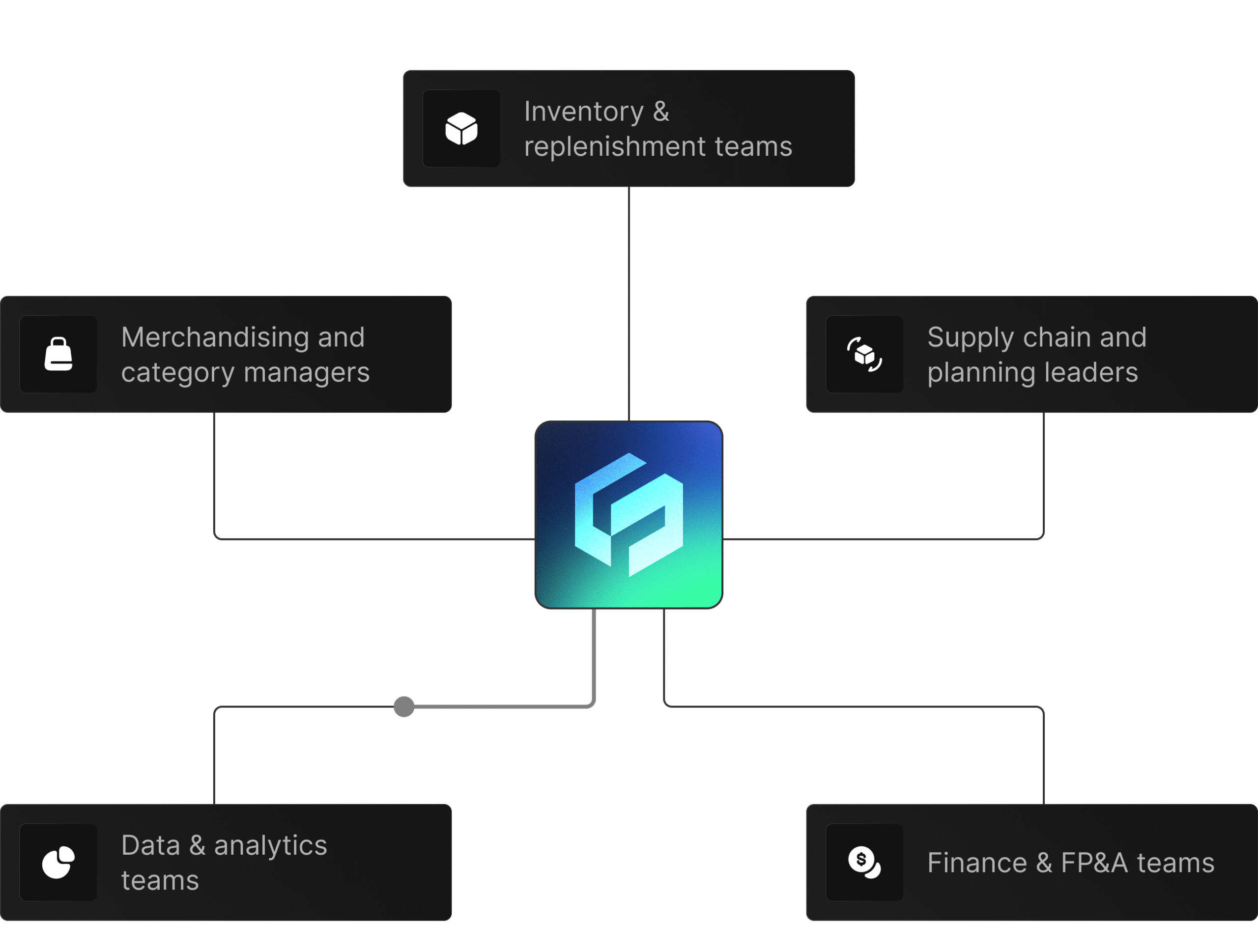
 Inventory & replenishment teams
 Supply chain and planning leaders
 Merchandising and category managers
 Data & analytics teams supporting forecasting and planning
 Finance & FP&A teams reviewing stock and working capital
50–200 stores or a few key regions where inventory pain is real (stockouts, waste, or both).

For example: Mobility + Events + Retail Sales for promos, or People + Economic for pack / mix decisions.
Compare your current plans with “current + Factori data,” and review the changes in stockouts, overstock, and forecast error.
Inventory management is the process of planning, stocking, replenishing, and allocating products so businesses can meet demand without creating excess stock, stockouts, waste, or unnecessary working capital pressure.
Factori helps inventory teams anticipate local demand changes using external signals such as foot traffic, events, weather, market interest, economic conditions, retail sales trends, and audience behavior. These signals improve store-level, category-level, and regional inventory planning.
Factori gives planning teams external context that internal sales history alone cannot capture. It helps inventory, merchandising, supply chain, and operations teams understand where demand may rise, soften, or shift before it becomes visible in POS data.
Businesses can enrich inventory forecasts with Factori signals to adjust replenishment, safety stock, allocation, and promotional inventory by location or market. This helps reduce lost sales from stockouts and margin pressure from overstock, waste, and markdowns.
Products
Solutions By Use Case
By Use Case
By Industry
© 2026 Factori. All rights reserved.