Talk to the real world with Factori MCP - Get Started Now
Talk to the real world with Factori MCP - Get Started Now
Factori helps teams plan and activate smarter audience strategies using privacy‑safe segments, market context, and location intelligence—so targeting is clearer, spend is more efficient, and performance is easier to explain.
Trusted by





Trusted by
Use predefined segments and consumer insights to build targeting plans that aren’t guesswork.
Understand where your best audiences concentrate by market, neighborhood, trade area, or territory.
Build consistent audience strategies for digital, CTV, and location‑based planning—without re‑defining segments for every tool.
Tailor what you say and where you spend based on who’s actually in each area.
Compare performance by audience mix and market context to understand what’s working—and why.
Focus investment on markets and segments that match your product and goals.

Replace fragmented segment definitions with a shared audience language across teams.

Align creatives, offers, and channel strategy to local audience reality.

Replace fragmented segment definitions with a shared audience language across teams.
Align creatives, offers, and channel strategy to local audience reality.
Audience targeting platforms work best when geo decisions are grounded in where your audience actually concentrates.
Combining consumer profiles, spend signals, and mobility data helps teams prioritize markets and ZIPs based on real fit, not just reach estimates.

Effective OOH audience targeting means knowing where your audience lives, works, and moves, not just where screens are available.
Mobility, foot traffic, and people data help plan corridors and placements that match the audience you're trying to reach.

Understanding which DMAs have stronger audience concentration and higher category interest helps teams allocate CTV budgets where they're more likely to work and measure performance in a consistent way across regions.

Store-level audience targeting needs to reflect who's actually in the trade area, not a national segment applied uniformly.
Consumer profiles, local spend data and foot traffic patterns help tailor campaigns to the audience mix around specific locations and catchments.

B2B audience targeting and consumer launch strategies both benefit from knowing which markets have the right profile before committing budget.
Audience concentration, market interest, and local demand signals help identify high-fit markets based on who's there, not just where you've performed before.

B2B audience targeting works better when business landscape data sits alongside consumer context.
Pairing firmographics, business density and vertical mix with audience signals helps GTM teams prioritize territories and outreach based on where the right buyers and decision-makers actually are.




Privacy‑safe consumer insights aggregated by geography to understand who’s in each market.


Search and commerce signals to understand what markets are paying attention to right now.
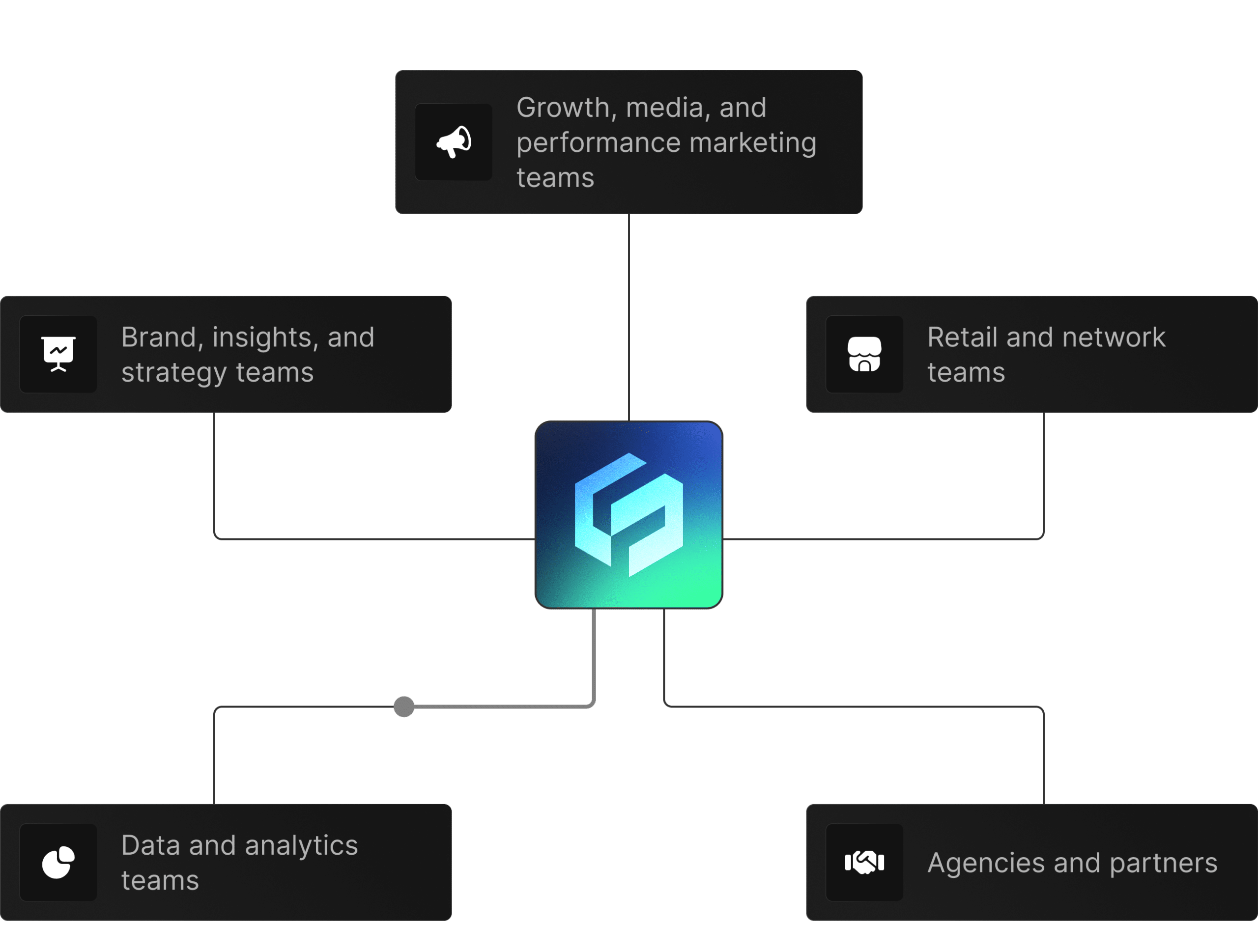
 Growth, media, and performance marketing teams
 Brand, insights, and strategy teams
 Retail and network teams running location‑aware growth
 Data and analytics teams supporting targeting and measurement
 Agencies and partners building repeatable audience playbooks
Acquisition, retention, launch, local growth, or awareness.

A region, territories, or a set of locations to start with.
Select segments and validate where they concentrate.
Compare performance across markets and audience mixes.
Standardize what works and expand across teams, channels, and regions.
Audience targeting is the process of identifying and reaching the right consumers based on demographics, interests, behaviors, intent, location context, lifestyle, category affinity, and market demand signals.
Factori helps marketers and platforms build privacy-safe, geo-aware audience strategies using People, Audiences, Mobility, Market, Retail Sales, Places, Events, Economic, Geo, and Identity signals.
Factori helps teams move beyond broad demographic targeting by combining consumer traits with real-world market, location, movement, and demand context. This supports better media planning, activation, local targeting, and measurement.
Marketers can use Factori to identify high-value audience concentrations, choose stronger geographies, align campaigns with local demand, reduce wasted media spend, and measure impact across markets, channels, and audience segments.
Products
Solutions By Use Case
By Use Case
By Industry
© 2026 Factori. All rights reserved.