Talk to the real world with Factori MCP - Get Started Now
Talk to the real world with Factori MCP - Get Started Now
One unified location intelligence and geospatial analytics platform — turning mobility, places, people, identity, and audience signals into measurable outcomes across site selection, audience targeting, demand forecasting, attribution, and more.
Every decision, whether it’s site selection, demand forecasting, audience planning, or network expansion, impacts millions of dollars. Yet most of these decisions are still made using outdated data, limited samples, or assumptions.
Surveys take months, so insights often arrive after decisions have already moved. Panels are limited, making it hard to fully understand markets at a granular level, and layered models add assumptions that push insights further from reality.
This leads to:
Real-world data changes this by showing what’s actually happening today. It is continuous, observed, and unified across datasets, helping businesses move faster and make decisions based on reality instead of guesswork.
Plan distribution, target audiences, and measure shopper journeys across digital and physical touchpoints.
Underwrite locations, evaluate trade areas, and forecast asset performance with property and mobility data.
Build risk models, score markets, and underwrite policies with real-world behavioral signals.
Plan network rollouts, target growth markets, and analyze service usage with mobility data.
Optimize site selection, daypart strategy, and competitive positioning with real-world traffic and demographics.
Drive store-level decisions on assortment, hours, staffing, and expansion with daily visitor data.
Forecast demand, target inbound audiences, and benchmark properties using global mobility data.
Model regional demand, optimize route density, and identify high-growth corridors with movement data.
Power smart-city planning, tourism strategy, and infrastructure investment decisions with mobility intelligence.
Map access deserts, plan facility expansion, and analyze population health patterns ethically.
Replace stale survey data with continuous real-world behavioral signals across 229 countries.
Power cookieless audience targeting, OOH measurement, and cross-channel attribution at scale.
Predict regional and category demand using mobility, events, and economic signals, not just historical sales.
Pick high-performing locations using foot traffic, demographics and competitor density.
Stock by real demand pattern, not by average. Use trade area data and mobility flows.
Build campaign plans grounded in real audience behavior and media context.
Staff by real visitor flows, not by historical schedules. Daily mobility refresh per location.
Adjust pricing based on local demand, competitor density, and demographic context.
Model network flows, identify bottlenecks, and plan capacity with real movement data.
Train AI models on real-world context, not synthetic or web-scraped data alone.
Append real-world attributes to your CRM, warehouse, or audience platform.
Build audiences on real behavior, not just declared interests or cookies.
| USE CASE | TRADITIONAL APPROACH | WITH FACTORI | REPORTED LIFT |
|---|---|---|---|
| Retail site selection | Demographics + drive-time models | + mobility, foot traffic, competitor density | 25–40% lower failure rate |
| OOH media planning | Traffic surveys, modeled estimates | Real mobility data | 40–60% more accurate impressions |
| Audience targeting | Cookies, declared interests | Real-world behavioral signals | 25–35% segment performance lift |
| Demand forecasting | Historical sales + seasonality | + mobility, events, economic indicators | 15–30% lower forecast error |
| Footfall attribution | Survey-based panels | Privacy-safe mobility | 32% measurable ROAS improvement |
| Identity resolution | Cookie matching | Real-world identity graph | 20–30% fewer duplicate impressions |
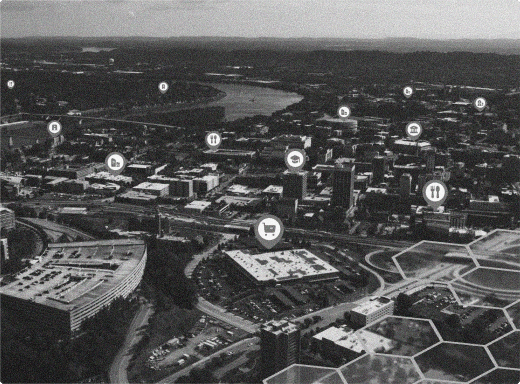
An emerging DTC brand used Factori’s POI data to identify high-potential store locations based on foot traffic, nearby businesses, and customer behavior.
Retail & FMCG
Site Selection
Points of Interest Data
Real-world data is most valuable for decisions where the physical world is the deciding factor — retail site selection, OOH media planning, demand forecasting, audience targeting, dynamic pricing, supply chain routing, and footfall attribution. If the answer depends on where people go, how often they move, who they are, or what businesses surround them, real-world data improves the decision by 15–40% on the most common outcome metrics
Twelve industries are heaviest users today: QSR, retail, travel & hospitality, logistics & supply chain, CPG, real estate, finance & insurance, telco & utilities, public sector, healthcare, market research, and adtech & martech. The common thread is that all twelve have multi-million-dollar decisions that depend on accurate physical-world signal — and all twelve have, until recently, made those decisions on survey data, panels, or modeled estimates.
Reported outcomes by use case: 25–40% reduction in retail site failure rates; 40–60% more accurate OOH impression estimates; 25–35% lift in audience targeting performance; 15–30% reduction in demand forecast error; 32% improvement in measurable ROAS via real-world attribution; 20–30% reduction in duplicate cross-channel impressions.
Yes. Factori supports aggregated, policy-aligned, and privacy-safe audience intelligence designed for responsible targeting, clean-room collaboration, campaign analysis, and measurement.
Yes — the twelve industries shown are the largest existing buyer clusters, but the underlying signals (mobility, places, people, identity, audiences) apply to any decision involving physical-world context. If you can describe the decision, our team can map it to the right datasets. Book a 30-minute discovery call.
Three free options:
(1) Download a 100-row sample CSV for FREE
(2) Connect the MCP server to your AI client and query in natural language
(3) Book a 30-minute discovery call, validate fit against a specific use case.
Twelve datasets, one schema, bidirectional links across every signal. Whether you’re forecasting demand, planning OOH, or routing supply chains, you’re querying the same graph, through API, MCP, or natural language.
Products
Solutions By Use Case
By Use Case
By Industry
© 2026 Factori. All rights reserved.