Talk to the real world with Factori MCP - Get Started Now
Talk to the real world with Factori MCP - Get Started Now
Search and commerce signals turned into geo-level indicators of interest and intent. See which brands, products, and categories are gaining attention in each market and act before the curve
Trusted by





Trusted by
Where people are searching for a category or brand more (or less) than before.

How intent and interest differ by country, region, city, or neighborhood, so you avoid treating all markets the same.

Where search interest is high but presence on digital or physical “shelves” is limited—a signal for opportunity or risk.
Simple trend signals that show whether interest is rising, flat, or falling in each market.

See where attention is shifting before it shows up fully in sales, and move budget or inventory accordingly.
Choose launch markets, pilot regions, and promo windows using clear demand‑side signals.
When a category under‑ or over‑performs, quickly see whether customer interest changed in that market.
Give growth, merchandising, and finance a shared, objective view of which markets are heating up.
Use category and brand interest as an additional signal to refine short- and medium-term demand plans.
Market data that captures where search intent is building gives forecasters an earlier read on demand shifts, before they fully appear in sales numbers or internal reporting.

Market data lets marketing teams make allocation decisions based on what consumers are actually looking for right now, not what performed well last quarter.

Decide which products and categories to push in each region based on where demand is building.
When you can see which categories are gaining search momentum locally, assortment decisions stop being based on gut feel and start reflecting what shoppers are actually moving toward.

Market data on search momentum and consumer intent gives strategy and growth teams a clearer signal of where demand already exists, so entry decisions are grounded in evidence rather than assumption.

Data market lands in Category & Assortment where the slightly more commercial angle reads naturally in context. Nothing forced across either keyword.

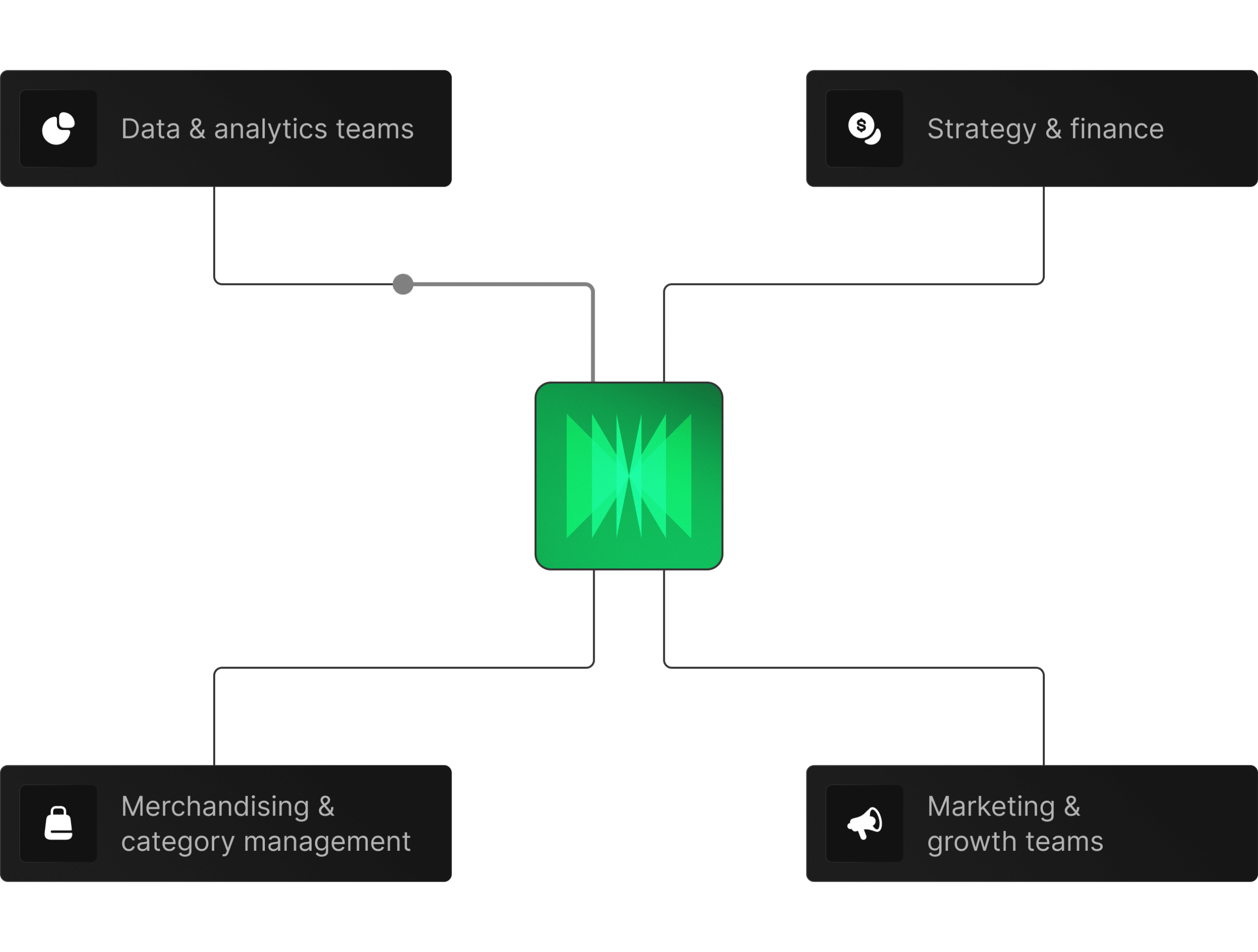
 Marketing & growth teams
Deciding where to spend and which messages to lead with.
 Merchandising & category management
 Planning assortment and feature space by market.
 Strategy & finance
Prioritizing markets and sizing upside with clearer leading indicators.
 Data & analytics teams
Adding clean, external intent signals to models and dashboards.






Tell us which regions, categories, and brands you want to track.

Explore how interest and momentum look across a handful of key markets.
Connect Market data to your forecasting, planning, and marketing workflows.
Factori Market Data turns search, commerce, product, category, brand, and interest signals into geo-level demand intelligence that helps businesses understand where attention, intent, and market momentum are rising or falling.
Businesses use Market Data for demand planning, category strategy, product launches, market expansion, competitive analysis, marketing allocation, trend tracking, and forecasting. It helps teams understand where consumer interest is building before sales fully move.
Market Data helps teams identify which products, brands, and categories are gaining traction in each market. It supports demand forecasting, category planning, product launches, marketing allocation, and market expansion.
Factori builds Market Data from aggregated search, commerce, category, product, brand, interest, and market trend sources. These signals are normalized by geography, category, time period, and business use case.
Customers can access using any of these options:
(1) Download a 100-row sample CSV for FREE
(2) Connect the MCP server to your AI client and query in natural language
(3) Book a 30-minute discovery call, validate fit against a specific use case.
(4) Factori Platform
Market Data can be updated frequently depending on the signal type and market. High-momentum signals may refresh weekly or monthly, while broader market indicators may refresh on a scheduled cadence.
Internal sales data shows what customers already bought from your business. Market Data shows broader consumer demand, product interest, category momentum, and competitive market signals before they fully appear in internal sales.
Products
Solutions By Use Case
By Use Case
By Industry
© 2026 Factori. All rights reserved.