Talk to the real world with Factori MCP - Get Started Now
Talk to the real world with Factori MCP - Get Started Now
Large language models made the internet fully queryable. They unlocked the ability to reason across vast amounts of text, code, and knowledge in seconds. But that understanding has always been limited to what exists online.
The physical world operates differently. It is dynamic, constantly changing, and largely unstructured. It is defined by how people move, where demand emerges, and how places evolve over time. These signals do not live on the internet, and as a result, they have remained outside the scope of how AI systems understand context.
We built the first MCP server for real-world data, so any AI agent can now query the physical world the way it queries the internet.
By structuring real-world signals across 229 countries into a unified, queryable layer, AI systems can move beyond static knowledge and access live, grounded context. The result is a shift from answering based on what was known to reasoning based on what is happening, bringing real-world awareness into every query.

“We built Factori MCP because we saw the same pattern over and over teams spending weeks integrating data pipelines just so their AI could answer basic location questions. One MCP call should be enough.”

Understand who lives, works, or moves through any area, demographics, behaviors, and daily patterns.
“Who lives within 5 miles of our new Seattle location?”
“What kinds of workers commute into downtown Austin on weekdays?”

Map the competitive landscape anywhere in the world, what businesses exist, how they cluster, who’s winning.
“What coffee shops compete within a mile of our proposed Shoreditch location?”
“Break down the retail landscape in San Francisco’s Marina District.”

See how people actually move, when they arrive, how long they stay, how patterns shift over time.
“Who lives within 5 miles of our new Seattle location?”
“What kinds of workers commute into downtown Austin on weekdays?”

Track how neighborhoods and regions evolve, what’s growing, declining, and where momentum is building.
“Who lives within 5 miles of our new Seattle location?”
“What kinds of workers commute into downtown Austin on weekdays?”

Get data-backed answers to your toughest location questions, where to open, close, expand, or invest.
“Who lives within 5 miles of our new Seattle location?”
“What kinds of workers commute into downtown Austin on weekdays?”
Settings → Connectors → Add custom connector
One URL. That's the whole config.
OAuth opens in a new tab. Approve and you're live in the chat window/


Fragmented vendors, stale exports and weeks of analyst time just to stand up a single use case. Factori MCP collapses that stack.

More data layers are on the way — each one unlocks a new category of questions your AI can answer about the physical world.
Concerts, sports, conferences, and calendars that move foot traffic and demand.
“What’s the property mix within 1 mile of this site — residential vs. commercial vs. mixed-use?”
Parcel types, housing density, and land use classifications that define trade areas.
“What’s the property mix within 1 mile of this site — residential vs. commercial vs. mixed-use?”
Category-level spend signals showing where consumer spending is rising or softening.
“Is dining spend growing or declining in the Austin metro compared to 6 months ago?”
“Which QSR brands are gaining search momentum in Southeast Asia this quarter?”
“Is dining spend growing or declining in the Austin metro compared to 6 months ago?”
Chain vs. independent ratios, category composition, and competitive makeup by area.
“What’s the independent vs. chain restaurant ratio in Brooklyn, and how has it shifted?”
Income levels, employment rates, and local economic health signals that shape demand.
“How does the unemployment rate in this trade area compare to the metro average?”
Category-level spend signals showing where consumer spending is rising or softening.
“Is dining spend growing or declining in the Austin metro compared to 6 months ago?”
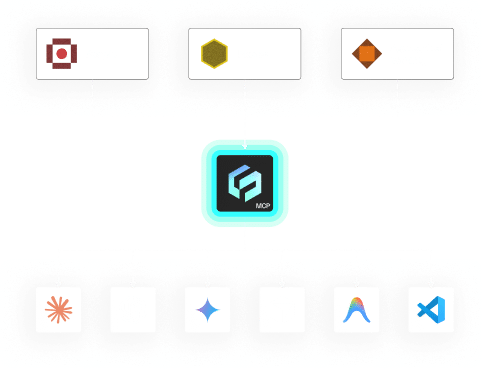
Factori MCP is a custom connector that plugs real-world intelligence directly into any AI agent like Claude, ChatGPT, or Cursor, directly to Factori’s Real-World Graph.Once connected, your agent can query live data on people, places and movement across 229 countries, in plain english, no GIS software or SQL required.
Factori MCP replaces days of manual location research with a single AI query. Instead of pulling foot traffic, demographics, and competitor data from multiple vendors and stitching it together manually, your team can ask a question in natural language and get a structured, real-world answer in seconds, powered by live data across people, places, and movement.
No, the Setup is simple and super easy:
Once you’ve added your API key, you interact with Factori the same way you’d chat with an AI, just ask your question.
Factori MCP works with any MCP-compatible client including, Claude Desktop, ChatGPT, Cursor and LangChain. If your agent environment supports MCP, you can connect Factori to it.
Factori MCP currently spans five core categories: People & Communities, Places & Competition, Movement & Foot Traffic, Markets & Trends, and Site & Location Intelligence. Additional layers are continuously being added, including Events & Demand Signals, Property & Land Use, Retail Sales Indicators and Economic Indicators, enabling AI systems to answer an even broader range of real-world questions.
Here are a few examples of the kinds of questions you can ask:
Join the early access waitlist and be among the first to integrate Factori MCP into your AI stack.
Products
Solutions By Use Case
By Use Case
By Industry
© 2026 Factori. All rights reserved.
Ask about people, places, movement and markets, in just plain English.