Retail store cannibalization happens when a new location shifts visits and sales away from nearby stores instead of creating new demand. By using mobility and location intelligence to measure catchment overlap, simulate expansion scenarios, and track post-launch demand shifts, retailers can reduce expansion risk and protect network performance.
Customer shopping behavior data helps retailers understand how people visit, move between, and engage with physical locations over time. By combining privacy-safe people and visit data, businesses can uncover visit frequency, dwell time, cross-shopping, repeat behavior, and location-level differences that transaction data alone cannot explain.
Aggregated mobility data helps businesses improve demand forecasting by revealing real-world activity before it appears in sales, bookings, or orders. By using privacy-safe movement trends as early demand signals, teams can adjust forecasts, inventory, staffing, and capacity decisions with greater speed and confidence.
Micro-catchment footfall helps retailers understand demand at the block, street, and intersection level. By identifying where foot traffic is rising, weakening, or shifting around each store, retailers can improve hyper-local marketing, staffing, inventory planning, site selection, and competitive response.
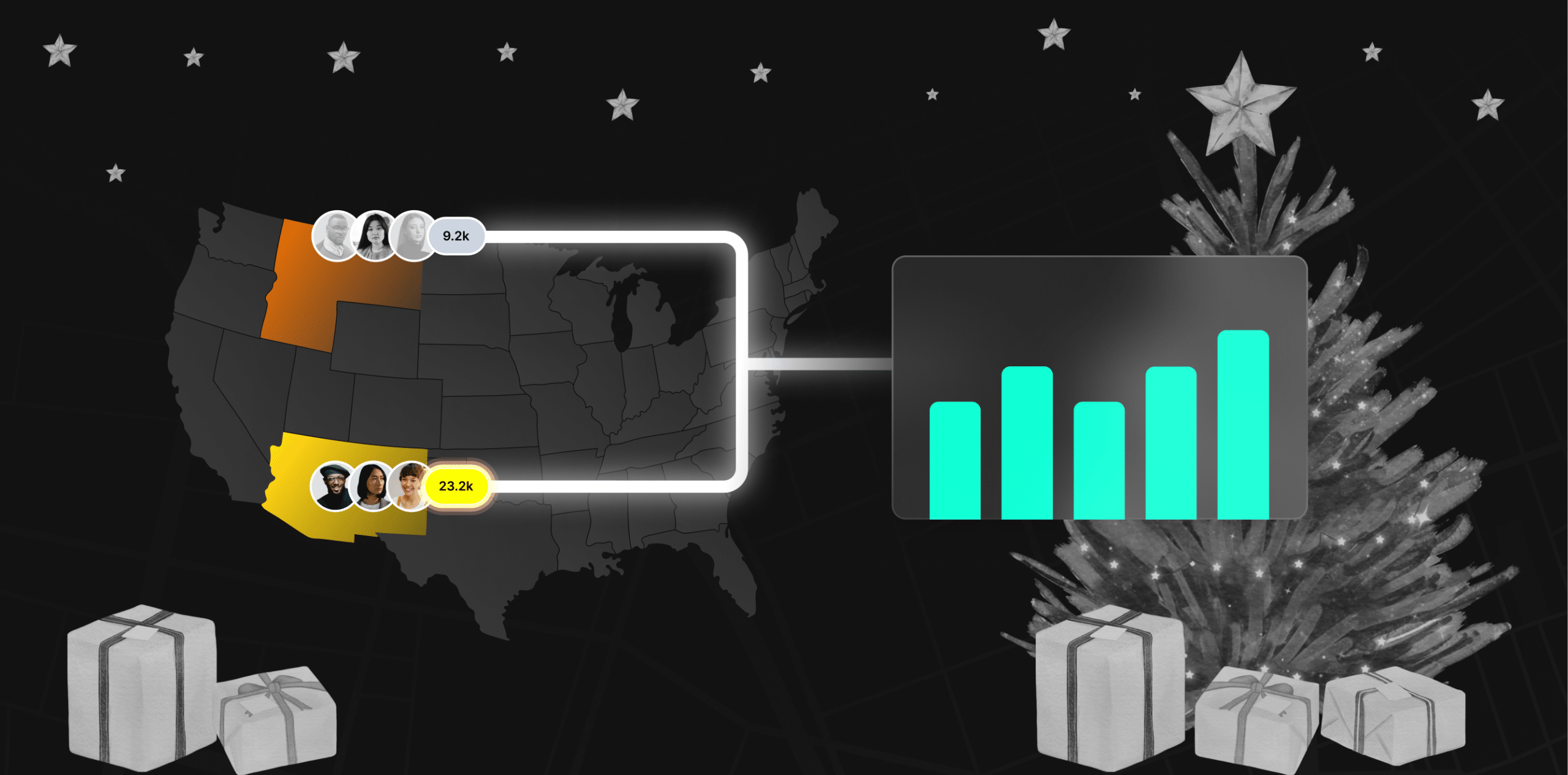
Holiday geo-targeting helps retailers move beyond broad campaigns by using real-world signals like events, weather, traffic, footfall, competition, and local economics. By aligning media spend with store-level demand and operational capacity, brands can reduce wasted budget, improve ROI, and deliver more relevant holiday campaigns.
Location data providers help businesses understand where people go, how places perform, and where opportunities exist. By comparing providers on accuracy, freshness, coverage, integration, flexibility, and privacy, businesses can choose the right partner for site selection, mobility analysis, marketing, logistics, and real-world decision-making.
Explore the top Texas points of interest. Find ideal business locations, POI data, and insights to boost your business near Texas's iconic attractions.
Geofencing marketing helps brands reach people based on their real-world location and intent. By creating virtual boundaries around stores, events, competitor locations, or high-traffic areas, businesses can deliver timely ads, notifications, and offers that improve engagement, foot traffic, and campaign performance.
Visit data offers a powerful lens into real-world customer behavior, revealing when, where, and how people interact with physical locations. From optimizing store layouts to measuring marketing impact, these insights help businesses make smarter decisions.