Location data helps businesses understand people, places, movement, and market activity.
Retailers can use it to identify high-traffic areas. Logistics teams can use it to improve route planning. Urban planners can use it to understand mobility patterns.
The value of location data, however, depends heavily on the provider behind it.
With many location data providers available, businesses need to compare more than dataset size. Accuracy, freshness, coverage, integration, licensing, and privacy all affect whether the data can support real business decisions.
Before comparing providers, it helps to understand what to look for.
Read about: What Is Location Data?
Key Takeaway
- Location data helps businesses understand physical places, movement, markets, and customer activity.
- The largest dataset is not automatically the best dataset.
- Accuracy and freshness are critical because places and movement patterns change over time.
- Coverage should be evaluated in the specific markets and categories a business needs.
- APIs, cloud delivery, dashboards, and downloadable datasets support different workflows.
- Licensing models can significantly affect cost and flexibility.
- Privacy practices are an important part of evaluating mobility and audience data providers.
- POI, mobility, demographic, and audience data become more useful when they can be connected.
- Different location data providers serve different use cases, so comparisons should focus on business requirements rather than rankings.
- The right provider should fit the required geography, data attributes, delivery method, and business decision.
How to Choose a Location Data Provider
The best location data provider is not always the one with the largest dataset.
Businesses should focus on whether the data is accurate, relevant, current, and easy to use.
1. Assess Data Accuracy and Freshness
Location data changes constantly.
Businesses open and close. Store hours change. People move differently across markets.
A provider should have clear processes for updating and validating its data.
Look for:
- Reliable source inputs
- Regular refresh cycles
- Data validation
- Clear quality controls
Fresh data gives teams more confidence that their analysis reflects current conditions.
2. Check Coverage and Scale
Coverage should match the markets where your business operates.
A global company may need broad geographic coverage. A regional business may care more about local detail.
Evaluate:
- Countries covered
- Cities and regions available
- Categories included
- Depth of attributes
- Consistency across markets
Large coverage numbers matter less if the data is weak in the locations you actually need.
3. Evaluate Access and Integration
Useful data should fit into existing workflows.
Providers may offer:
- APIs
- Dashboards
- Downloadable datasets
- Cloud delivery
- Data warehouse integrations
The right access model depends on whether teams want to explore data manually or integrate it into analytics, CRM, GIS, or machine learning systems.
4. Understand Licensing and Flexibility
Different providers use different commercial models.
Some require businesses to purchase large datasets. Others provide more flexible access based on usage or specific data needs.
Before choosing a provider, understand:
- What data you can access
- How it can be used
- How much data must be purchased
- Whether access can scale with your needs
Flexible access can reduce unnecessary data costs.
5. Review Privacy Practices
Privacy is especially important when working with mobility or audience data.
Businesses should understand how the provider collects, processes, aggregates, and protects its data.
Learn more about consumer data privacy and how privacy should fit into a location data strategy.
What Makes Location Data Reliable?
Reliable location data should provide more than a point on a map.
It should give teams enough context to understand what exists at a location, how conditions change, and how the data can support a business decision.
Comprehensiveness
Good location data may include attributes such as:
- Business name
- Category
- Brand
- Address
- Operating hours
- Contact information
- Coordinates
More complete attributes make the data useful across more workflows.
Accuracy and Precision
Incorrect coordinates or outdated business information can weaken an entire analysis.
Strong providers use validation and quality controls to reduce these errors.
Timeliness
Location data loses value when it no longer reflects the real world.
Frequent updates help businesses work with more current information about places, movement, and market activity.
Scalability
A provider should be able to support larger datasets, new regions, and more complex workflows as requirements grow.
Contextual Data Layers
Location data becomes more useful when it can be connected with other signals.
For example:
- POI data shows what places exist
- Mobility data shows how people move
- Demographic data adds audience context
These layers can help businesses understand not only where something is located, but also what is happening around it.
Explore Factori’s Audience Data to work with audience segments built from mobility, demographic, and behavioral signals.
Top 5 Location Data Providers
The following providers represent different approaches to location and real-world data.
This is a comparison, not a ranking.
1. Factori

Factori provides location, mobility, and audience data through a unified platform.
Businesses can use Factori to explore places, understand movement patterns, and work with audience insights in one environment.
Factori also uses a credit-based access model. This allows teams to access the data they need instead of purchasing entire datasets upfront.
This approach can support teams working across retail, mobility, analytics, and other location-based use cases.
2. SafeGraph
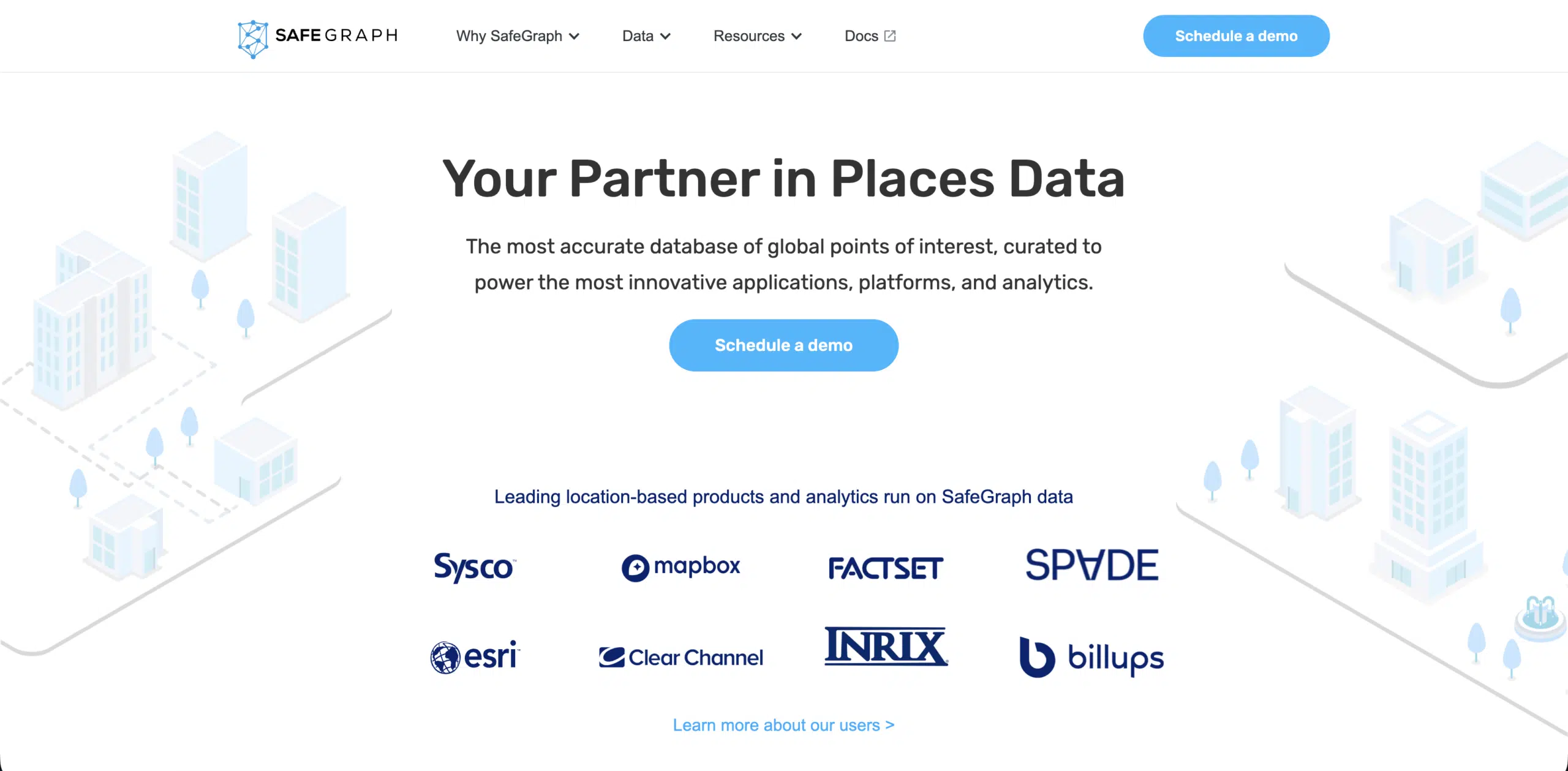
SafeGraph is known for POI data.
Its datasets provide information about physical places and can support use cases across research, enterprise analytics, and urban planning.
It is commonly evaluated by teams that need structured data about businesses and locations.
3. Unacast
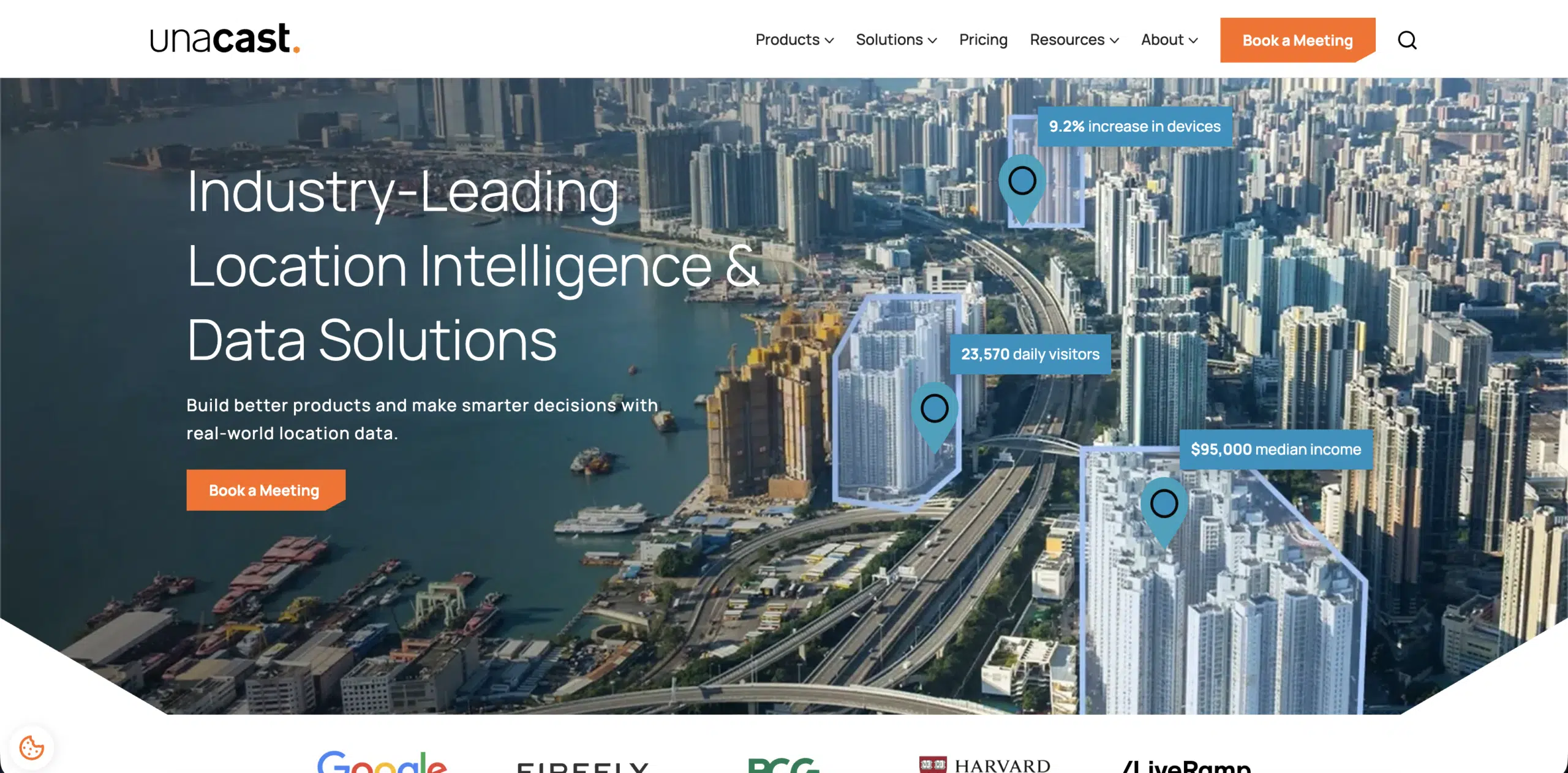
Unacast focuses on location intelligence for understanding places and population distribution.
Its data can support:
- Site selection
- Urban development
- Market analysis
It is relevant for organizations that want to understand geographic activity and population patterns.
4. Echo Analytics
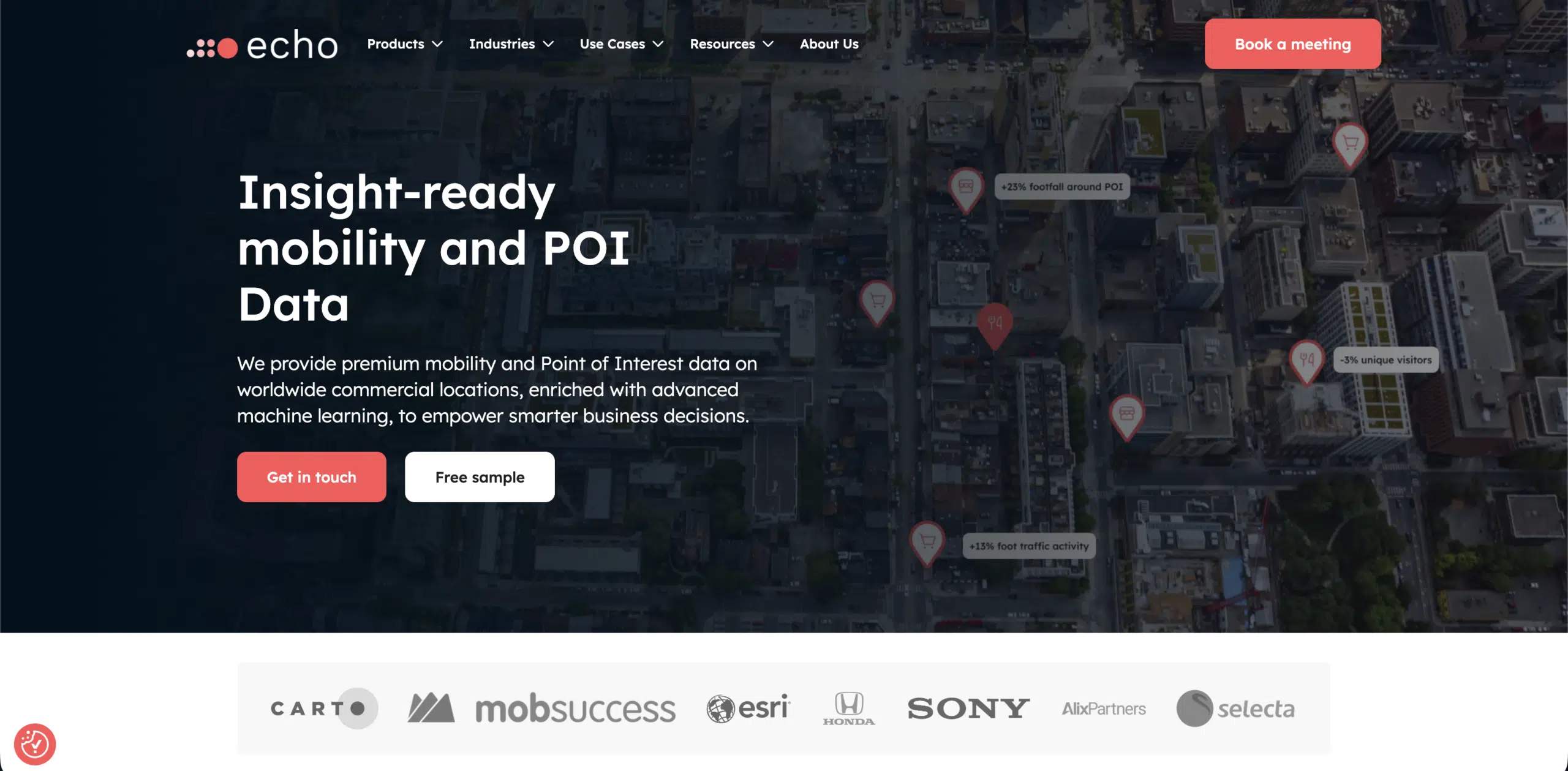
Echo Analytics provides geospatial datasets that combine place information with additional contextual layers.
Its data can support analysis across:
- Retail
- Real estate
- Government
This makes it useful for teams that need geographic context around physical locations.
5. Veraset
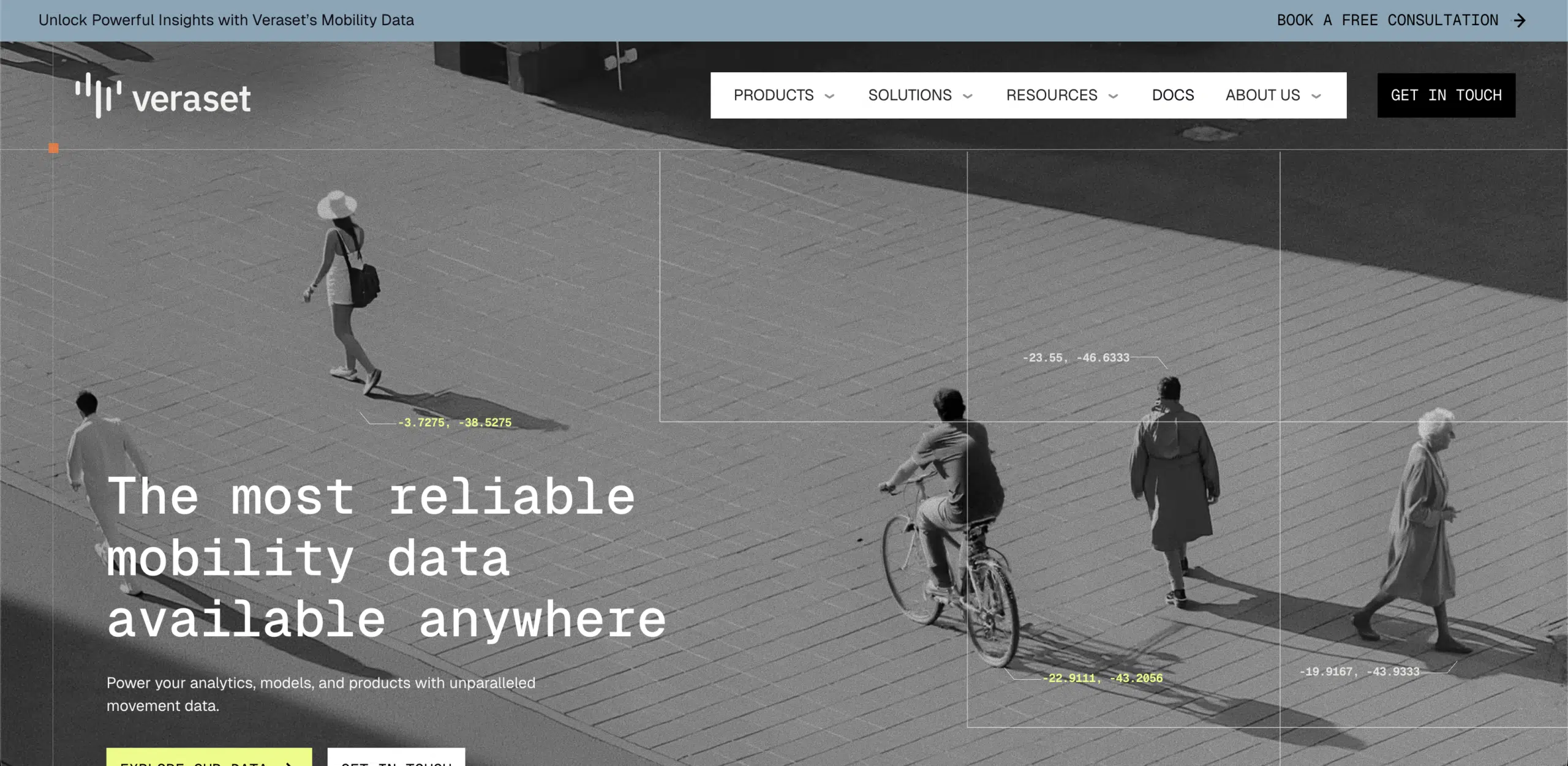
Veraset provides open and commercial location datasets.
Its data supports:
- Research
- Analytics
- Strategic planning
- Large-scale modeling
Its open-data initiatives can improve accessibility, while commercial datasets support more advanced use cases.
How to Compare Location Data Providers
A useful provider comparison should focus on your use case rather than trying to find a single “best” vendor.
| Evaluation Area | What to Check |
|---|---|
| Accuracy | How the provider validates its data |
| Freshness | How often datasets are updated |
| Coverage | Whether required markets and categories are available |
| Attributes | How much context is available for each location |
| Access | APIs, downloads, cloud, platform, or other delivery methods |
| Integration | Whether the data fits existing workflows |
| Licensing | How the data can be purchased and used |
| Privacy | How data is collected, processed, and protected |
| Scalability | Whether the provider can support growing data needs |
The strongest provider is the one that matches the business problem, geography, data requirements, and workflow.
Conclusion
Location data can support better decisions across retail, logistics, marketing, real estate, urban planning, and analytics.
But the quality of the result depends on the quality of the provider.
Businesses should compare location data providers based on accuracy, freshness, coverage, integration, licensing, privacy, and use-case fit.
Different providers offer different strengths.
The goal is not to choose the provider with the most data. It is to choose the one that provides the right data, in the right format, for the decision you need to make.
Get started for free to explore how Factori brings location, mobility, and audience insights together.
FAQs
What Should Businesses Look for in a Location Data Provider?
Businesses should evaluate accuracy, freshness, coverage, integration options, licensing, scalability, and privacy practices.
The provider should also match the specific business use case.
Why Is Data Freshness Important?
Physical places and movement patterns change over time.
Frequent updates help businesses work with information that better reflects current market conditions.
What Makes Location Data Reliable?
Reliable location data is accurate, complete, current, scalable, and supported by strong quality controls.
It should also provide enough context to support real business decisions.
How Do Businesses Use Location Data Providers?
Businesses use location data for site selection, market analysis, mobility analysis, route planning, audience intelligence, marketing, and operational planning.
The most important provider attributes depend on the use case.
How Is Factori Different From Traditional Location Data Providers?
Factori combines multiple real-world datasets, including location, mobility, and audience data, in one platform.
Its access model is designed to give teams more flexibility in how they explore, integrate, and use the data.