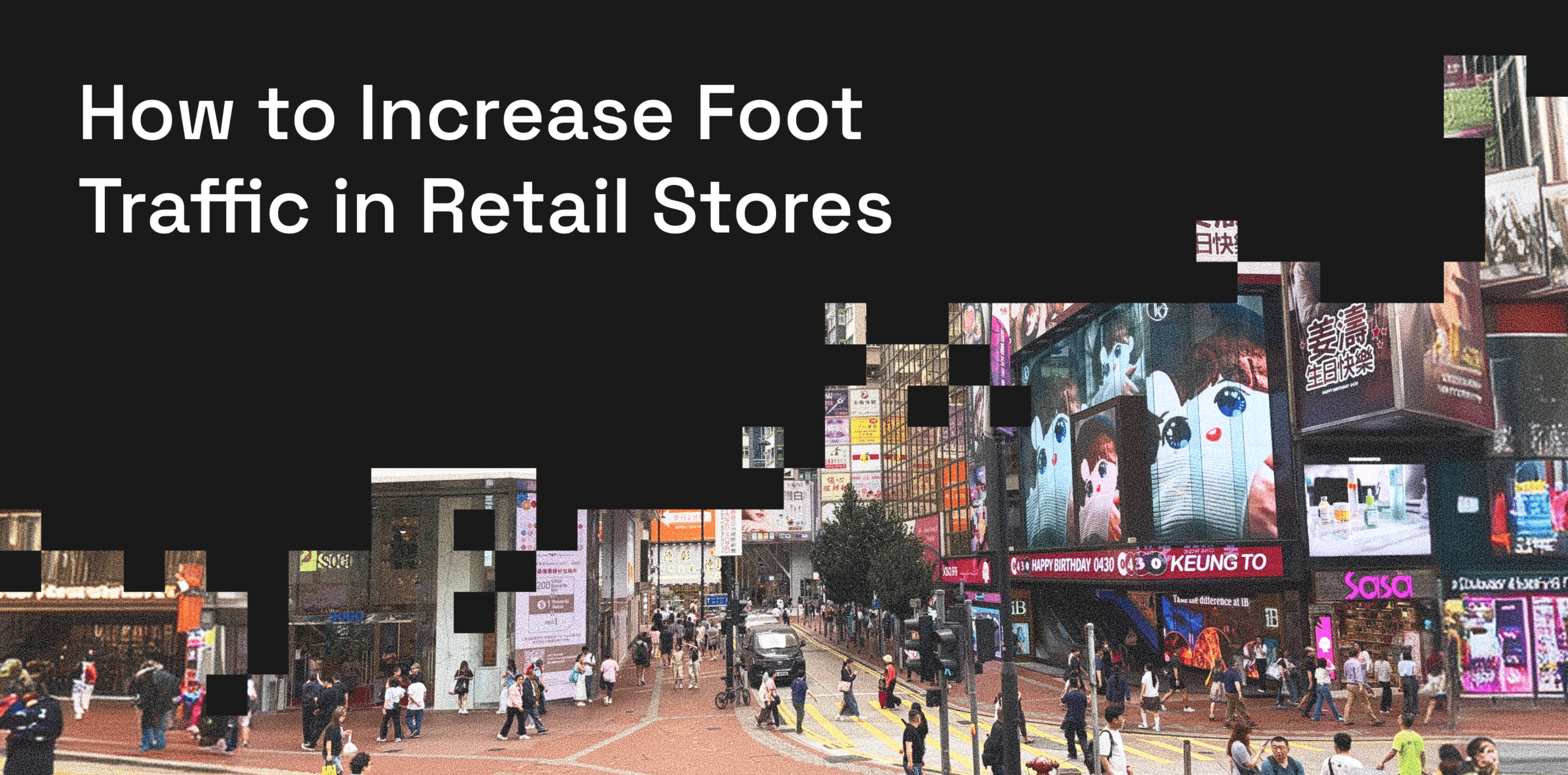
Increasing foot traffic in retail is not only about running discounts or putting up better displays. To understand how to increase foot traffic in retail, businesses need to know where shoppers are, what brings them into stores, when visits happen, and which actions actually increase store visits.
A strong foot traffic strategy combines local visibility, audience targeting, store experience, campaign timing, competitor insights, and location data. When retailers understand real-world behavior, they can bring more shoppers into stores and make better decisions across marketing, operations, and expansion.
What Is Retail Foot Traffic?
Retail foot traffic is the number of people who visit a physical store during a specific period.
It helps retailers understand how much real-world demand a store attracts. A store with strong foot traffic usually has better opportunities for sales, customer engagement, repeat visits, and local brand awareness.
Retailers use foot traffic to understand:
- How many shoppers visit a store
- When visits are highest or lowest
- Which locations perform better
- How campaigns influence store visits
- Whether a market has enough customer demand
- Where new stores should be opened
Foot traffic alone does not explain everything. A store may have high visits but low sales, or fewer visits but stronger conversion. That is why retailers should combine foot traffic data with sales, customer, competitor, and location insights.
Why Foot Traffic Matters for Retail Stores
Foot traffic is one of the clearest signals of physical retail demand.
For retailers, it shows whether a store is attracting enough shoppers from its local market. It also helps teams compare stores, plan campaigns, improve staffing, and make better site selection decisions.
Foot traffic matters because it helps retailers:
- Identify high-performing and underperforming stores
- Understand local demand across markets
- Improve campaign planning and measurement
- Adjust staffing during busy and slow periods
- Plan inventory based on visit patterns
- Compare store performance against nearby competitors
- Reduce risk before opening new locations
When retailers track foot traffic properly, they can move from guesswork to evidence-based decisions.
Why Retail Foot Traffic Drops
Before trying to increase foot traffic, retailers need to understand why visits are low.
A drop in store visits can happen for many reasons. Sometimes the issue is weak local awareness. In other cases, the location has poor visibility, limited access, or weak audience fit. A store may also be losing visits because nearby competitors are attracting the same shoppers.
Common reasons retail foot traffic drops include:
- Low local awareness
- Poor storefront visibility
- Limited parking or difficult access
- Stronger nearby competitors
- Weak fit between products and local shoppers
- Poor promotion timing
- Seasonal or weekday traffic gaps
- Store experience issues
- Low repeat visits
- Weak connection between marketing and store visits
The right solution depends on the cause. A store with low awareness needs better local marketing. A store with strong visits but low sales needs better conversion. A store in a weak catchment may need deeper location and audience analysis.
10 Ways to Increase Foot Traffic in Retail Stores
1. Understand Where Your Best Customers Come From
Retailers should start by understanding which neighborhoods, ZIP codes, and catchment areas already drive store visits.
Trade area and visit pattern analysis can show where customers come from, how far they travel, and which areas have stronger store affinity. This helps retailers focus marketing spend on the places most likely to bring shoppers into stores.
For example, a retailer may find that most visits come from nearby residential areas during weekends, while weekday traffic comes from office zones. That insight can shape local advertising, staffing, store hours, and promotions.
2. Improve Local Search Visibility
Many store visits begin online.
Shoppers search for nearby stores, product availability, opening hours, directions, and reviews before visiting. If a store is hard to find online, retailers may lose visits before customers even reach the store.
Retailers can improve local search visibility by:
- Keeping Google Business Profile details updated
- Adding accurate store hours and addresses
- Uploading store photos
- Encouraging customer reviews
- Creating local landing pages
- Improving store locator pages
- Adding location-specific keywords
- Highlighting available products and services
Better local search visibility helps retailers capture shoppers who are already showing intent.
3. Time Promotions Around Low-Traffic Periods
Discounts and offers work best when they solve a real traffic problem.
Instead of running promotions during already busy periods, retailers should look at visit patterns by day, time, and season. This helps them identify when traffic needs support.
| Traffic Pattern | Better Retail Action |
| Low weekday visits | Run weekday offers |
| Strong weekend traffic | Focus on conversion |
| Seasonal spike | Launch campaigns before peak demand |
| Evening traffic drop | Test after-work promotions |
For example, if a store already receives strong Saturday traffic, a weekend discount may reduce margin without adding meaningful new visits. A weekday offer may be more useful if the real gap is Monday to Thursday traffic.
4. Use Audience Data to Target Nearby Shoppers
Not every nearby shopper is the right shopper.
Retailers can use privacy-safe audience data to understand which customer groups are most likely to visit a store or buy from a category. This helps teams target campaigns more precisely.
Audience segments may include:
- Frequent category shoppers
- Visitors to complementary locations
- Shoppers near competitor stores
- High-fit demographic groups
- Interest-based customer segments
- People who visit nearby retail areas
For example, a sportswear retailer may want to reach people who visit gyms, fitness studios, sports complexes, and nearby shopping centers. Better audience targeting helps reduce wasted spend and improves the chance of driving store visits.
5. Run Geo-Targeted Campaigns Around Store Catchments
Geo-targeted campaigns help retailers reach shoppers in areas that matter most to each store.
Instead of targeting broad cities or regions, retailers can focus on store catchments, nearby neighborhoods, malls, transit hubs, office clusters, or competitor areas.
Useful channels include:
- Mobile advertising
- Paid social
- Search ads
- Digital out-of-home
- Local display campaigns
- Retail media
- Location-based offers
The goal is not just to reach more people. The goal is to reach people who are close enough, relevant enough, and likely enough to visit.
6. Create Store Experiences Worth Visiting
Retailers can increase foot traffic by giving shoppers a reason to visit in person.
This is especially important when customers can easily buy online. Physical stores need to offer experiences, services, or moments that digital channels cannot fully replace.
Examples include:
- Product launches
- Limited-time collections
- In-store demos
- Workshops
- Community events
- Loyalty member days
- Personal styling sessions
- Brand collaborations
These experiences should be measured. Retailers should compare visit patterns before, during, and after events to understand whether they actually increase traffic and repeat visits.
7. Partner With Nearby Businesses
Nearby businesses can help create shared demand.
Retailers can partner with complementary stores, restaurants, gyms, salons, cafes, or entertainment venues to attract overlapping audiences. This works especially well in malls, high streets, mixed-use districts, and neighborhood retail zones.
Examples include:
- A gym and a health food store
- A coffee shop and a bookstore
- A salon and a beauty retailer
- A cinema and a restaurant
- Mall stores with shared promotions
Partnerships work best when the two businesses serve similar audiences but do not directly compete.
8. Improve Storefront Visibility and Access
Sometimes foot traffic is low because shoppers do not notice the store or find it easy to enter.
Retailers should review the physical factors that affect visits. A strong location can still underperform if signage is unclear, the entrance is hidden, parking is difficult, or the storefront does not invite people in.
Retailers should evaluate:
- Signage visibility
- Window displays
- Entrance placement
- Parking access
- Walkability
- Nearby transit access
- Store locator accuracy
- Mall or street-level positioning
Small improvements can make a meaningful difference, especially in high-traffic retail corridors.
9. Benchmark Against Nearby Competitors
Retailers should not measure store performance in isolation.
A store may show flat foot traffic, but the wider market may be declining. In that case, the store may be holding share. Another store may show modest growth, but competitors nearby may be growing faster.
Competitor benchmarking helps retailers answer:
- Are competitors gaining more visits?
- Is the store underperforming in a strong market?
- Are nearby stores attracting the same shoppers?
- Which locations are gaining or losing local share?
- Is the issue store-specific or market-wide?
This helps retailers decide whether to adjust marketing, improve store operations, reposition the location, or rethink the market strategy.
10. Choose Better Locations Before Opening New Stores
The strongest foot traffic decision often happens before a store opens.
Retailers can avoid weak store performance by evaluating real-world demand before committing to a location. This includes analyzing nearby footfall, audience fit, competitor density, POI mix, catchment strength, and visit patterns.
Before opening a new store, retailers should evaluate:
- Nearby footfall
- Local audience fit
- Competitor density
- Complementary places nearby
- Trade area strength
- Visit patterns by day and time
- Cannibalization risk from existing stores
- Market growth potential
Better site selection helps retailers choose locations with stronger demand and lower risk.
How to Measure Foot Traffic Growth
Retailers need to measure whether their actions are actually increasing store visits.
The right metrics depend on the goal. A campaign may aim to increase new visitors, while a loyalty program may focus on repeat visits. A new store may need to measure total demand, while an existing store may need to compare performance against competitors.
| Metric | What It Shows |
| Total visits | Whether more people are entering the store |
| Unique visitors | Whether reach is increasing |
| Repeat visits | Whether shoppers are coming back |
| Visit frequency | How often customers return |
| Dwell time | Whether visitors are engaging |
| Peak visit periods | When demand is highest |
| Campaign lift | Whether marketing increased visits |
| Competitor comparison | Whether the store is gaining local share |
Foot traffic should also be compared with sales, conversion rate, basket size, and customer retention. More visits are valuable only when they support stronger business outcomes.
Common Mistakes Retailers Should Avoid
Retailers often try to increase foot traffic without understanding the real issue.
Common mistakes include:
- Running promotions without knowing the traffic gap
- Measuring visits without comparing sales conversion
- Treating every store the same
- Ignoring nearby competitors
- Choosing sites based only on rent or intuition
- Looking only at total visits
- Ignoring repeat visits and audience fit
- Measuring campaigns without store visit lift
- Using location data without privacy-first safeguards
The best strategies are specific to each store, market, audience, and business goal.
How Factori Helps Retailers Increase Foot Traffic
Factori helps retailers understand where shoppers go, which locations they visit, and which trade areas have the strongest demand.
With Mobility Data, Visit and Location Intelligence, POI Data, People Data, Audience Data, and APIs, Factori helps retail teams identify high-potential catchments, improve site selection, build better local audiences, measure campaign-driven visits, and benchmark store performance.
Built with privacy-first practices, Factori helps retailers turn real-world movement and place data into better store growth decisions.
Conclusion
Increasing foot traffic in retail starts with understanding local shoppers, visit patterns, and nearby demand.
When retailers combine practical actions with real-world data, they can improve campaigns, strengthen store performance, and bring more shoppers into stores with greater confidence.
The goal is not just to increase visits, but to attract the right shoppers, measure what works, and turn store traffic into long-term retail growth.
FAQs
What is the best way to increase foot traffic in retail?
The best way is to first understand why foot traffic is low. A store with weak awareness may need better local marketing, while a store with poor audience fit may need better targeting or location analysis.
How can retailers attract more local customers?
Retailers can attract local customers through local SEO, geo-targeted ads, store events, nearby partnerships, loyalty offers, and campaigns focused on high-potential catchment areas.
How do you measure retail foot traffic?
Retail foot traffic can be measured using total visits, unique visitors, repeat visits, visit frequency, dwell time, peak visit periods, campaign lift, and competitor benchmarks.
Why is foot traffic important in retail?
Foot traffic shows how many people visit a store. It helps retailers understand demand, measure marketing impact, improve staffing, plan inventory, and compare location performance.
Can data help increase store visits?
Yes. Retailers can use mobility, visit, POI, audience, and location intelligence data to understand where shoppers are, when they visit, which stores are underperforming, and which campaigns drive more visits.