Retail demand can change quickly across stores, categories, and local markets.
Historical sales show what happened before, but they do not always explain sudden changes in shopper activity, promotions, competitor performance, or local spending.
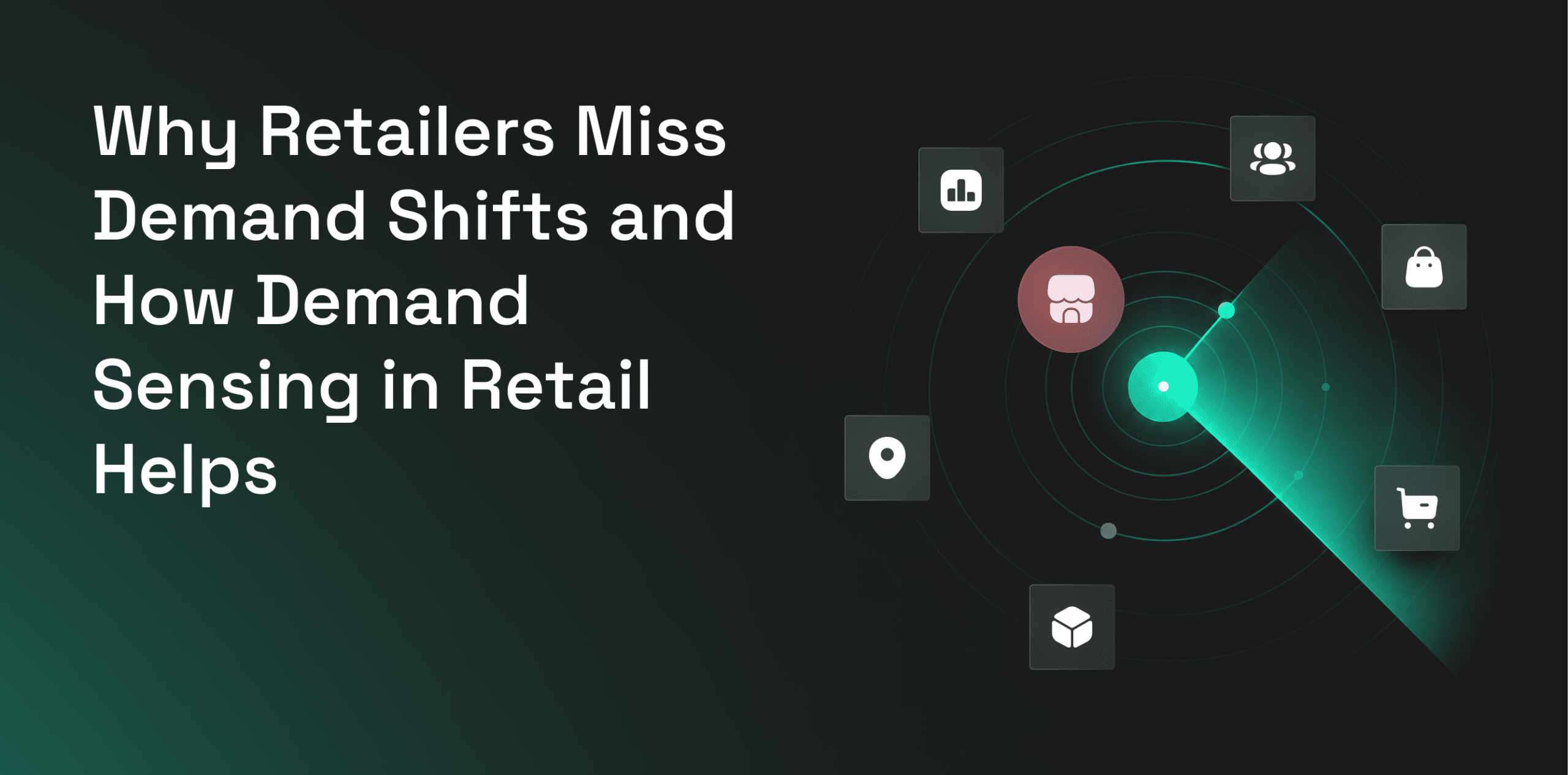
Demand sensing in retail helps retailers detect these short-term changes earlier. It combines recent sales and inventory data with real-world signals such as foot traffic, store visits, consumer characteristics, and local market activity.
This gives teams a more current view of retail demand and helps them adjust inventory, product allocation, promotions, staffing, and store operations faster.
What Is Demand Sensing in Retail?
Demand sensing in retail is the process of using recent internal and external data to identify changes in demand at the store, product, category, or market level.
Instead of relying only on historical sales, retailers use current signals to understand whether demand is rising, falling, or shifting across locations.
Common signals include:
- Point-of-sale transactions
- Inventory movement
- Online orders
- Store foot traffic
- Visit frequency
- Promotion performance
- Competitor activity
- Consumer characteristics
- Local economic conditions
For example, a retailer may see foot traffic rising around several stores before sales fully reflect the change.
Demand sensing can help identify that shift earlier and support faster inventory or staffing decisions.
Why Retail Demand Changes So Quickly
Retail demand is rarely consistent across every store or market.
Two stores in the same region may perform differently because of customer profiles, surrounding businesses, local competition, shopper movement, or changing retail market dynamics.
Demand may shift when a promotion performs differently across stores, a competitor opens nearby, local foot traffic changes, or product preferences vary between neighborhoods.
Seasonal demand can also arrive earlier or later than expected. Changes around offices, malls, schools, transport hubs, or local events can affect store activity.
These changes contribute to wider retail consumer trends and retail market trends.
Traditional reporting may detect them only after sales have changed.
Demand sensing helps retailers identify those signals earlier.
How Demand Sensing Works in Retail
A simple demand sensing retail process follows four stages:
Retail signals → Demand change detection → Updated forecast → Retail action
1. Collect Retail Signals
Retailers combine internal operational data with external market and location signals.
Internal inputs may include sales, inventory, returns, pricing, promotions, and online orders.
External inputs may include foot traffic, visit patterns, consumer characteristics, nearby businesses, and economic activity.
Together, these inputs create a richer retail demand forecasting dataset.
2. Identify Demand Changes
Retail analytics models compare current activity with expected demand patterns.
The model may identify rising store visits, unusual category demand, changing competitor activity, or weaker demand in a particular trade area.
This retail demand analysis helps teams understand not only what changed, but where it changed.
3. Update Store or Category Forecasts
The forecast is adjusted to reflect current demand conditions.
Depending on the retailer, this may happen at store, regional, category, product, or SKU level.
This is where demand sensing in retail strengthens traditional forecasting by adding recent market signals.
4. Turn Signals Into Action
Updated demand signals can support decisions such as inventory replenishment, product reallocation, promotion changes, staffing adjustments, localized assortment, and markdown planning.
The value of demand sensing comes from connecting the signal to a clear action.
Retail Data Used for Demand Sensing
Demand sensing works best when internal performance data is combined with external market context.
Internal Retail Data
Internal data shows what is happening inside the business.
Common inputs include store sales, inventory availability, product movement, online orders, returns, pricing, promotions, and category performance.
This data is essential, but it may not explain why retail sales trends are changing.
External Retail Signals
External data adds context about what is happening around each store.
| Retail Signal | What It Shows | Retail Decision |
|---|---|---|
| Foot traffic | Changes in shopper activity | Adjust store demand expectations |
| Visit patterns | Changes in engagement and frequency | Reallocate inventory |
| Competitor visits | Shifts in local customer activity | Review promotions and assortment |
| People data | Characteristics of nearby consumers | Localize product mix |
| Economic data | Changes in local spending conditions | Adjust demand assumptions |
| POI data | Nearby competitors and demand generators | Improve store and trade area planning |
These signals can provide useful retail insights that are difficult to see in sales data alone.
For example, retail footfall analysis may show that shopper activity is rising before transaction data shows the same increase.
Retail customer insights and retail consumer insights can also help explain who is driving that demand and whether the change is relevant to a particular category.
Demand Sensing Across Retail Operations
Demand sensing can support several areas of retail planning.
Store-Level Inventory Planning
Demand can increase at one location while remaining flat at another.
Retailers can combine recent sales, visits, and foot traffic to decide where inventory should increase or decrease.
This avoids applying the same replenishment rules across an entire region.
Product Allocation
Retailers can identify where specific products or categories are gaining demand.
For example, a product may perform strongly near office districts but weakly in suburban stores.
Store-level retail insights can help move stock toward locations with stronger demand.
Promotion Monitoring
Promotions do not perform equally across every market.
Demand sensing can track changes in traffic, visits, and sales while a promotion is active.
Teams can then identify which locations are responding and where the campaign may need adjustment.
Seasonal Demand Planning
Seasonal demand does not always begin at the same time across regions.
Changes in shopper movement, early product sales, and local activity can help retailers detect whether seasonal demand is arriving early, late, or more strongly than expected.
These signals can also help teams understand changing retail consumer trends.
New Product Launches
New products have limited historical data.
Retailers can use early transactions, store visits, consumer characteristics, and local market signals to identify where demand is developing.
This can guide inventory allocation and marketing support.
Store Assortment Planning
Customer demand varies by neighborhood, trade area, and store format.
Retailers can use current retail consumer insights, visit behavior, and market conditions to localize assortment instead of relying only on broad regional assumptions.
Perishable Inventory Planning
Retailers selling food or other short-shelf-life products need to respond quickly.
Recent traffic, sales velocity, and local activity can help improve ordering and reduce shortages or waste.
Demand Sensing at the Store and Trade Area Level
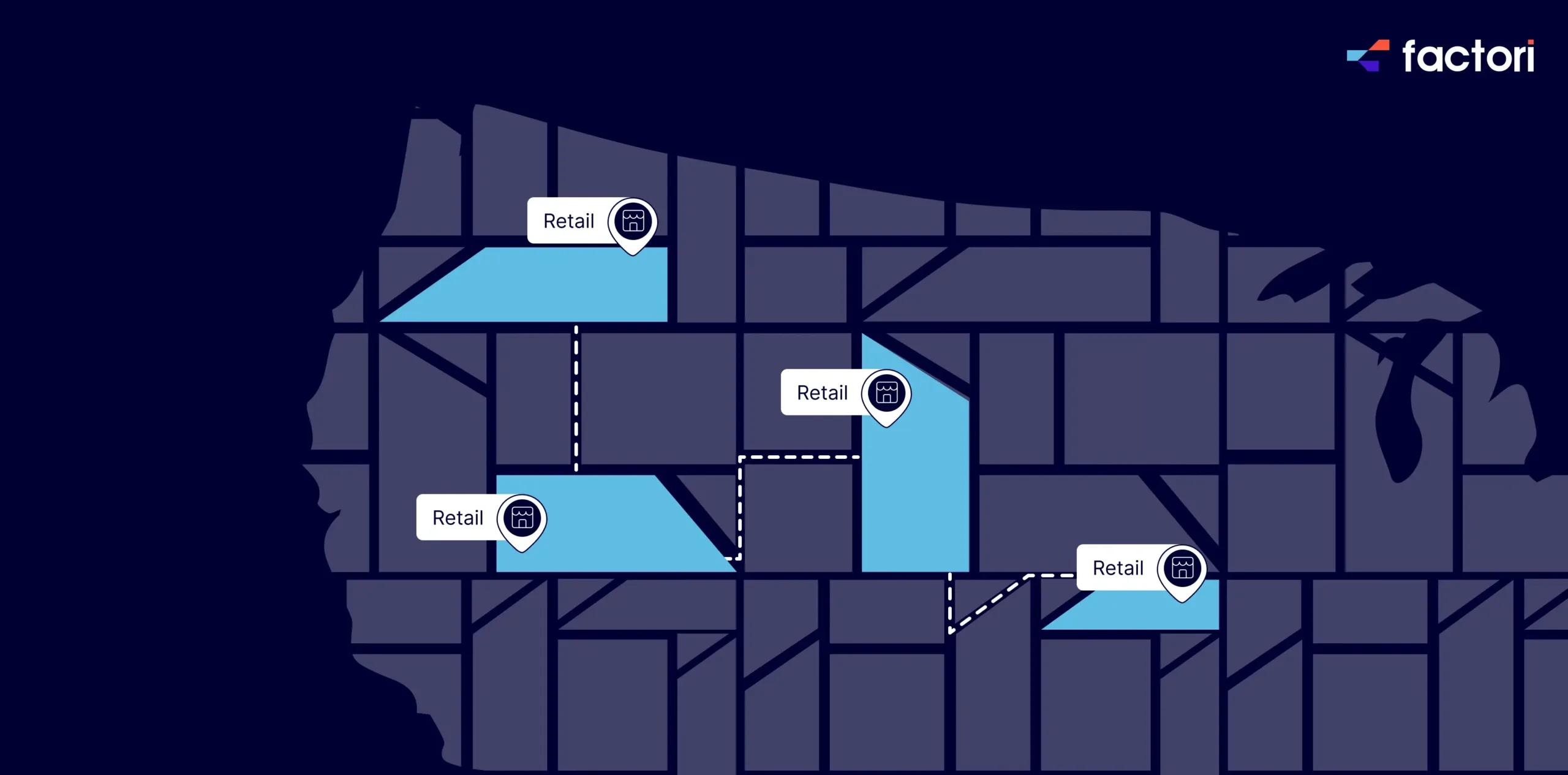
Retail demand should not be treated as uniform across a city or region.
Each store operates within a different local market shaped by population, customer characteristics, competitors, nearby businesses, transport access, visit patterns, and time-of-day activity.
A store near a business district may perform strongly during weekdays.
A residential store may see greater demand in evenings and on weekends.
Store-level demand sensing helps retailers account for these differences.
It also improves visibility into local retail market dynamics rather than applying one forecast across many stores.
For large retail networks, this level of detail can be especially important because local demand patterns may vary widely.
Demand Sensing and Retail Analytics Trends
One of the major retail analytics trends is the move from backward-looking reporting toward more current, signal-driven analysis.
Traditional retail analytics often explains performance after sales change.
Demand sensing tries to identify the signals behind those changes earlier.
This can include changes in retail footfall analysis, competitor visitation, local consumer activity, or economic conditions.
The result is a more responsive approach to retail demand forecasting.
Instead of asking only, “What did sales do last month?” teams can also ask, “What signals suggest demand is changing now?”
How Retailers Can Introduce Demand Sensing
Retailers do not need to replace their entire forecasting system at once.
A practical approach is to start with one business problem.
1. Select a Use Case
Choose a specific area such as replenishment, promotion planning, inventory allocation, or seasonal demand.
2. Establish a Baseline
Measure how the current forecast performs across selected stores, categories, or products.
3. Add Relevant Demand Signals
Introduce external data that can explain changes in local demand.
This may include foot traffic, visits, consumer attributes, or market conditions.
4. Test the Approach
Compare results across a controlled set of stores or categories before expanding it.
5. Connect Signals to Decisions
Define what teams should do when demand rises or falls.
6. Measure the Outcome
Useful metrics include forecast error, stockout rate, on-shelf availability, inventory turnover, markdown rate, waste, promotion uplift, and store-level sales variance.
The goal is not simply a more accurate forecast.
It is faster and more precise retail decision-making.
How Factori Supports Demand Sensing in Retail
Factori helps retailers add real-world context to store and category forecasting.
Retail teams can use Factori’s mobility, visit intelligence, places, people, consumer, market, and economic data to understand how retail demand changes across locations and trade areas.
These signals can support retail demand analysis, store-level forecasting, product allocation, promotion planning, assortment decisions, and market analysis.
Factori data can also help teams build a richer retail demand forecasting dataset by combining internal performance data with external location and market signals.
Data is available through datasets, APIs, and the Factori platform, helping retailers integrate external signals into existing analytics and forecasting workflows.
Conclusion
Demand sensing in retail helps teams understand what is changing across stores, products, categories, and local markets.
By combining sales and inventory data with foot traffic, visits, consumer characteristics, POI, and market signals, retailers can build a more current view of demand.
This supports faster decisions across inventory, promotions, assortment, staffing, and store operations.
As retail market dynamics become more complex, demand sensing gives teams a way to connect retail insights with current customer behavior instead of relying only on historical sales.
FAQs
What Is Demand Sensing in Retail?
Demand sensing in retail uses recent sales, inventory, shopper activity, and external market signals to identify short-term changes in demand across stores, products, categories, and locations.
How Does Retail Footfall Analysis Support Demand Sensing?
Retail footfall analysis shows changes in shopper activity around stores.
Rising or falling foot traffic can act as an early signal that store-level retail demand may change.
What Data Is Used for Demand Sensing in Retail?
Retailers may use point-of-sale data, inventory, promotions, online orders, foot traffic, visit patterns, competitor activity, consumer attributes, POI data, and local economic signals.
Together, these sources can form a more useful retail demand forecasting dataset.
Can Demand Sensing Be Applied at the Store Level?
Yes.
Store-level demand sensing helps retailers account for differences in trade areas, customer profiles, nearby competition, local visits, and retail market trends.
Which Retail Decisions Can Demand Sensing Improve?
Demand sensing can support inventory replenishment, product allocation, assortment planning, promotion monitoring, staffing, seasonal planning, new product launches, and perishable inventory management.