A sales dashboard can tell a retailer which stores are underperforming. It cannot always explain whether the problem is weak foot traffic, changing trade areas, a new competitor nearby, or customers shifting to another shopping district.
Location intelligence adds that missing geographic context. It combines information about places, movement, customers, markets, and business performance to explain not just what is happening, but where it is happening and why location matters.
What Is Location Intelligence?
Location intelligence is the process of analyzing geospatial and location-based data to understand how geography affects business outcomes.
It connects locations with other signals such as customer movement, demographics, traffic, nearby businesses, visits, market conditions, and internal business data.
For example, knowing where a store is located is location data. Location intelligence goes further by helping answer:
- Where are customers coming from?
- Which trade areas generate the most demand?
- How does competitor proximity affect performance?
- Which markets are underserved?
- Where should the next store, branch, billboard, or service location go?
- How does customer behavior change across locations?
The difference is important: location data tells you where something is. Location intelligence helps explain what that location means for a decision.
How Does Location Intelligence Work?
Location intelligence typically combines several stages of data preparation and spatial analysis.
1. Collect Location and Business Data
The process starts with geographic information such as coordinates, addresses, points of interest, visits, movement patterns, roads, boundaries, and trade areas.
Businesses may also combine this with internal data such as sales, CRM records, store performance, customer data, or campaign results.
2. Standardize and Connect the Data
Location data often comes from different sources and formats. Addresses may need to be geocoded, business categories normalized, geographic boundaries aligned, and timestamps standardized.
Once cleaned, datasets can be connected through common geographic references.
3. Add Real-World Context
External data can then enrich internal business information with context such as:
- Foot traffic
- Customer movement
- Nearby competitors
- Demographics
- Consumer characteristics
- Traffic and accessibility
- Market activity
- Surrounding businesses
4. Analyze Spatial Relationships
This is where location intelligence goes beyond simply putting points on a map.
Businesses can analyze proximity, clusters, trade areas, visitor origins, travel patterns, market overlap, competitor density, and changes across locations.
5. Apply the Insight
The output is used to support decisions such as where to expand, which customers to target, how to design territories, where demand is changing, or which locations require attention.
What Data Powers Location Intelligence?
Different business questions require different combinations of data.
| Data Type | What It Helps Explain |
|---|---|
| POI and places data | Where stores, businesses, venues, and other destinations exist |
| Mobility data | How people move between locations, neighborhoods, and markets |
| Visit data | When locations are visited, how frequently, and how activity changes |
| Demographic and people data | Who lives in or interacts with a market |
| Consumer data | Audience characteristics and broader behavioral context |
| Traffic and accessibility data | How easily people can reach a location |
| Business and market data | Competitive density, commercial activity, and market opportunity |
| Internal business data | Sales, customer, store, operational, or campaign performance |
Location intelligence becomes more useful when these layers are analyzed together.
A location with high foot traffic, for example, may still be a poor expansion opportunity if the audience does not match the target customer or the area is already saturated with competitors.
Location Intelligence vs Location Data vs GIS
These terms are related, but they describe different parts of the location analytics process.
| Location Data | GIS | Location Intelligence | |
|---|---|---|---|
| Purpose | Describe geographic information | Manage, visualize, and analyze geospatial information | Turn spatial analysis into business insight |
| Typical input | Coordinates, addresses, POIs, visits, boundaries | Multiple spatial datasets | Spatial, external, and business data |
| Typical output | Raw records or geographic signals | Maps, spatial models, layers, analysis | Decisions, predictions, priorities, and recommendations |
| Example | Competitor coordinates | Map competitor locations and trade areas | Identify which market has the strongest expansion opportunity |
GIS technology is often used to perform the spatial analysis behind location intelligence. Location intelligence is the broader business outcome produced when those capabilities are combined with relevant data and decision context.
Location Intelligence vs Business Intelligence
Business intelligence and location intelligence answer different but complementary questions.
Traditional business intelligence may show:
- Which stores generated the most revenue?
- Which region missed its sales target?
- Which campaign performed best?
Location intelligence adds the spatial dimension:
- Why are stores in one trade area outperforming another?
- Did a competitor opening change customer movement?
- Which neighborhoods contribute most customers?
- Where should the business expand next?
Business intelligence helps explain what happened. Location intelligence adds where it happened and how geography influenced the result.
Key Business Use Cases of Location Intelligence
Site Selection and Market Expansion
Location intelligence helps businesses compare markets and candidate sites using real-world demand signals.
Retailers, restaurants, banks, and other location-based businesses can analyze foot traffic, audience fit, trade areas, competition, accessibility, and surrounding businesses before choosing a site.
Rather than assuming nearby population equals demand, teams can evaluate how people actually interact with an area.
Retail Performance and Network Planning
Retailers can compare store performance against local market conditions.
Location intelligence can help identify:
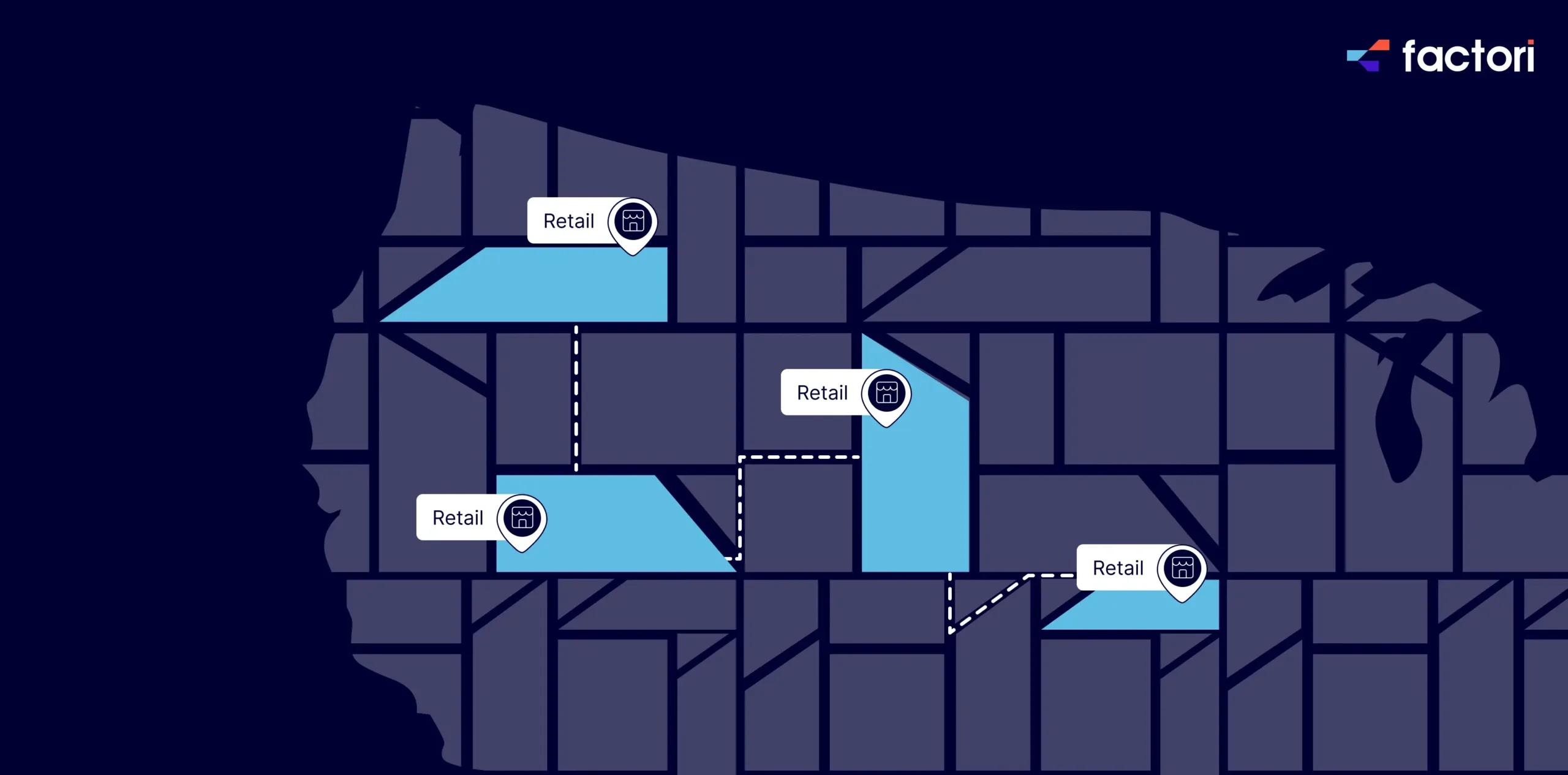
- High-performing and underperforming trade areas
- Changes in customer movement
- Competitor pressure
- Catchment overlap
- Potential store cannibalization
- Underserved markets
This makes it easier to decide where to expand, consolidate, invest, or adjust local strategy.
Audience Targeting and Media Planning
Marketers can use real-world behavior to understand which audiences interact with relevant places and categories.
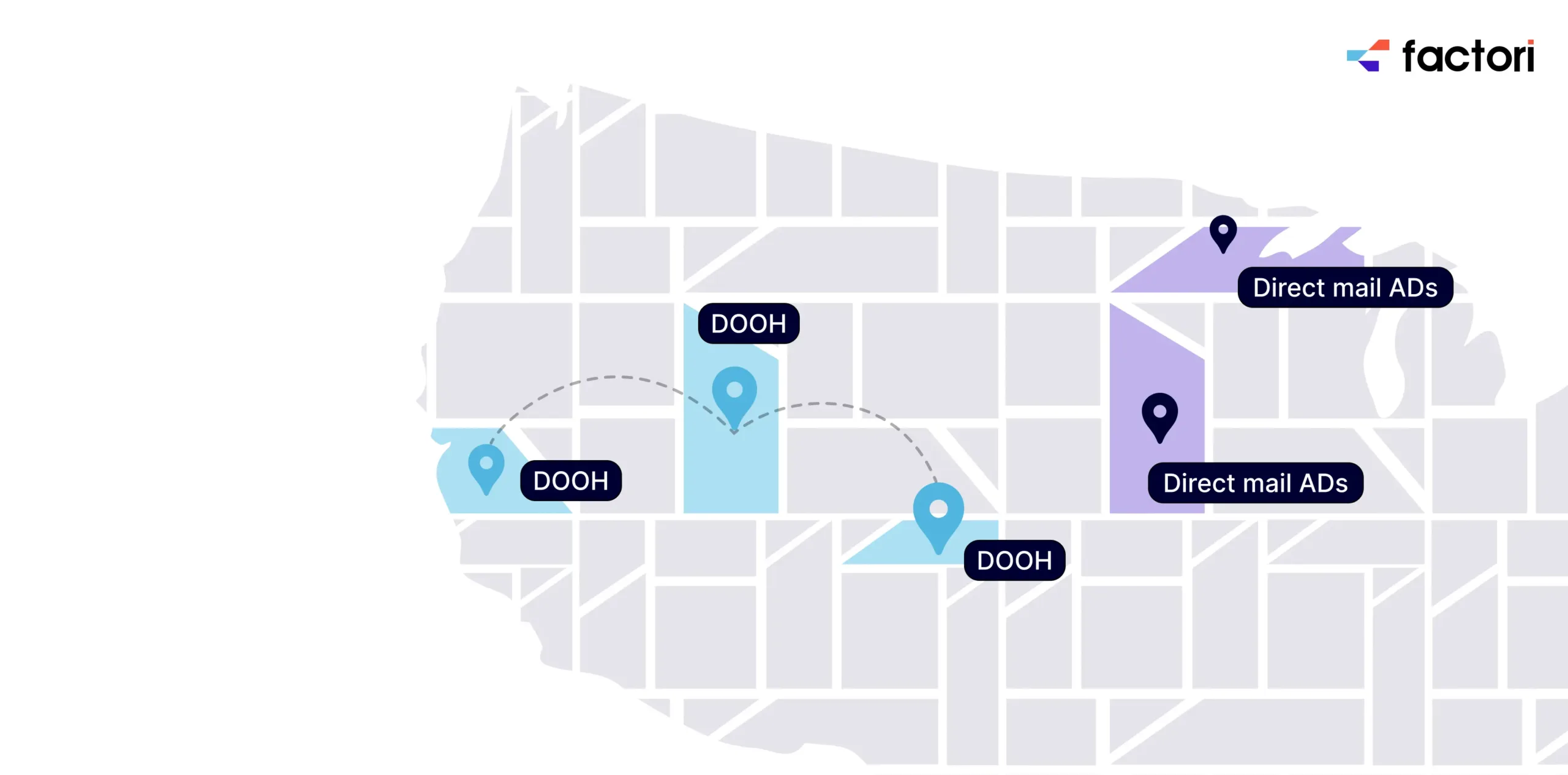
Location intelligence can support audience creation, geographic campaign planning, DOOH placement, local media strategy, and measurement of offline visitation patterns.
Instead of relying only on online attributes, marketers gain another layer of context around how audiences behave in the physical world.
Demand Forecasting
Historical sales data explains past demand. Location intelligence can add external signals that help explain why demand changes between places and periods.
Foot traffic, visits, market activity, nearby businesses, and customer movement can provide additional context for store-level or market-level forecasts.
Businesses can use these signals to support inventory, staffing, expansion, promotion, and operational planning.
Financial Services
Banks and financial institutions can use location intelligence for branch and ATM planning, market coverage, customer strategy, and geographic risk analysis.
For example, teams can identify markets where relevant customer demand is strong but physical coverage remains limited.
Commercial Real Estate
Real estate teams can evaluate properties using more than location and lease characteristics.
Foot traffic, surrounding businesses, trade areas, accessibility, audience characteristics, competitor locations, and local demand can help explain the commercial potential of a property.
Territory and Market Planning
Sales, franchise, and field teams can use spatial analysis to understand where customers and opportunities are concentrated.
Location intelligence can help create territories based on actual market potential rather than simple administrative boundaries or equal-sized geographic regions.
What Are the Benefits of Location Intelligence?
The biggest advantage of location intelligence is that it adds real-world context to business data.
It can help businesses:
- Reduce uncertainty in expansion decisions
- Identify markets with stronger demand
- Understand customers beyond residential demographics
- Improve site and territory evaluation
- Detect competitive and market changes
- Plan media using real-world behavior
- Improve local demand forecasts
- Connect internal performance with external market conditions
It also helps teams move beyond viewing maps as visualizations and use geography as an analytical variable in business decisions.
What Makes Location Intelligence Reliable?
More data does not automatically produce better location intelligence.
Businesses should evaluate the quality of the underlying data and methodology, including:
- Accuracy: Are locations and attributes correctly represented?
- Coverage: Does the dataset adequately cover the markets being analyzed?
- Freshness: How often are places, visits, and other changing signals updated?
- Consistency: Are categories, geographic units, and timestamps standardized?
- Relevance: Does the dataset actually answer the business question?
- Privacy: Are movement and audience insights designed for responsible, privacy-aware use?
- Integration: Can the data connect easily with existing analytics, warehouse, GIS, or AI workflows?
These factors are particularly important when location intelligence is used for high-value decisions such as network expansion or forecasting.
How Factori Supports Location Intelligence
Factori helps businesses combine real-world data about people, places, movement, and visits with their existing decision workflows.
Mobility and Visit/Location Intelligence help teams understand how people move and interact with physical locations. POI data provides context around businesses, competitors, categories, and the surrounding commercial environment. People and Consumer datasets add audience and market context.
Teams can use these signals for site selection, market intelligence, retail optimization, media planning, audience targeting, and predictive analytics.
Factori provides access through its platform, APIs, datasets, and MCP integrations, helping teams move from raw location signals to analysis and business decisions without building every data layer from scratch.
Factori is built with privacy-aware approaches designed to support responsible use of real-world data.
Conclusion
Location intelligence is more than putting business data on a map.
It connects geography with movement, places, customers, markets, and business performance to reveal relationships that traditional analysis can miss.
For businesses making decisions about where to expand, who to target, how to allocate resources, or where demand may change, location intelligence turns “where” into a measurable part of the decision.
Talk to an expert to explore how Factori can support your location intelligence use case.
FAQs
What is location intelligence in simple terms?
Location intelligence uses geographic and location-based data to understand how where something happens affects a business decision. It combines spatial information with other data such as customers, visits, movement, competitors, or sales.
What is an example of location intelligence?
A retailer comparing candidate store locations based on foot traffic, customer trade areas, competitor density, accessibility, and target audience fit is an example of location intelligence.
What is the difference between GIS and location intelligence?
GIS is technology used to store, manage, map, and analyze geospatial data. Location intelligence is the business insight produced when spatial analysis is combined with relevant business data and applied to a decision.
How is location intelligence used in retail?
Retailers use location intelligence for site selection, trade area analysis, store benchmarking, competitor analysis, network planning, customer understanding, and local demand forecasting.
What should businesses look for in location intelligence data?
Businesses should evaluate data accuracy, geographic coverage, freshness, consistency, privacy, relevance to the use case, and how easily the data can integrate with existing analytics and decision workflows.