Artificial intelligence has become central to how businesses analyze data, generate insights, and make decisions. But despite its capabilities, most AI systems still operate without a clear view of what is happening in the real world. They rely heavily on historical and internal data, which limits their ability to reflect how markets actually behave in the moment.
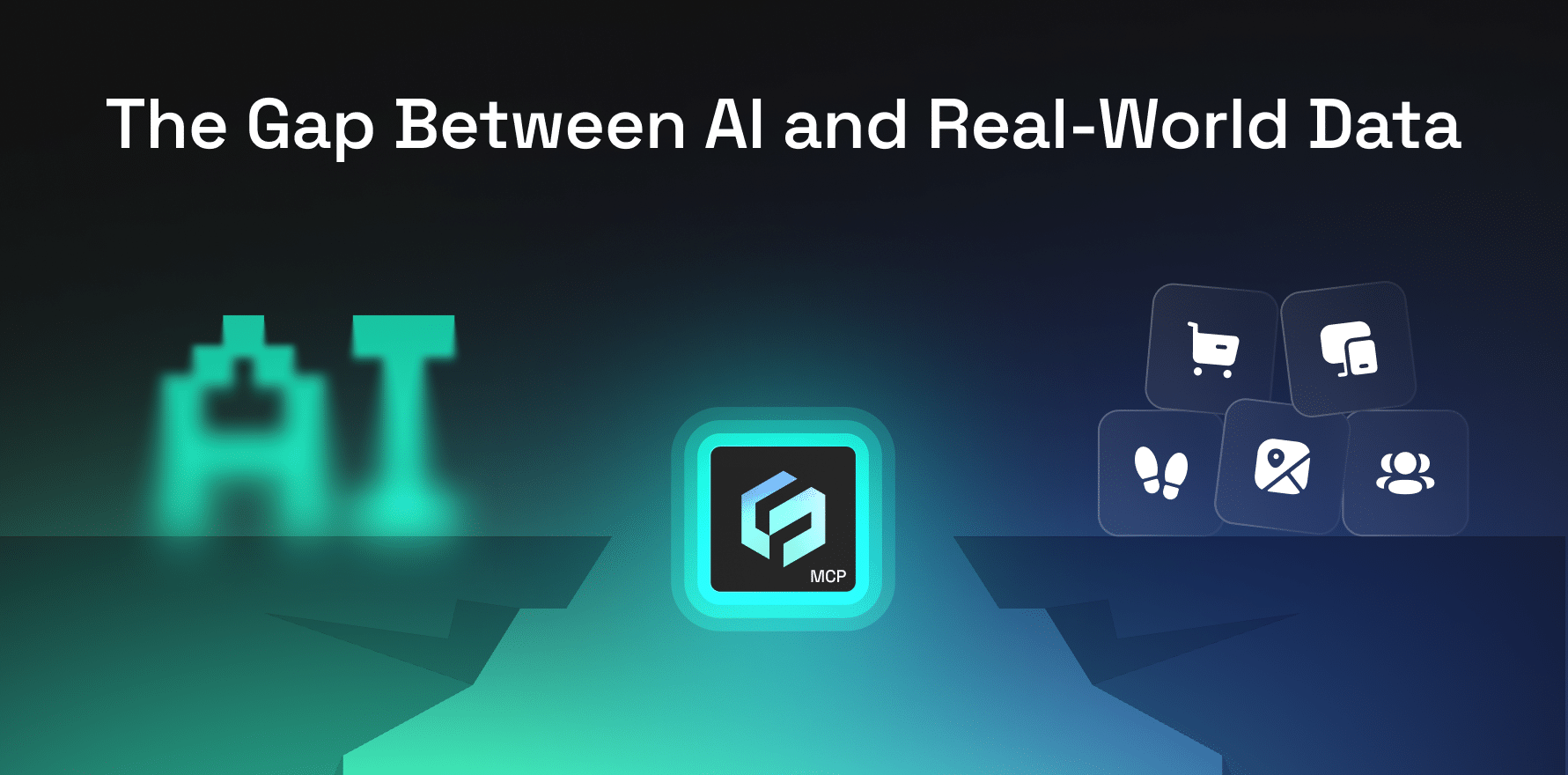
This creates a gap between AI outputs and real-world conditions. Decisions around forecasting, marketing, and expansion are often influenced by how people move through places, which locations are active, and where relevant audiences are present. Without access to this context, AI systems can miss shifts in demand and produce insights that lag behind reality. Closing this gap requires connecting AI with real-world data in a way that is both accessible and usable, which is where approaches like Factori MCP begin to play a role.
Key Takeaway
- AI systems can generate strong insights from historical and internal data, but they often lack visibility into what is changing in the real world right now.
- Real-world signals such as mobility, visit activity, audience presence, competitor density, and trade-area behavior give AI more current context for decisions.
- Factori MCP connects AI agents with real-world data so location-sensitive questions can be answered using current market conditions rather than static assumptions.
- Natural-language access reduces the need for manual exports, complex queries, and separate data-preparation workflows, helping teams move from question to insight faster.
- Combining AI with real-world data can improve forecasting, marketing, expansion planning, market analysis, and overall decision confidence.
What AI Does Well and Where It Falls Short
AI systems are highly effective at working with structured, historical, and internal data. They can identify patterns, detect trends, and generate predictions based on past behavior. This makes them valuable for use cases like demand forecasting, customer segmentation, and performance analysis.
However, these strengths also highlight a key limitation. AI models are only as good as the data they are trained on and the inputs they receive. When that data lacks visibility into real-world activity, the outputs can become disconnected from what is actually happening on the ground.
In practice, this means AI systems often lack awareness of how people move through different locations, which locations are seeing higher activity, and where relevant audiences are present at any given time. This creates a disconnect between model inputs and real-world conditions, especially in environments where change happens continuously.
Why This Gap Matters for Business Decisions
This gap is not just a technical limitation. It directly affects how decisions perform in real-world scenarios.
In forecasting, models may fail to capture short-term shifts in demand because they are based on historical trends rather than current activity. In marketing, campaigns may not align with where relevant audiences are actually present, reducing effectiveness. In expansion and location planning, decisions may rely on incomplete context, leading to missed opportunities or increased risk.
The challenge is not only the absence of real-world data, but also how difficult it has traditionally been to access and use it. Real-world signals are often fragmented across multiple sources, making it hard to get a unified view. Data is frequently delivered through static exports or periodic updates, which introduces delays. In many cases, significant time and technical effort is required to prepare the data before it can be used.
As a result, even when real-world data exists, it is not always available in a form that can be easily integrated into AI workflows. This limits its impact on decision-making.
Closing the Gap with Factori real-world data MCP
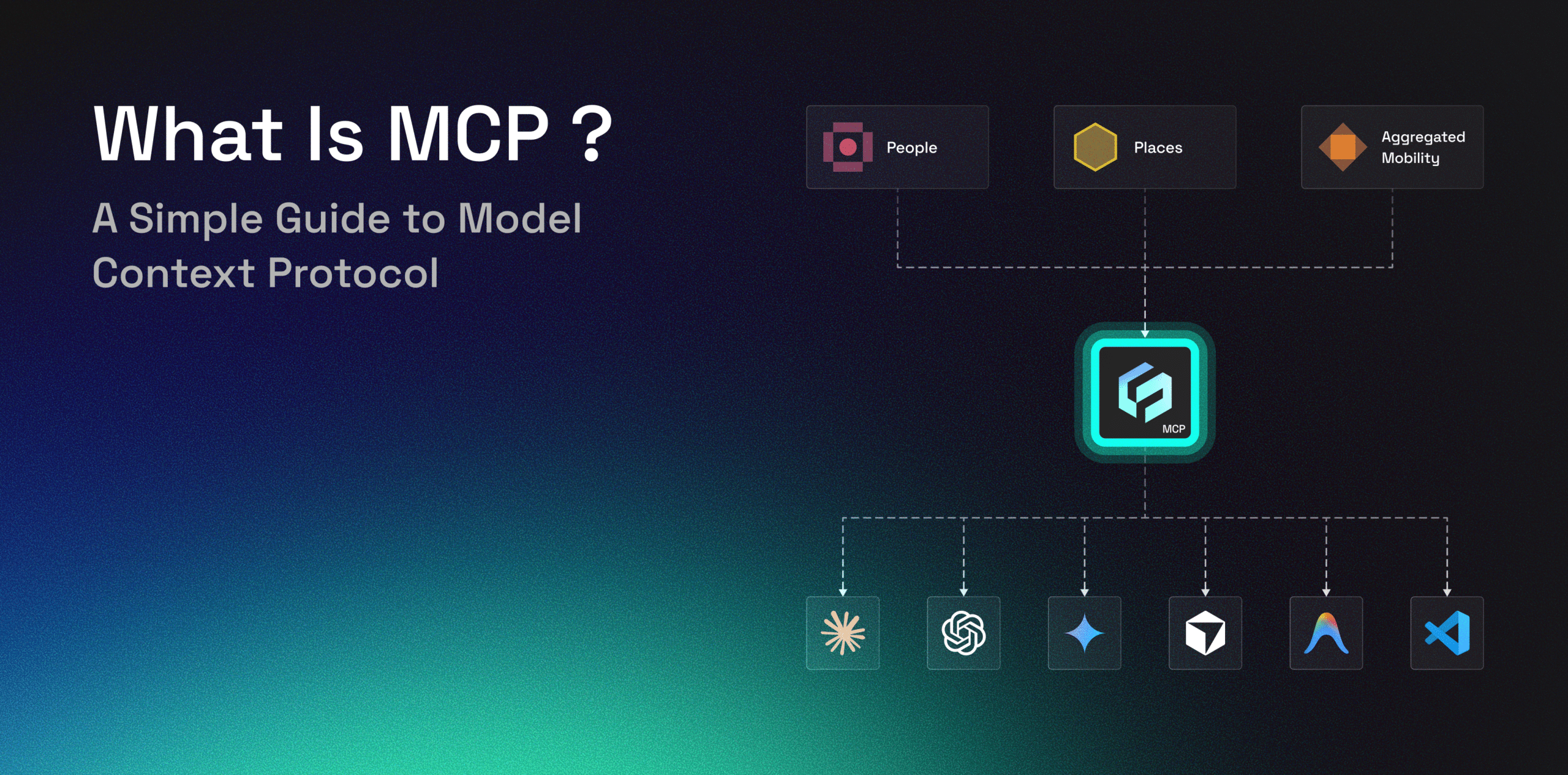
Addressing this gap requires a way to connect AI systems directly with real-world data. Factori MCP is designed to enable this by acting as a connector between AI agents and continuously updated external signals.
It allows AI systems to access context related to how people move through places, which locations are active, and how different catchments and markets behave. This can include near real-time market growth trends, demand patterns, audience presence, competitor density, trade area behavior, visit activity, dwell patterns, mobility flows, local business distribution, and whitespace opportunities. Instead of relying only on internal or historical datasets, models can incorporate real-world signals into their outputs.
This changes how AI responds to business questions. Queries around where to expand, how a location is performing, which audiences are present, how trade areas behave, where demand is growing, how competitors are distributed, which markets are underserved, where campaigns should be activated, how footfall is changing, and which sites have stronger growth potential can be answered using current context rather than assumptions or delayed data.
By bringing these signals into AI workflows, Factori MCP helps reduce the gap between model outputs and real-world conditions, making insights more relevant to actual market and people behavior in the physical world.

Making Real-World Data Easier to Use
Access to data is only one part of the problem. The other challenge is usability. Even when real-world data is available, it often requires complex workflows to access and interpret.
Factori MCP simplifies this by making real-world data easier to work with inside AI systems. Instead of relying on advanced analytics tools, technical query building, or data engineering pipelines, users can interact with the data directly through natural language.
Teams can ask questions in plain language and receive structured answers within the same AI interface. This reduces the need for manual data preparation and makes real-world insights more accessible across business, strategy, and operational teams.
It also integrates directly with AI agents, allowing them to use real-world data as part of their reasoning process. This makes it possible to move from a question to an answer quickly, without switching between multiple tools or workflows.
Business Impact of Closing the Gap
When AI systems can access and use real-world data effectively, the impact becomes visible across multiple areas of the business.
- Improved forecasting accuracy
Predictions reflect actual activity patterns instead of relying only on historical trends. - More effective marketing
Campaigns align with where relevant audiences are present, improving targeting and performance. - Better expansion and location decisions
Decisions are backed by clearer visibility into demand, competition, and market conditions. - Faster time to insight
Teams can move from question to answer quickly without waiting for data preparation or manual analysis. - More responsive decision-making
Faster insights enable quicker adjustments to strategy and execution. - Reduced decision risk
Clearer visibility into market behavior reduces reliance on incomplete or outdated information. - More consistent outcomes
Decisions are better aligned with real-world conditions, leading to more reliable performance over time.
Conclusion
The gap between AI and real-world data is not a limitation of the technology itself, but of the data it can access. As long as AI systems rely only on static or internal datasets, their ability to reflect real-world conditions will remain constrained.
Connecting AI with real-world data changes this dynamic. It allows systems to move from analyzing what has already happened to understanding what is happening now. This shift makes AI more useful for decision-making, not just analysis.
Approaches like Factori MCP make this connection possible by bringing real-world context directly into AI workflows. As this becomes more common, organizations that can combine AI capabilities with real-world awareness will be better positioned to make faster, more accurate, and more confident decisions.
FAQs
What is the gap between AI and real-world data?
It refers to the difference between what AI systems can analyze using historical or internal data and what is actually happening in real-world environments at any given time.
Why does AI struggle with real-world context?
Most AI models rely on structured and historical datasets, which do not always capture dynamic changes in how people behave or how locations perform.
How does real-world data improve AI outputs?
It provides current context, allowing AI systems to generate insights that are more relevant to present conditions rather than past trends.
What is Factori MCP?
Factori MCP is a connector that allows AI agents to access real-world data signals within their workflows, making it easier to use external context in decision-making.
Who benefits most from this approach?
Businesses that rely on location-based decisions, such as retail, real estate, marketing, and finance, benefit the most from combining AI with real-world data.