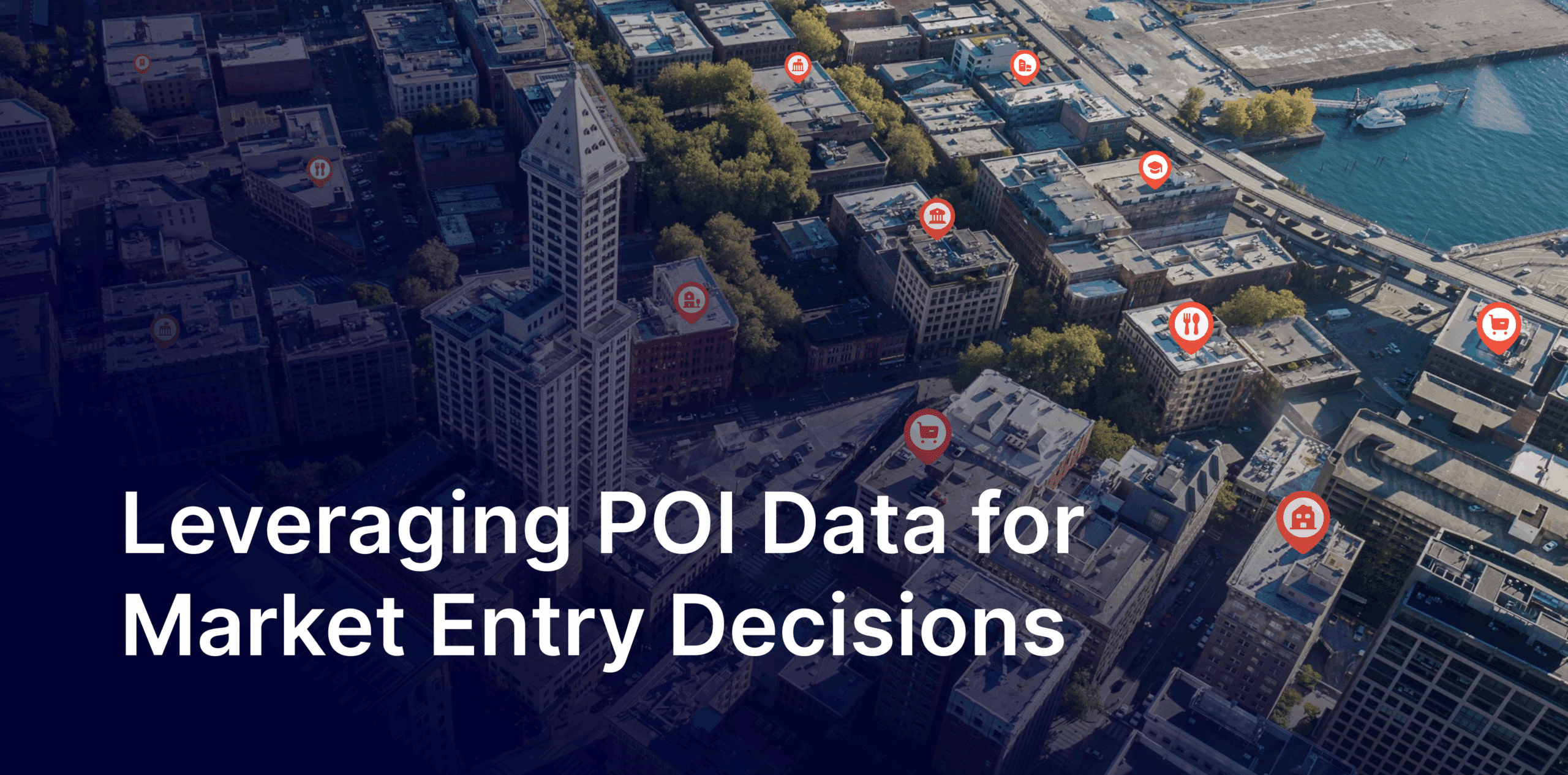

Point of Interest (POI) data helps businesses and public-sector organizations understand what places exist, where they are located, and how they relate to surrounding areas.
By analyzing specific locations and the data connected to them, organizations can improve planning, marketing, operations, and customer engagement.
Below are some of the key applications of POI data across industries.
Key Takeaway
- POI data helps businesses and public-sector organizations understand what places exist, where they are located, and what surrounds them.
- It supports decisions across marketing, retail, financial services, public planning, site selection, and advertising.
- Marketers can use POI data for geofencing, geo-targeted advertising, campaign planning, and audience activation.
- Retailers can use POI data to compare markets, evaluate store locations, and understand nearby competitors.
- Financial institutions can use POI data for branch planning, local market assessment, and added location context for fraud detection.
- Public-sector teams can use POI data to plan infrastructure, identify service gaps, and support emergency response.
- POI data becomes more useful when combined with mobility and foot traffic data because it shows not only what places exist, but how people interact with them.
- Site selection teams can use POI data to evaluate competitors, complementary businesses, audience fit, and local market conditions.
- OOH and DOOH teams can use POI data to identify relevant advertising locations near high-traffic businesses, venues, and audience activity.
- The main value of POI data is that it adds context around a location, helping organizations understand the surrounding market before making a decision.
1. Marketing and Advertising
Location-Specific Targeting
Businesses can use POI data to support location-based advertising.
By understanding where relevant places are located, marketers can create campaigns for consumers who are near specific stores, venues, or areas. This can make advertising more relevant to the audience.
Behavioral Insights
POI data can also be combined with mobility patterns to understand how people interact with different locations.
These insights can help businesses understand customer preferences, common visit patterns, and the types of places people engage with.
Competitive Analysis
Businesses can study the location and presence of competitors using POI data.
This can help teams understand where competitors operate, how dense a market is, and where there may be gaps or opportunities.
Visual suggestion: Show a map with a brand location, nearby competitors, and surrounding customer activity.
2. Retail
Market Analysis
Retailers use POI data to understand the potential of different markets.
They can study nearby businesses, customer activity, local demand, and the mix of places in a specific area. This can help identify growth opportunities and compare different markets.
Store Management
POI data can support better store location decisions.
Retailers can evaluate the surrounding area, nearby businesses, and customer activity before choosing where to open or expand.
This helps them identify locations with stronger potential for foot traffic and customer demand.
Competitive Intelligence
POI data also helps retailers understand their competitive environment.
By mapping competitor locations and nearby businesses, retailers can compare market coverage and identify areas that may be underserved.
3. Financial Services
Fraud Detection
POI data can add location context to financial transactions.
For example, financial institutions can compare transaction locations with known business locations to identify unusual activity. These signals can support existing fraud detection systems.
Branch Management
Banks and financial institutions can use POI data when planning branch locations.
They can study nearby businesses, local demand, population activity, and accessibility before opening, relocating, or closing branches.
Market Assessment
POI data can also help financial services firms understand local markets.
By studying business density, commercial activity, and nearby services, firms can compare areas and make better decisions about investments and service expansion.
Visual suggestion: Show potential bank branch locations alongside business density and nearby services.
4. Public Sector
Infrastructure Planning
Governments can use POI data to understand where important services and facilities are located.
This can support planning for roads, transport systems, utilities, and other public infrastructure.
Emergency Response Planning
POI data can help identify critical locations such as hospitals, shelters, transport hubs, and emergency facilities.
Mapping these locations can support disaster preparedness, evacuation planning, and faster emergency response.
Community Development
Governments can also use POI data to understand where services are available and where gaps exist.
This can help planners identify areas that may need better access to healthcare, education, transport, or other public services.
Top Use Cases for POI Data
1. Geofencing
Geofencing creates virtual boundaries around physical locations.
Businesses can use these boundaries to trigger actions when users enter or leave a specific area. Common applications include location-based marketing, alerts, and customer engagement.
For example, a retailer could create a geofence around a store or shopping area and use it to support location-relevant campaigns.
2. Geo-Targeted Advertising
One of the most common applications of POI data is location-based advertising.
Businesses can use location insights to reach audiences based on their proximity to relevant places. This can make campaigns more timely and relevant.
POI data helps marketers understand which locations matter to a campaign and where their target audience is more likely to be present.
Discover how Factori’s audience targeting solutions help businesses use location-based insights to reach relevant audiences.
3. Marketing Campaign Planning
POI data can help marketers decide where campaigns should run.
By understanding the types of places in an area and the activity around them, businesses can identify locations that are more relevant to their target audience.
This can support decisions around advertising placement, campaign coverage, and local market strategy.
Explore Factori’s marketing planning solution to support campaigns with POI-driven location insights.
Visual suggestion: Show a city map with selected POIs and recommended campaign zones.
4. Traffic Management
Cities and transport planners can use POI data to understand where traffic demand is likely to be higher.
Busy locations such as shopping centers, business districts, transport hubs, and entertainment venues can create predictable traffic patterns.
By analyzing these locations alongside movement and congestion data, planners can improve route planning and traffic management.
This can help reduce congestion and improve the overall travel experience.
5. Site Selection
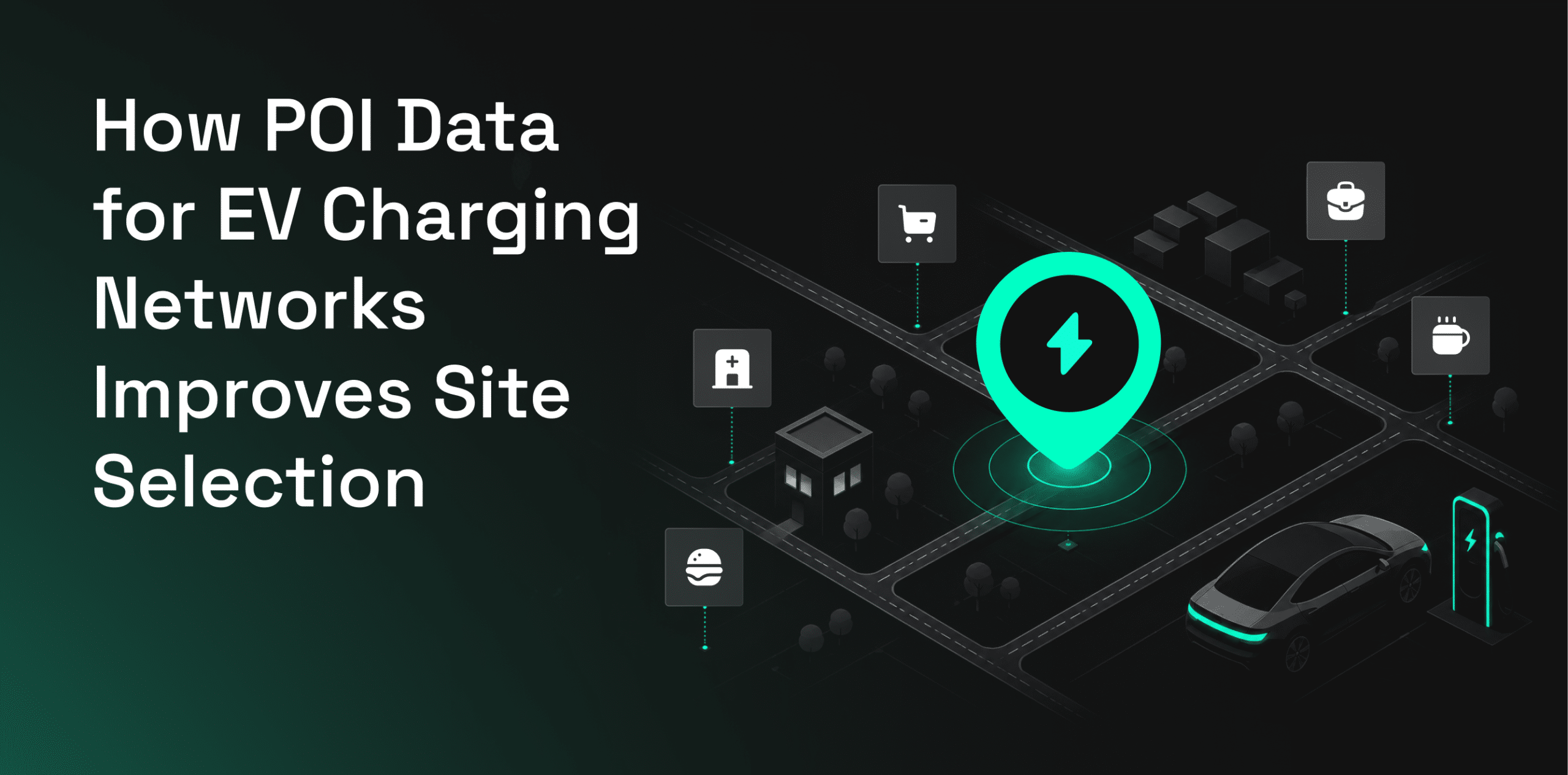
POI data plays an important role in site selection.
Businesses can study nearby competitors, complementary businesses, customer activity, and other local factors before choosing a new location.
For example, a retailer may want to know:
- Which competitors are nearby
- What types of businesses surround the site
- Whether the area attracts the right audience
- How the location compares with other candidate sites
These insights help businesses compare locations before committing to expansion.
Factori’s foot traffic data can add visit and movement signals to POI analysis and show how people actually interact with different areas.
6. OOH and DOOH Campaign Planning
POI data is also useful for Out-of-Home (OOH) and Digital Out-of-Home (DOOH) advertising.
Marketers can identify areas with relevant businesses, venues, and customer activity before selecting billboard or screen locations.
This can help campaigns reach audiences in places that are more closely connected to their interests or behavior.
When combined with traffic and mobility data, POI data can also help marketers compare potential advertising locations and improve campaign planning.
Visual suggestion: Map OOH screens alongside high-traffic POIs and nearby audience activity.
Why POI Data Matters
POI data adds real-world context to business decisions.
It helps organizations answer practical questions such as:
- What businesses and facilities exist in an area?
- Where are competitors located?
- Which neighborhoods have the right mix of places?
- Where should a new store or branch be opened?
- Which locations are most relevant for advertising?
- Where are important public services located?
Without accurate place data, businesses may make decisions using incomplete information.
POI data helps turn a location on a map into a more detailed picture of the surrounding market.
Conclusion
Point of Interest data supports decision-making across marketing, retail, financial services, public planning, site selection, and advertising.
It helps organizations understand the places that shape customer behavior, market activity, and local demand.
As location analytics become more advanced, POI data will continue to play an important role in helping businesses and public-sector organizations understand the physical world around them.
Explore Factori’s POI data to understand businesses, places, and locations across markets.