Retailers collect large amounts of sales, inventory, customer, and campaign data.
But internal data alone cannot explain every change in store performance, market demand, or customer behavior.
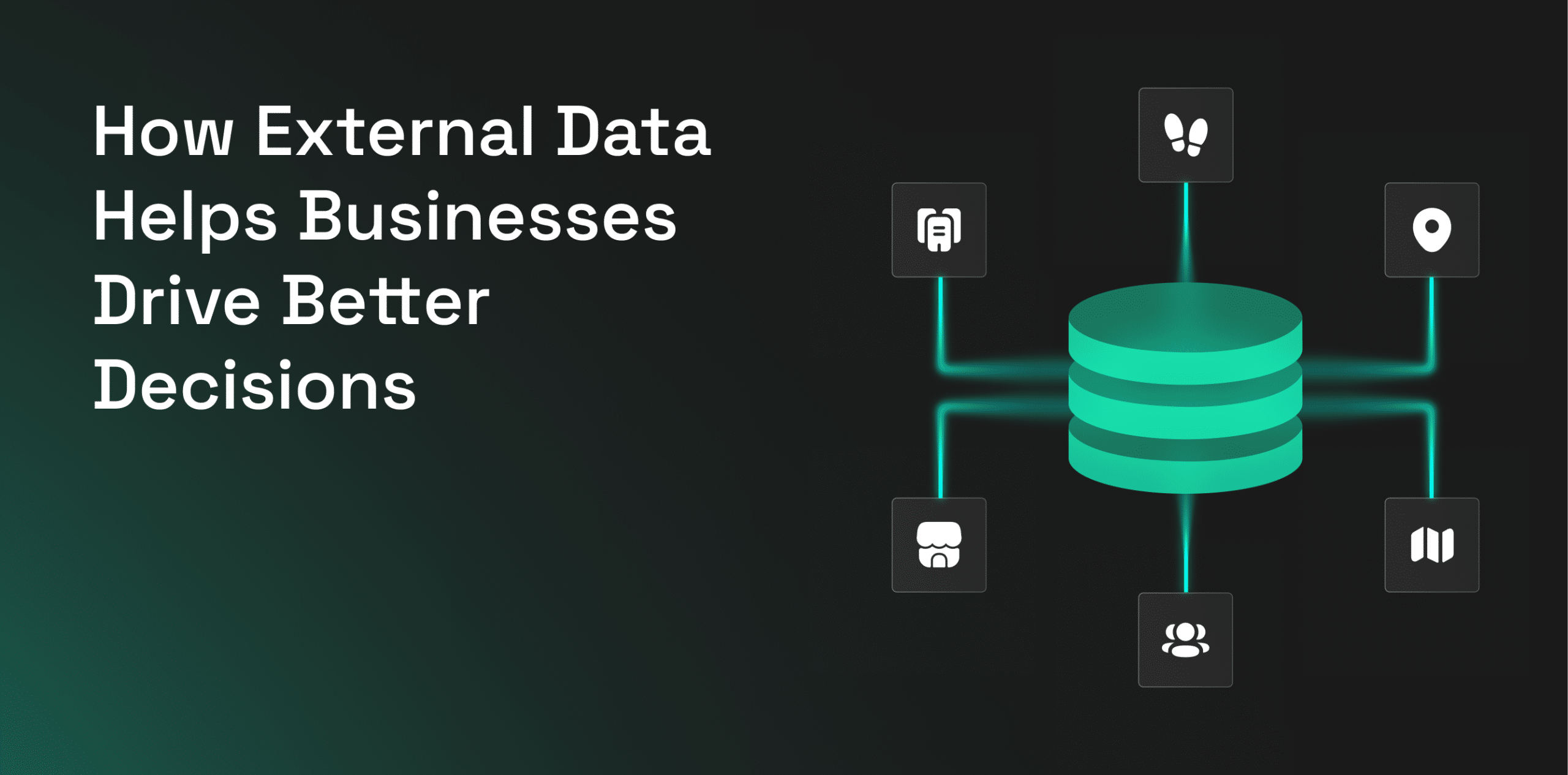
Retail decisions become stronger when internal business data is combined with external signals. These may include mobility patterns, visit trends, competitor locations, demographic attributes, and local market conditions.
Together, these signals give retailers more context for decisions across stores, markets, marketing, and demand planning.
What Are Data-Driven Retail Decisions?
Data-driven retail decisions use measurable evidence to guide business actions.
Instead of relying mainly on intuition, past habits, or broad assumptions, teams use relevant data to compare options and understand likely outcomes.
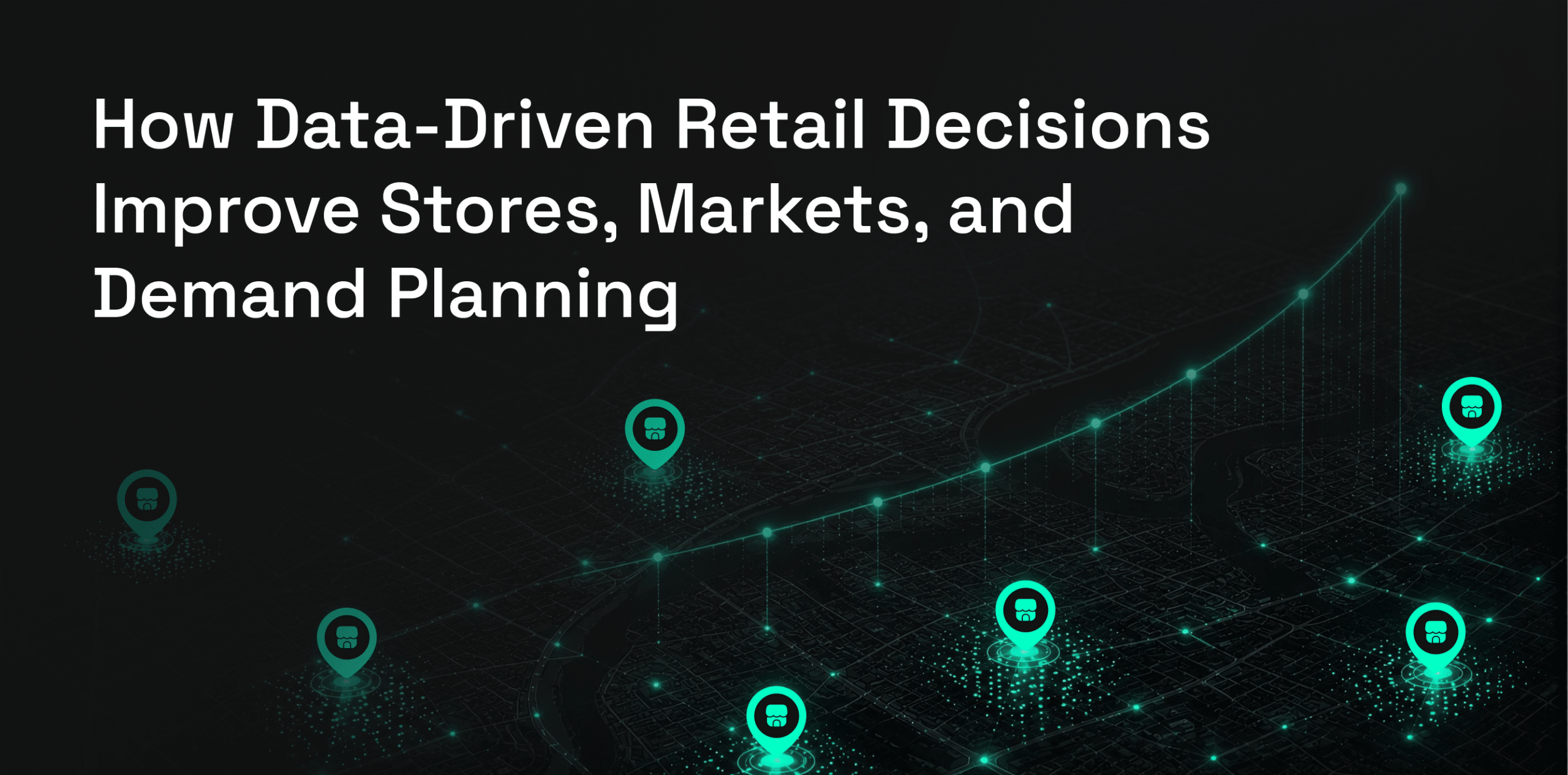
Retailers can use data to support decisions around store locations, inventory, demand forecasting, customer targeting, expansion, store performance, and campaign planning.
For example, a retailer evaluating a new market may compare sales potential, demographics, competitor density, foot traffic, and nearby businesses before selecting a location.
The goal is not to remove human judgment.
It is to give decision-makers stronger evidence and reduce uncertainty.
Why Internal Retail Data Is Not Enough
Internal retail data shows what is happening inside the business.
Sales records reveal which products are performing. Inventory data shows where stock is available or running low. Loyalty data helps retailers understand existing customers.
But this data may not explain why performance changed.
A store may experience lower sales because foot traffic has fallen. A new competitor may have opened nearby. Customer movement may have shifted to another part of the market.
These changes may not appear in transaction or CRM data.
External data adds the market context needed to explain them.
| Internal Retail Data | External Retail Data |
|---|---|
| Sales and transactions | Mobility and visit patterns |
| Inventory levels | Local demand signals |
| Loyalty records | Demographic and audience attributes |
| Store performance | Competitor and POI density |
| Campaign results | Real-world movement patterns |
Combining both helps retailers move from knowing what happened to understanding why it happened.
What Data Do Retailers Need?
Different decisions require different data.
| Data Category | What It Reveals | Decisions Supported |
|---|---|---|
| Sales and inventory data | Product and store performance | Replenishment and assortment |
| Mobility and visit data | Foot traffic, frequency, and movement | Store performance and demand planning |
| Places and POI data | Competitors and surrounding businesses | Site selection and market analysis |
| People and audience data | Customer characteristics and interests | Targeting and market prioritization |
| Market and economic data | Local commercial conditions | Expansion and investment planning |
The goal is not to use every available dataset.
Teams should choose the signals that are most relevant to the decision.
A site selection team may need foot traffic, competitors, POIs, and customer fit. A demand planning team may care more about historical sales, visits, and changes in local market activity.
Five Data-Driven Retail Decisions Retailers Can Improve
1. Selecting Store Locations
Retailers can compare potential sites using more than rent, visibility, and population.
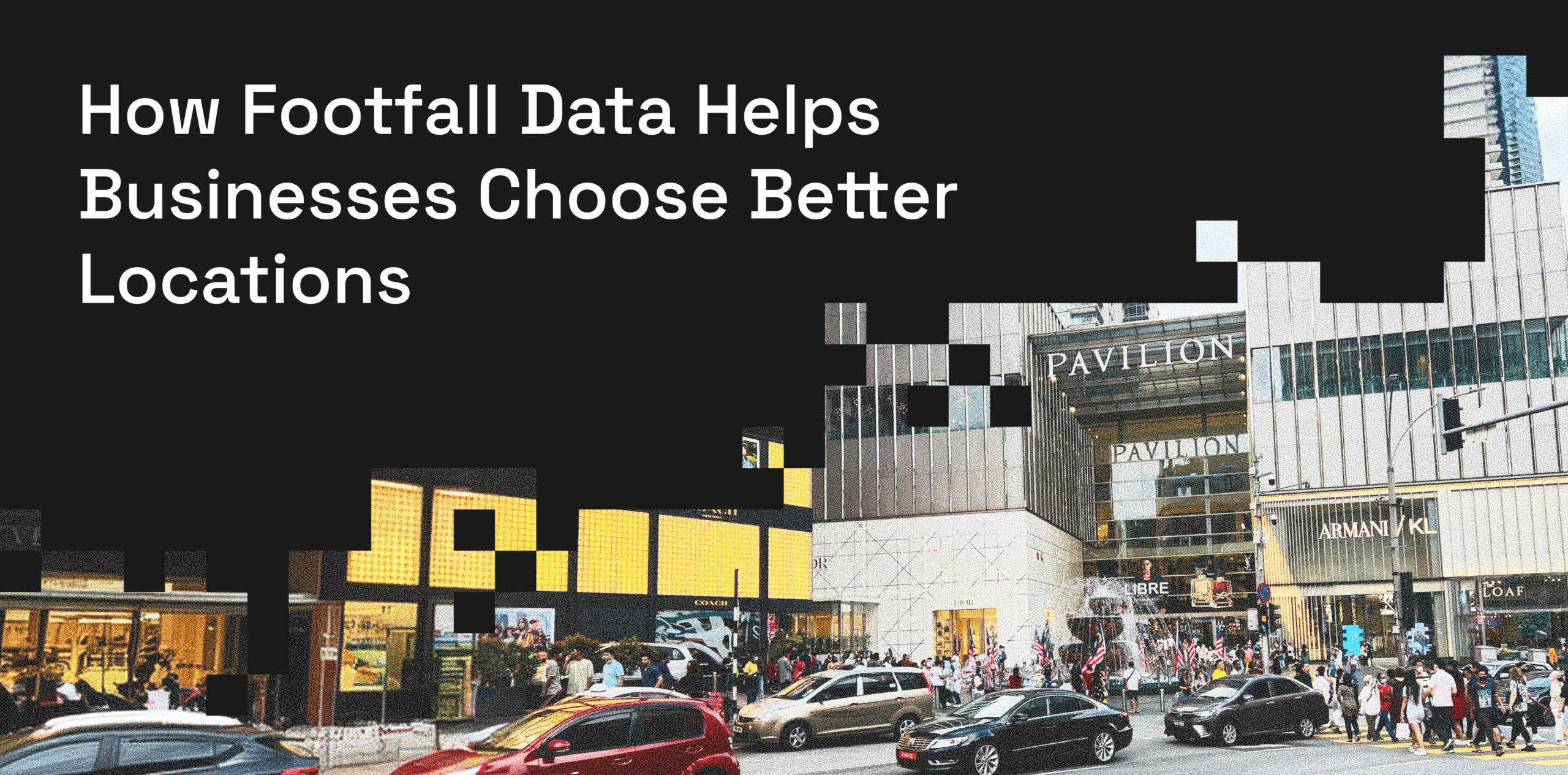
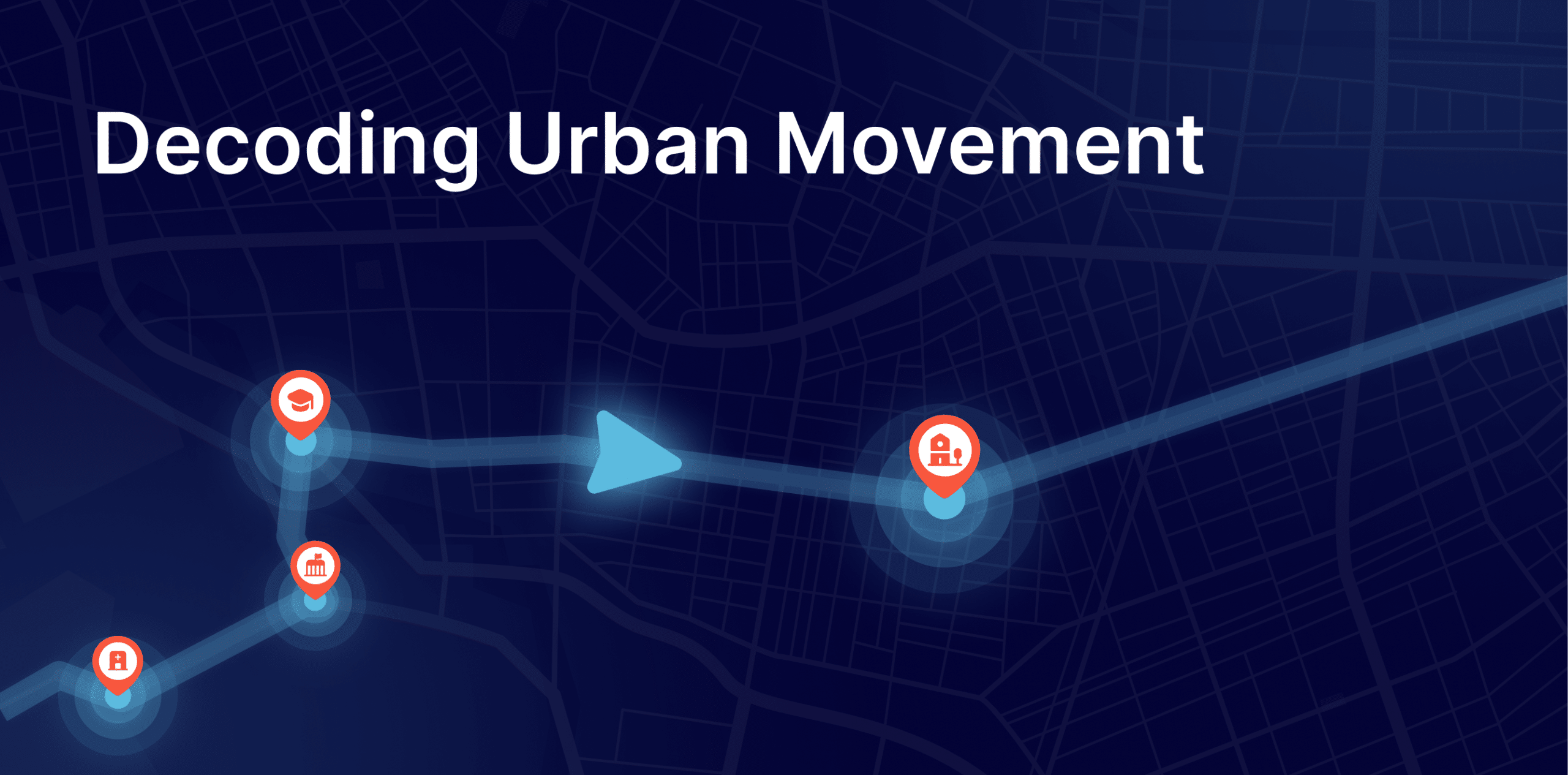
Mobility data can show how people move through an area. Visit data can reveal how often nearby locations attract customers.
Places data can show competitors, complementary businesses, and retail clusters.
People and market data can then help teams understand whether the surrounding area contains the right customers.
Together, these signals can reduce the risk of choosing a site with weak demand or excessive competition.
2. Evaluating Store Performance
Sales figures do not always explain why a store is performing poorly.
One store may have low sales because it receives fewer visitors than similar locations.
Another may have strong foot traffic but weak conversion. In that case, the problem may be store execution rather than market demand.
Visit frequency, repeat visits, trade area behavior, and competitor activity can help retailers separate different causes of underperformance.
These may include low demand, poor accessibility, high competitive pressure, changing movement patterns, or in-store problems.
This gives teams a stronger basis for deciding what action to take.
3. Forecasting Store-Level Demand
Many demand forecasts depend heavily on historical sales.
Past sales are useful, but they may not capture recent changes in the local market.
Retailers can add signals such as foot traffic changes, visit frequency, local commercial activity, customer movement, and nearby business activity.
These inputs can reveal shifts in demand before they become fully visible in sales data.
Better demand forecasts can support inventory allocation and help reduce stockouts or excess stock.
4. Planning Retail Marketing
Data can also improve retail campaign planning.
Retailers can identify markets with strong customer concentration, stores where visits are declining, and areas where competitors attract more traffic.
Audience and mobility data can help teams decide where campaigns should run, which customer groups to prioritize, and which stores may need more marketing support.
Behavioral signals can also help measure whether campaigns were followed by changes in store visits or other real-world activity.
This connects marketing decisions more closely with customer behavior.
5. Prioritizing Markets for Expansion
A large population does not automatically make a city or region a strong expansion market.
Retailers need to understand customer fit, demand, competition, and whether there is room for network growth.
A stronger market assessment may consider customer profiles, competitor density, foot traffic, existing store overlap, local commercial activity, and spending potential.
This allows retailers to compare markets using the same criteria and focus investment on stronger opportunities.
A Practical Framework for Data-Driven Retail Decision-Making
A simple five-step process can help teams turn data into action.
1. Define the Business Question
Start with a specific decision.
For example: Where should we open the next store? Which locations need additional marketing? How much inventory should each store receive?
A clear question prevents teams from analyzing data without a useful outcome.
2. Select Relevant Data
Choose the internal and external signals most closely linked to the decision.
Do not add data simply because it is available.
3. Normalize the Data
Data from different sources needs to be aligned before comparison.
Teams may need to match data by store, geographic area, trade area, market, or time period.
Consistent definitions help prevent misleading comparisons.
4. Make the Decision
Use the analysis to rank options, identify risks, or create a forecast.
The output should connect directly to the original business question.
5. Measure the Outcome
After the decision is made, measure what happened.
The KPI may be sales, visits, conversion, forecast accuracy, inventory availability, or another business outcome.
This creates a feedback loop that improves future decisions.
For forecasting, retailers should also make sure that every input was available before the forecast date.
This prevents data leakage and gives a more realistic view of model performance.
Common Barriers to Better Retail Decisions
Retailers often have enough data but struggle to turn it into useful decisions.
| Barrier | Practical Response |
|---|---|
| Data silos | Connect datasets through common location and time fields |
| Inconsistent geographic levels | Standardize stores, trade areas, and markets |
| Too many dashboards | Start with one decision and one measurable KPI |
| Stale market context | Use regularly refreshed external data |
| Privacy concerns | Use aggregated and privacy-aware signals |
| Unclear business impact | Compare results against a baseline |
The goal should not be to create another dashboard.
It should be to improve the quality or speed of a specific retail decision.
How Factori Supports Data-Driven Retail Decisions
Factori provides privacy-aware real-world datasets and APIs that help retailers understand people, places, movement, and market activity.
Retail teams can combine Factori’s mobility, visit intelligence, Places, People, audience, market, and economic data with internal sales and store information.
These signals can support site selection, trade area analysis, demand forecasting, customer targeting, store benchmarking, and market expansion.
Factori’s platform and APIs also make it easier to bring external data into existing analytics and decision workflows.
Conclusion
Data-driven retail decisions require more than internal sales reports and historical dashboards.
Internal data shows what happened inside the business. External signals add context around customer movement, competition, local demand, and changing market conditions.
By combining both, retailers can make stronger decisions across stores, inventory, marketing, forecasting, and expansion.
The goal is not to use more data.
It is to use the right data to make a specific decision better.
FAQs
What Are Examples of Data-Driven Retail Decisions?
Examples include choosing store locations, allocating inventory, forecasting demand, evaluating store performance, targeting customers, and prioritizing expansion markets.
What Data Do Retailers Use to Make Decisions?
Retailers commonly use sales, inventory, customer, mobility, visit, Places, demographic, market, and economic data.
Different decisions require different combinations of these datasets.
How Does Location Data Improve Retail Decision-Making?
Location data shows how customers move, which places they visit, where competitors operate, and how trade areas differ.
This provides context that sales or CRM data alone may not show.
How Can Retailers Combine Internal and External Data?
Retailers can connect datasets using common fields such as store location, trade area, market, time period, or geographic coordinates.
The data should be normalized before it is compared.
How Should Retailers Measure the Impact of Data-Driven Decisions?
Retailers should compare results against a baseline.
Useful KPIs may include sales growth, foot traffic, conversion, forecast accuracy, stock availability, or the time needed to evaluate a site.