Most marketers can describe the people they want to reach. They might want high-income homeowners in Atlanta, frequent travelers in New York, or consumers who visit premium fitness locations.
The harder part is turning that description into an audience that can actually be used. How many people match? Where are they concentrated? Which attributes matter? And is the final audience large enough and reachable enough for the campaign?
People Data helps answer those questions by adding demographic, household, financial, lifestyle, work, geographic, and behavioral context to audience planning.
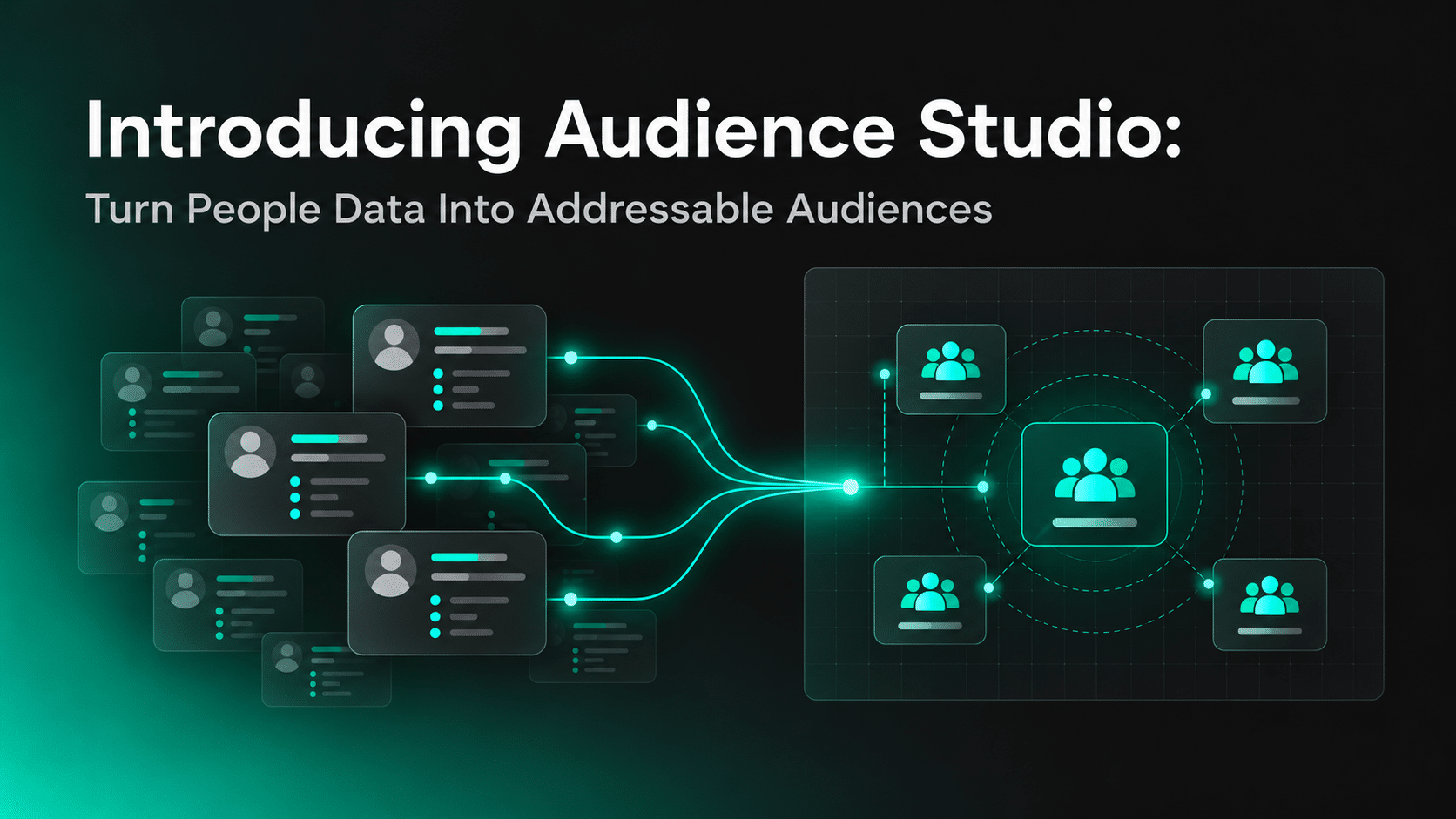
Factori Audience Studio puts that data into a practical workflow. Marketers can describe an audience, refine it using People Data, review audience size, understand geographic concentration, and save the segment for downstream use.
Key Takeaway
- People Data helps turn a broad target audience into a measurable segment.
- Demographics alone rarely provide enough context for strong audience targeting.
- Audience size should be checked while the segment is being created, not after media buying begins.
- Geography and real-world visitation can add useful context to audience planning.
- Audience Studio helps marketers build, size, map, and refine audiences using People Data.
Start With the Audience Question, Not the Filters
Audience building often starts with demographic filters.
A marketer may choose age, income, gender, and geography, then treat the resulting group as the target audience.
But that can create an audience that is technically precise without answering the actual campaign question.
Start with the business objective instead.
For example:
“Reach affluent homeowners in Atlanta who fit a premium home-furnishing audience.”
That question can then be translated into criteria such as age, household income, home ownership, household structure, lifestyle attributes, geography, and reachability.
Audience Studio supports this process by allowing marketers to start with a plain-English description or structured filters.
The filters should support the audience hypothesis, not define it.
This is also where audience segmentation analysis becomes important. A segment should be different enough to justify a change in targeting, messaging, media allocation, or market strategy.
What People Data Adds to Audience Targeting
Age and income can help narrow an audience, but they rarely explain enough on their own.
Two consumers with similar demographics may live in different households, work in different industries, have different financial profiles, show different lifestyle characteristics, and interact with different physical places.
People Data adds those additional layers.
| Data layer | What it can help answer |
| Demographics | Who broadly fits the audience? |
| Household & family | What does the household look like? |
| Financial | What economic context surrounds the audience? |
| Work | What professional characteristics matter? |
| Lifestyle | What characteristics help differentiate the audience? |
| Geography | Where is the audience concentrated? |
| Visitation | Which physical places are relevant to the audience? |
| Reachability | How much of the audience can potentially be activated? |
Not every campaign needs every layer.
A strong segmentation process uses the attributes that can actually improve targeting, messaging, market prioritization, or media allocation.
Factori’s broader Audience Data guide explains how audience information can support profiling, segmentation, targeting, enrichment, and activation.
Build and Size the Audience Before Buying Media
Audience targeting always involves a trade-off between precision and scale.
Consider this sequence:
Atlanta residents
↓
Age 30–50
↓
Homeowners
↓
Household income above $100,000
↓
Selected household and lifestyle characteristics
The audience becomes more specific with every step.
It also becomes smaller.
A highly refined segment may look attractive but still be too limited for the intended channel or campaign budget.
This is why audience sizing should happen while the segment is being built.
Audience Studio allows marketers to refine criteria and review audience size during the process.
That creates a simple feedback loop:
Define → Size → Refine → Size Again
If the audience becomes too narrow, marketers can adjust the criteria before allocating media spend.
Factori’s guide to audience data targeting also covers how different audience signals can support campaign targeting.
First-Party Data and People Data Solve Different Problems
CRM, transaction, loyalty, website, and app data can provide detailed information about existing customer relationships.
They can help answer questions such as:
- Who purchased?
- Who responded to a campaign?
- Who renewed?
- Who visited the website?
- Who is already in the CRM?
That makes first-party data valuable.
But it may provide less context when a company wants to identify new prospects, evaluate a new market, or build an audience where a strong seed list does not yet exist.
For example, a retailer entering a new city may have limited local customer data.
People Data can help define the audience before a meaningful first-party base exists.
The retailer could build a segment around relevant demographic, household, financial, lifestyle, and geographic criteria, then evaluate its size and distribution.
People Data should therefore complement first-party data rather than replace it.
When known customer signals are fragmented across systems and channels, an identity graph can also support more consistent audience understanding.
Where the Audience Is Can Matter as Much as Who It Is
An audience count can hide important geographic differences.
Imagine two markets each contain 50,000 people matching the same target profile.
In one market, those consumers may be concentrated in a handful of neighborhoods. In the other, they may be spread across an entire metro area.
Those patterns could lead to different media strategies.
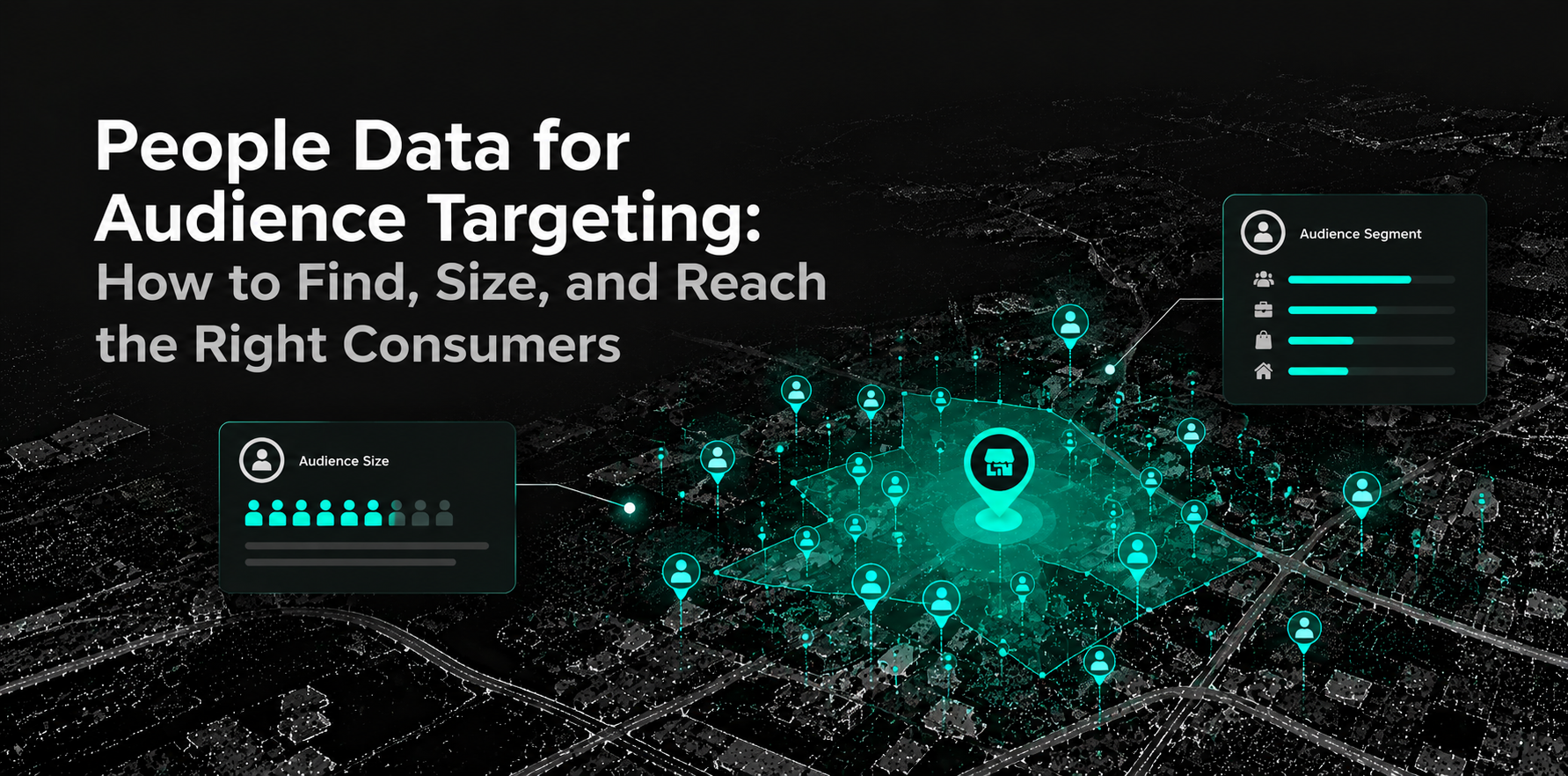
Audience Studio adds a geographic view so marketers can see where matching audiences are concentrated rather than relying only on a total count.
That can support decisions around:
- local media
- OOH
- regional campaigns
- store launches
- sales territories
- market prioritization
The map is useful when geography changes the decision, not simply because it provides another visualization.
Residents and Visitors Are Different Audience Strategies
Not every useful audience should start with where people live.
For some campaigns, the more useful question is:
Who visits a particular place?
A resident audience starts with people associated with a defined geography.
It can be useful for local acquisition, regional targeting, market expansion, or service-area campaigns.
A visitor audience starts with activity around a selected place or location.
It can provide useful context for competitor audiences, retail campaigns, destination marketing, and location-driven targeting.
The distinction matters.
Residents answer: Who lives here?
Visitors answer: Who shows up here?
Audience Studio can support both approaches and then refine those audiences using relevant People Data attributes.
Factori’s work on customer shopping behavior also shows why combining audience characteristics with real-world location context can improve market understanding.
Audience Size Is Only Part of the Decision
A large audience is not automatically a strong audience.
A small audience is not automatically better either.
Suppose two definitions produce:
Audience A: 400,000 people
Broad demographic fit, weak lifestyle relevance.
Audience B: 90,000 people
Stronger demographic, household, and lifestyle fit.
Audience B may appear more attractive, but the decision still depends on the channel, geography, budget, and campaign objective.
This is why reach should be evaluated alongside audience quality.
The goal is to find an audience that is specific enough to matter but large enough to use.
Example: Building an Audience for a New Retail Market
Consider a premium home-furnishing brand planning a campaign around a new Atlanta location.
A broad audience might begin with:
Adults in Atlanta
That provides scale but limited targeting value.
A stronger resident audience could combine:
Atlanta + age 30–50 + homeowner + selected household-income range + household characteristics + relevant lifestyle criteria
Audience Studio can then help the team review the resulting audience size and geographic concentration.
If the audience is too broad, additional criteria can be added.
If it becomes too narrow, criteria can be relaxed.
The team could also create a second audience based on visitors associated with relevant furniture, home-improvement, or competing retail locations, then refine that group using People Data.
The resident audience helps answer:
Who in the market fits the intended customer profile?
The visitor audience adds context around:
Who is connected to relevant physical places?
Neither signal alone proves purchase intent. Together, they can provide stronger inputs for audience planning and testing.
What to Evaluate Before Using People Data for Audience Targeting
A provider offering hundreds of attributes is not automatically the best choice.
Buyers should evaluate whether the data supports the decisions they actually need to make.
Attribute relevance
Are the demographic, household, financial, lifestyle, work, geographic, or other characteristics required for the campaign available?
Coverage
Does the dataset provide strong coverage in the markets being targeted?
Freshness
How frequently are important attributes updated?
Some characteristics change slowly. Others may require more frequent refreshes.
Methodology
Which attributes are observed, modeled, inferred, or derived?
Modeled attributes can provide useful context, but they should not be treated as verified facts.
Audience sizing
Can marketers understand audience scale before activation?
This becomes especially important when several criteria are combined.
Geographic context
Can audiences be analyzed across markets and places rather than only as a national total?
Activation
Can the resulting segment move into existing campaign, CRM, or customer workflows?
Privacy and governance
Is the data handled in a privacy-safe and transparent way?
The NIST Privacy Framework provides a structured approach for identifying and managing privacy risks, while the FTC’s consumer privacy guidance outlines considerations for organizations handling consumer information.
More attributes do not automatically produce better targeting.
The important question is whether those attributes help the marketer make a better audience decision.
Where Audience Studio Fits
Factori Audience Studio helps marketers turn People Data into a practical audience workflow.
Teams can describe an audience, refine it using relevant People Data criteria, review its size and geographic distribution, then save the resulting segment for downstream use.
The workflow is simple:
Describe → Refine → Size → Map → Save → Activate
This helps marketers test whether an audience is too broad, too narrow, or concentrated in the wrong markets before committing campaign spend.
Conclusion
The value of People Data is not the number of attributes available.
It is whether those attributes help marketers decide who to reach, how narrowly to define the audience, where that audience is concentrated, and whether the segment has enough scale to use.
Factori Audience Studio helps turn that process into a practical workflow by connecting People Data with audience building, sizing, geographic analysis, and activation.
FAQs
What is the difference between People Data and audience data?
People Data provides attributes and context about groups of consumers, including demographic, household, financial, lifestyle, work, and geographic characteristics. Audience data refers more broadly to the information used to understand, segment, target, and activate specific audience groups.
Can People Data be combined with first-party customer data?
Yes. First-party data can provide strong signals about existing customer relationships, while external People Data can add broader demographic, household, geographic, financial, or lifestyle context.
How narrow should an audience segment be?
There is no universal threshold. A segment should be specific enough to reflect the campaign hypothesis while maintaining enough scale for the intended channel and budget.
What is the difference between estimated reach and addressable reach?
Estimated reach represents the broader population matching selected audience criteria. Addressable reach refers to the portion of that audience that can potentially be reached through available activation methods.
Can audience targeting use real-world visitation?
Yes. Aggregated visitation can add context around audiences associated with particular places or categories. It is most useful as one signal within a broader audience strategy rather than as proof of purchase intent.