Data plays a major role in financial services. Banks and financial institutions use it to understand risk, customers, markets, and business performance.
Mobility data adds another layer. It shows how people move across places and how activity changes across locations over time.
At Factori, mobility data helps financial institutions understand real-world movement, local economic activity, and changes in demand.
These insights can support branch planning, portfolio analysis, investment research, market monitoring, customer segmentation, and risk management.
You can also download a free sample of Factori’s mobility dataset to explore how real-world movement patterns can support financial decisions.
1. Risk Management and Credit Analysis
Mobility data can add market context to risk analysis.
For example, financial institutions can study aggregated foot traffic, business activity, and local economic patterns to understand how an area is performing.
A decline in visits across a commercial district may suggest weaker business activity. Rising movement around retail or office areas may point to stronger local demand.
These signals can support area-level risk assessment and portfolio monitoring.
Mobility data should be used as an additional market signal rather than as a direct measure of an individual borrower’s creditworthiness.
2. Optimizing Branch and ATM Locations
Branch and ATM performance depends heavily on location.
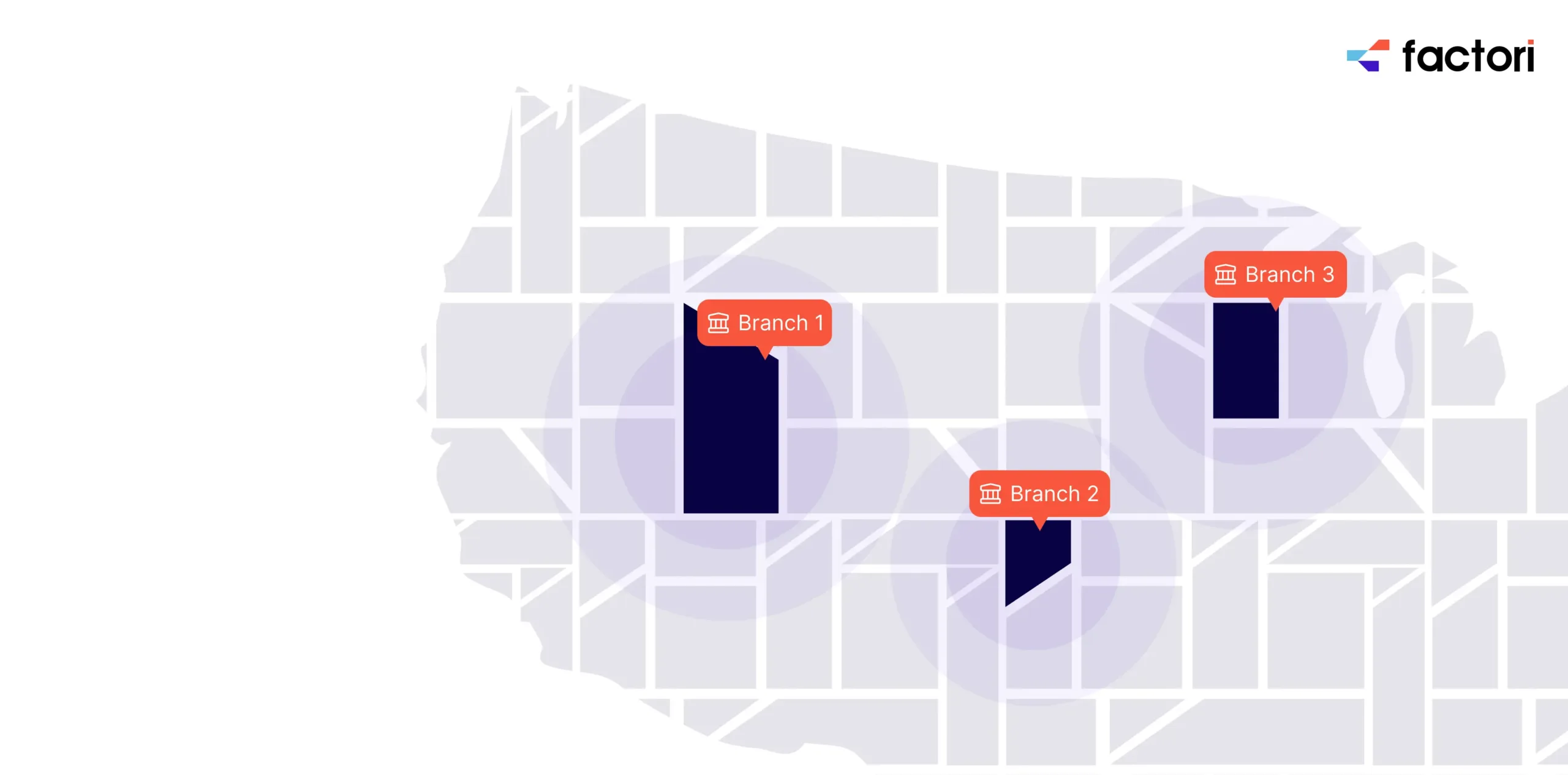
Banks need to understand where customers are active, how easy a location is to reach, and whether nearby demand is strong enough to support the site.
Mobility data can help teams analyze:
- Foot traffic
- Customer movement
- Nearby commercial activity
- Accessibility
- Surrounding demographics
- Competing branches and ATMs
For example, a bank planning a new branch can compare areas with strong movement, relevant customer segments, and high commercial activity.
This can improve access while reducing the risk of opening in a weak location.
3. Improving Investment Research
Mobility data can also support investment research.
Changes in real-world activity can provide additional context around local markets, sectors, and assets.
For example, rising foot traffic in a retail district may suggest improving consumer activity. A steady decline in visits may signal weaker local demand.
These signals can help investment teams understand market changes earlier.
Mobility data should not replace financial statements, economic data, or other investment research. It works best as an additional source of real-world context.
4. Tracking Real-Time Economic Activity
Traditional economic indicators can take time to update.
Mobility data can provide a more current view of activity across retail areas, restaurants, business districts, transport hubs, and entertainment locations.
Banks can use these patterns to monitor:
- Changes in consumer activity
- Regional recovery
- Business district performance
- Retail demand
- Travel and hospitality activity
For example, rising visits to shopping districts may suggest stronger consumer activity.
A sudden drop in movement may indicate disruption caused by an economic event, natural disaster, or local market change.
This gives financial institutions another signal to use alongside traditional economic indicators.
5. Supporting Fraud and Risk Monitoring
Mobility insights can support fraud and operational risk analysis when used in privacy-aware ways.
Rather than tracking individual movement histories, financial institutions can use aggregated location patterns to understand unusual activity across regions, merchant areas, or transaction environments.
For example, a sudden change in activity around a merchant cluster may help risk teams identify areas that need further review.
Mobility data should complement existing fraud systems rather than replace transaction-level controls, identity checks, or security processes.
6. Customer Segmentation and Market Targeting
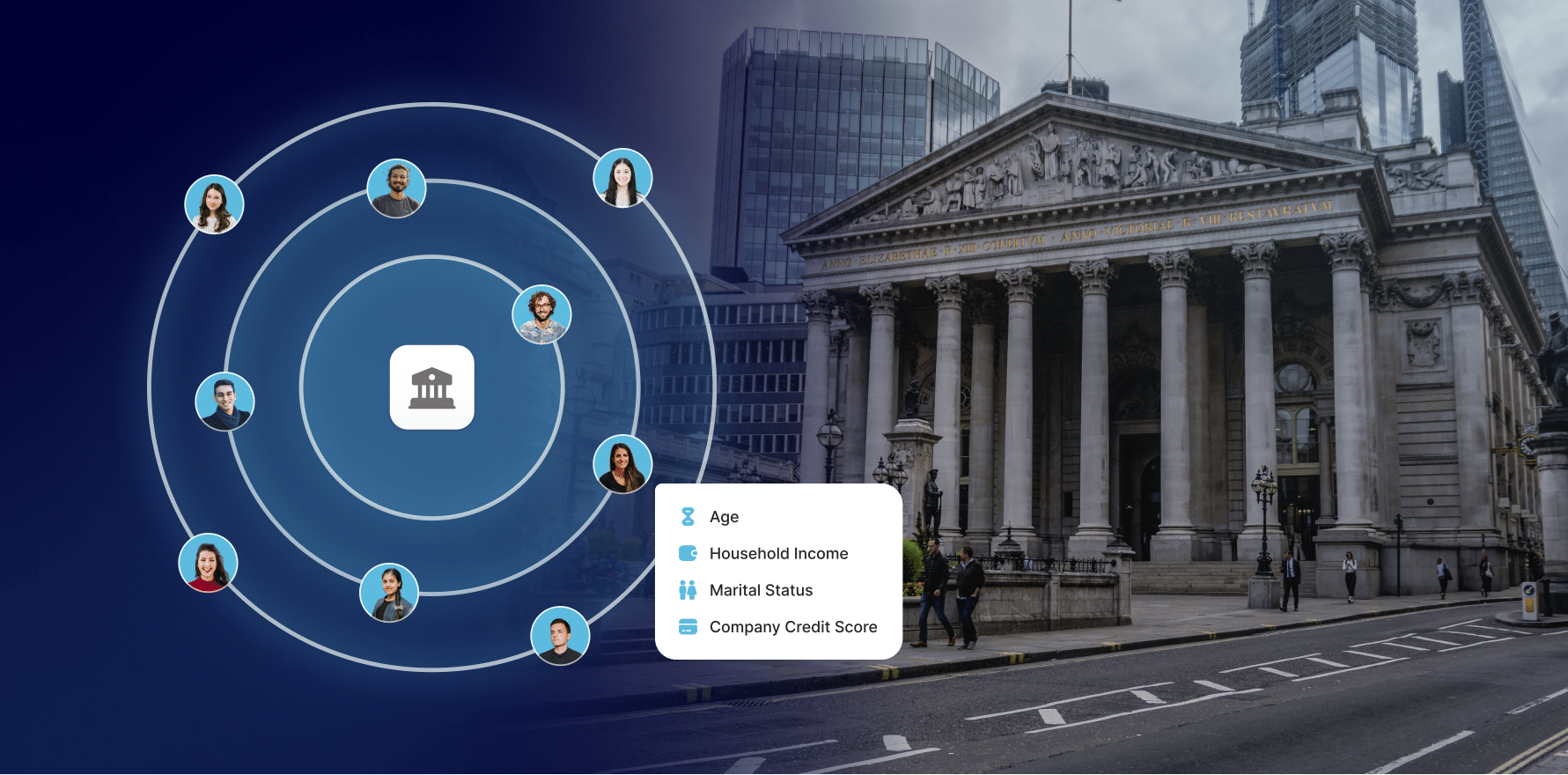
Financial institutions need to understand where different customer groups live, work, shop, and spend time.
Mobility data can add real-world context to customer segmentation.
For example, a bank may identify areas with strong activity around premium retail, business districts, or travel hubs.
It can then use those market-level insights to plan campaigns for relevant financial products.
Mobility data can also help banks identify underserved areas where customer demand may be strong but physical or marketing coverage is limited.
This supports more focused market planning without relying on individual-level tracking.
7. Financial Inclusion and Market Access Planning
Mobility data can also help financial institutions understand where access to financial services may be limited.
For example, teams can compare population activity, commercial movement, branch coverage, and ATM access across different areas.
This can help identify markets where demand exists but access remains weak.
Banks can then use these insights to support branch planning, ATM deployment, mobile banking outreach, or local partnerships.
For financial inclusion, aggregated market-level signals are more appropriate than using personal movement patterns to judge individual creditworthiness.
8. Merchant Performance and Portfolio Risk
Banks and lenders that work with merchants can use mobility data to monitor local business activity.
Foot traffic, dwell time, and changes in surrounding movement can provide additional signals about merchant performance.
For example, a sustained decline in visits around a retail location may indicate weaker local demand.
Rising activity may suggest stronger business conditions.
These insights can help lenders understand portfolio risk and identify businesses that may need closer review.
Mobility data becomes more useful when combined with transaction, sales, and financial performance data.
9. Real Estate and Asset Valuation
Mobility data can also support real estate and asset analysis.
Changes in movement may show where commercial activity is increasing or declining.
For example, rising activity around a new transit station or commercial development may signal growing demand in the surrounding area.
Real estate investors and lenders can use these patterns to add context to:
- Property valuation
- Market comparison
- Development analysis
- Asset monitoring
- Investment planning
Factori’s economic indicators data can complement mobility insights by adding broader market and economic context.
Emerging Trends in Mobility Data for Financial Services
Mobility data is becoming more useful as financial institutions connect it with other datasets and analytical systems.
Real-Time Analytics
Banks are increasingly working with more frequently updated data.
This allows teams to monitor changing market conditions, branch activity, merchant performance, and regional demand more quickly.
Privacy-Aware Analytics
Privacy is especially important in financial services.
Mobility data should be aggregated, governed, and designed to avoid identifying or monitoring individuals.
Financial institutions should also understand how data is collected, processed, stored, and used.
Combining Mobility With Other Data
Mobility data becomes more useful when combined with transaction, economic, demographic, market, and business data.
For example, a decline in foot traffic may mean more when it also appears alongside weaker sales or changing economic conditions.
This creates a more complete view of market performance.
Mobility as an Economic Signal
Mobility patterns can act as an early signal of economic change.
Changes in visits to retail, offices, restaurants, and transport hubs can help teams understand whether activity is strengthening or weakening.
These signals can complement traditional economic indicators and improve regional analysis.
How Factori Supports Financial Services
Factori helps financial institutions understand real-world activity through Mobility, Places, People, Market, and Economic Data.
Teams can use these signals to support:
- Branch and ATM planning
- Market analysis
- Merchant monitoring
- Portfolio risk analysis
- Real estate evaluation
- Customer segmentation
- Economic monitoring
- Investment research
Factori provides access through datasets, APIs, and its platform, helping teams connect real-world data with existing analytics workflows.
The focus is on aggregated, privacy-aware insights that help financial institutions understand markets and locations more clearly.
Conclusion
Mobility data gives financial institutions another way to understand real-world economic activity.
It can support branch planning, merchant monitoring, market analysis, portfolio risk, investment research, and real estate decisions.
Its value comes from adding current, location-based context to existing financial and economic data.
The strongest results come when mobility data is combined with other business signals and used through privacy-aware, responsible workflows.
Note: You can explore a free sample of Factori’s Mobility Data.
FAQs
What Is Mobility Data in Financial Services?
Mobility data is aggregated information about how activity and movement change across locations.
Financial institutions can use it to understand markets, branch activity, merchant areas, customer access, and local economic conditions.
How Can Banks Use Mobility Data?
Banks can use mobility data for branch and ATM planning, market analysis, merchant monitoring, economic tracking, customer segmentation, and portfolio risk analysis.
Can Mobility Data Help With Credit Risk?
Mobility data can provide area-level economic and market context that supports broader risk analysis.
It should not be used on its own to judge an individual borrower’s creditworthiness.
How Does Mobility Data Help With Branch Planning?
Mobility data can show where people move, which areas have strong activity, and how demand changes over time.
Banks can combine this with demographic, competitor, and market data to evaluate branch and ATM locations.
What Should Financial Institutions Look for in a Mobility Data Provider?
Financial institutions should review geographic coverage, freshness, data quality, methodology, privacy controls, integration options, and whether the data can connect with existing analytics and risk systems.