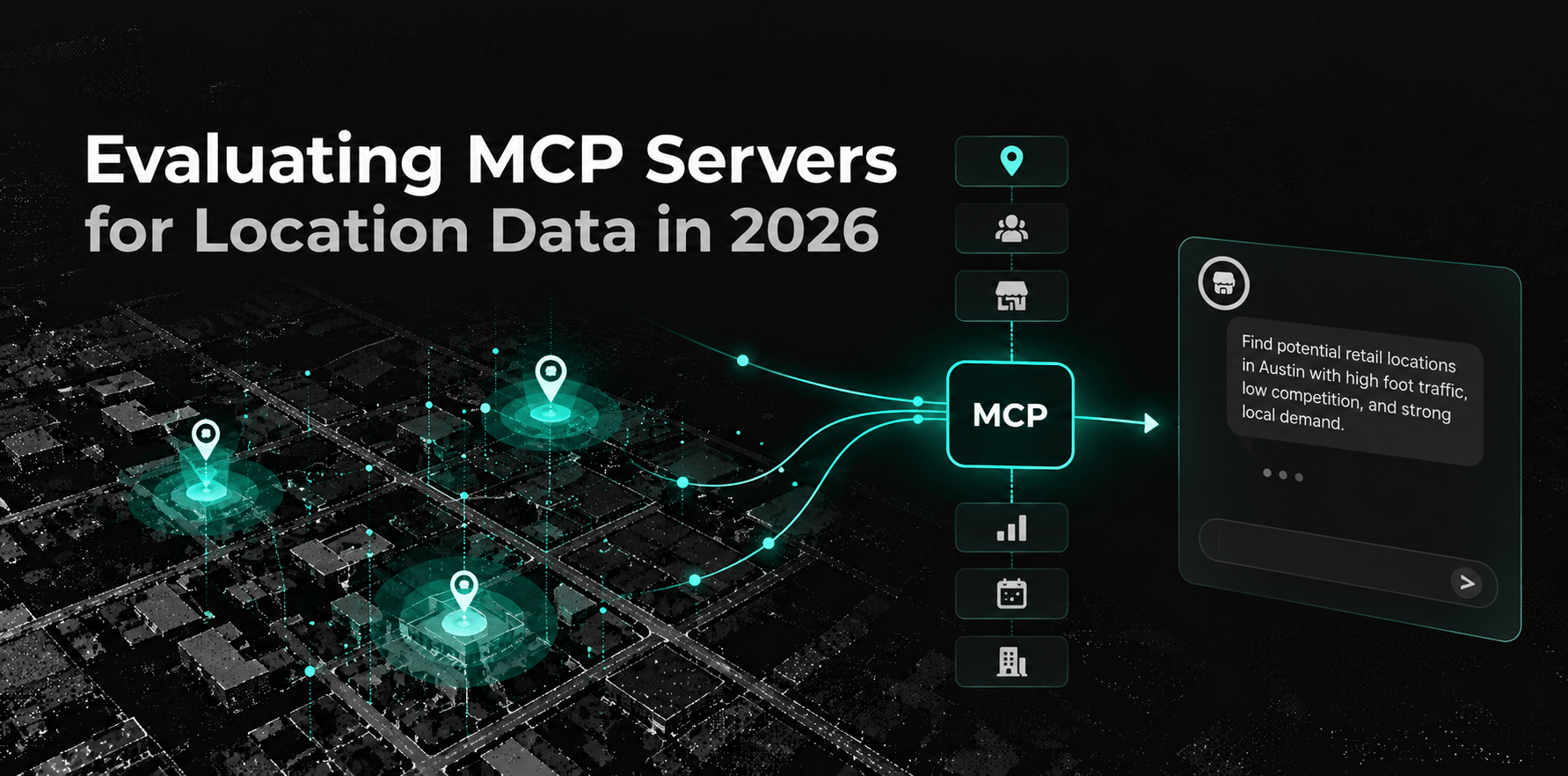
An MCP server can give an AI agent access to location data, but that alone does not make it useful for enterprise location intelligence. The real test is whether the agent can move from a location question to a reliable business answer using structured, current, and relevant real-world data.
For example, Factori MCP can connect an AI agent to POI, mobility, visitation, audience, and market signals. That allows the agent to move beyond finding a location and into workflows such as site selection, trade-area analysis, competitive benchmarking, audience profiling, and market comparison. The same evaluation principle applies to any location-data MCP: assess the decisions it enables, not simply the number of tools it exposes.
Key Takeaway
- Location-data MCP servers should be evaluated by the business workflows they enable, not only their technical connectivity.
- POI search and geocoding may be enough for simple questions, while site selection or competitive analysis requires several real-world data layers.
- Data coverage, freshness, historical depth, structured outputs, and stable identifiers directly affect agent reliability.
- Enterprise teams should test complete multi-step workflows rather than isolated prompts.
- MCP works best as another access layer to production-ready data, alongside APIs, cloud delivery, and existing data infrastructure.
What Should an MCP Server for Location Data Actually Provide?
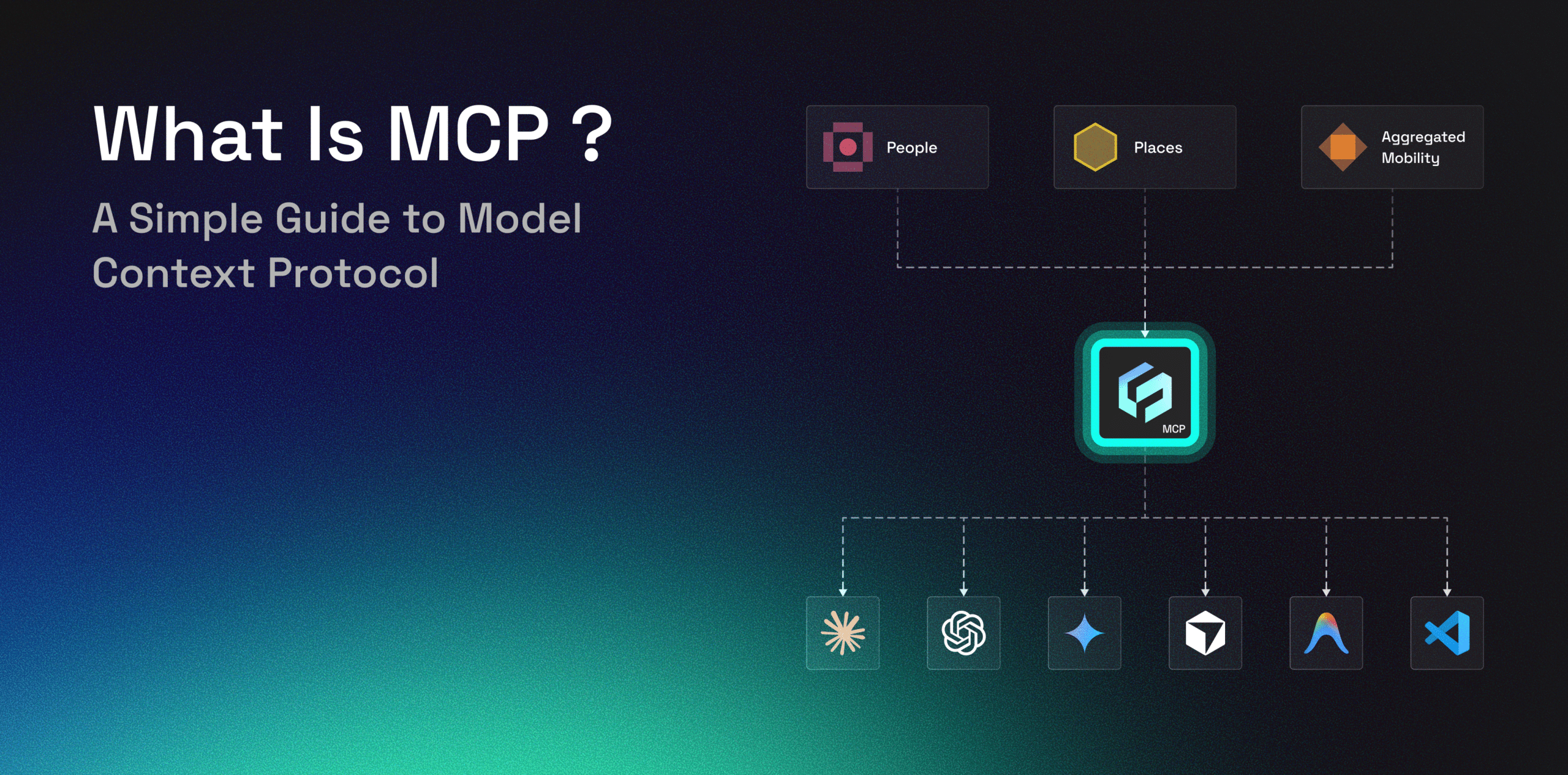
Model Context Protocol gives AI applications a structured way to connect with external data, tools, APIs, and business systems. For location intelligence, the usefulness of that connection depends heavily on what sits behind the MCP server.
A basic location MCP may help an agent answer:
“What businesses are near this address?”
A deeper real-world-data connection should support questions such as:
“Which of these neighborhoods combines strong foot traffic, low competitor saturation, the right audience, and positive market momentum?”
That second question requires several evidence layers.
| Data layer | Example question the agent can answer |
| Places / POI | What businesses and competitors exist here? |
| Mobility | How is physical activity changing across the market? |
| Visits | Which locations attract more activity? |
| Audience | What characterizes the surrounding market? |
| Events | Are temporary demand drivers affecting the area? |
| Market / Economic | Is the local market strengthening or weakening? |
| Geo | How do accessibility and geography affect the location? |
Factori MCP is an example of this broader approach. Instead of limiting the agent to map lookup, it can bring together real-world signals across places, movement, audiences, and markets.
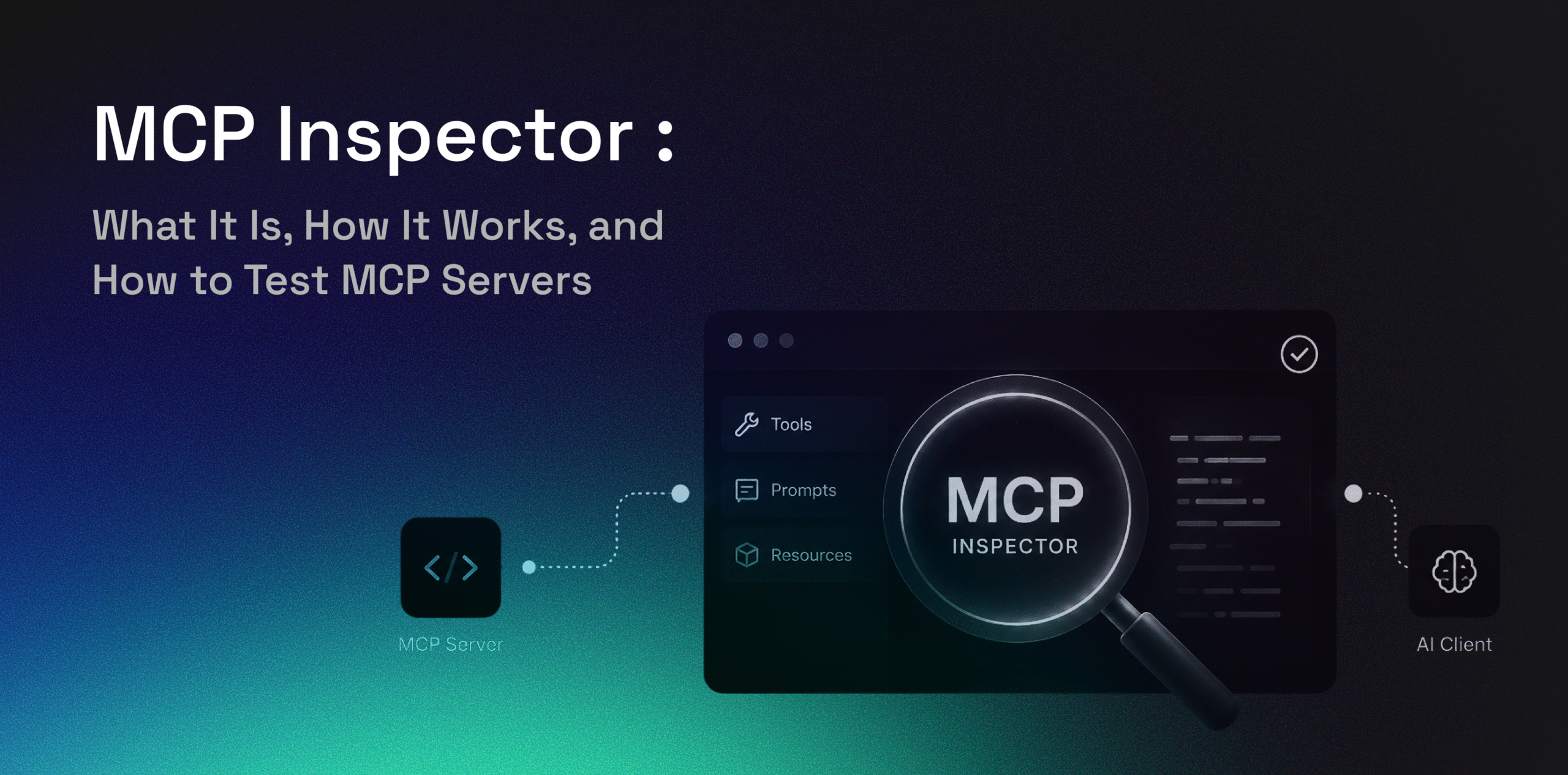
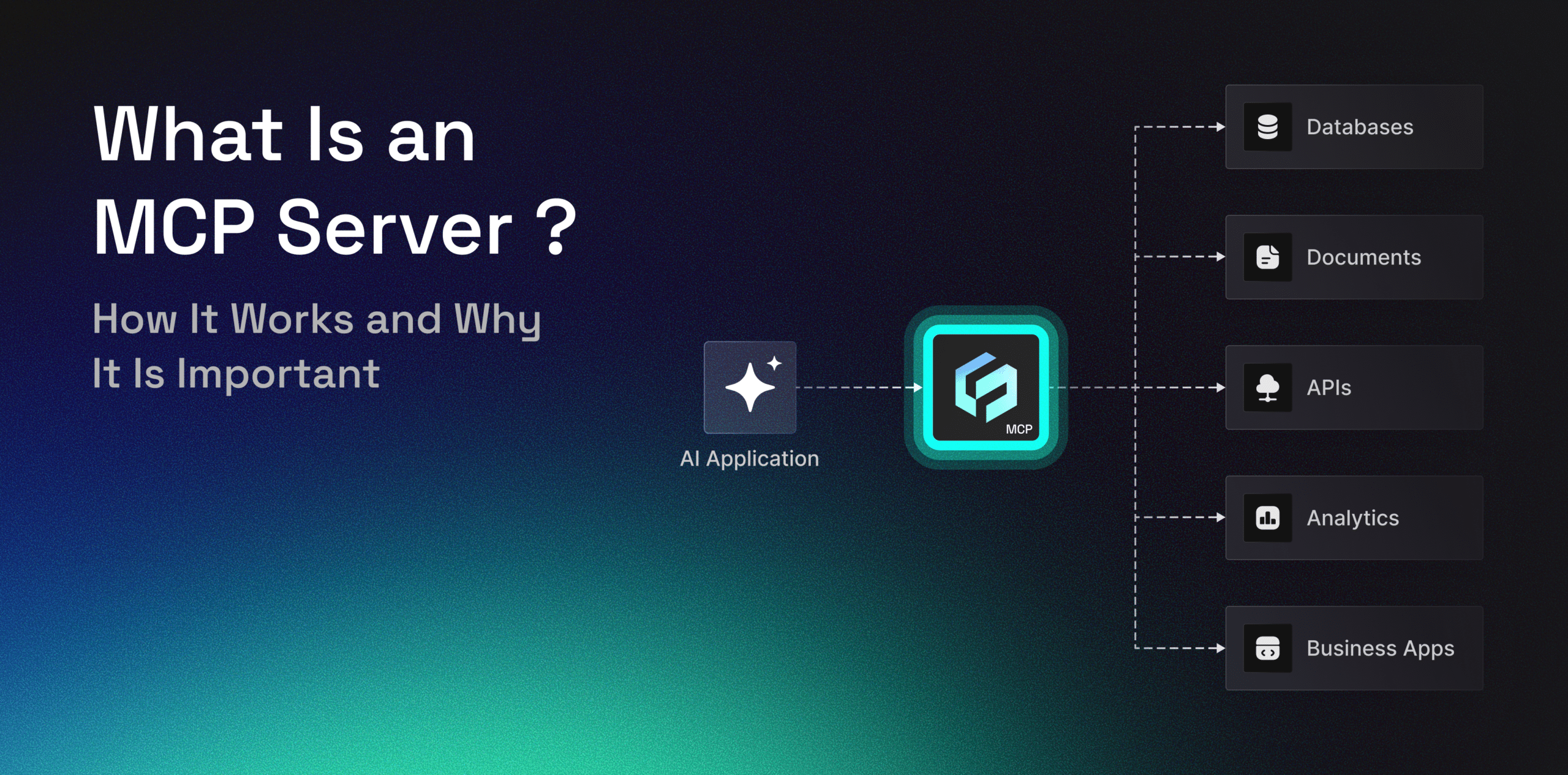
If the MCP server itself is unfamiliar, this guide to MCP servers explains how the server sits between an AI application and the external tools or data it needs.
Start With the Decision, Not the Tool List
A long MCP tool list does not necessarily mean the agent can solve the business problem.
Start by defining the decision.
For a site-selection workflow, an agent may need to:
- identify candidate markets;
- find competitors and surrounding POIs;
- compare foot traffic;
- assess the surrounding audience;
- measure trade-area or cannibalization risk;
- rank candidate sites;
- explain the recommendation.
With Factori MCP, the agent can draw on multiple real-world datasets around the same decision instead of treating POI, traffic, audience, and market context as separate analytical exercises.
This is more useful to test than whether the agent successfully responds to one POI query.
Evaluate the Data Behind the MCP
An MCP interface cannot compensate for weak underlying data.
For enterprise use, buyers should evaluate:
- Coverage: Does the data perform consistently in priority markets?
- Freshness: How quickly do places, visits, or market conditions update?
- Historical depth: Can the agent analyze change rather than only current conditions?
- Category depth: Are the POI and business categories required by the workflow available?
- Stable identifiers: Can the same location be tracked consistently across tools and time?
- Methodology: Are observed, modeled, and inferred fields clearly distinguishable?
- Geographic consistency: Can markets be compared using equivalent definitions?
Factori’s Places data, for example, covers more than 200M+ POIs across 229 countries, with hundreds of categories and enriched attributes per location. Factori also provides multiple access routes, including APIs, cloud delivery, files, the Factori Platform, and MCP.
The point is not that the largest dataset automatically wins. Buyers should test whether coverage and quality are strong in the markets their agent actually needs to reason about.
Check Whether the Data Is Agent-Ready
Giving an AI model API access is not the same as making the data easy for an agent to use.
A reliable MCP implementation should provide:
- clearly named tools;
- understandable parameters;
- predictable response schemas;
- consistent geographic definitions;
- stable IDs;
- machine-readable outputs;
- useful error responses.
This matters because an agent has to decide which tool to call and how to interpret the response.
Factori MCP is designed around real-world questions rather than forcing users to manually reconstruct every individual data request. For example, a location evaluation may require traffic, POI, audience, catchment, and competitor information before an agent can produce a useful comparison.
That orchestration layer is one of the reasons MCP differs from simply exposing another API.
Test Multi-Step Workflows, Not Demo Prompts
A POI lookup may work perfectly while a more complex workflow fails because of inconsistent entities, missing context, or weak orchestration.
A stronger MCP evaluation should use questions the business genuinely expects employees or customers to ask.
For example:
“Compare three candidate coffee shop locations and rank them using foot traffic, competition, audience fit, and market momentum.”
That requires the agent to retrieve multiple data layers, keep the three locations separate, compare equivalent metrics, and explain the ranking.
With Factori MCP, similar workflows can extend into site selection, competitive intelligence, trade-area analysis, audience research, and market comparison.
Testing these workflows reveals far more than asking whether the MCP connection itself works.
Authentication and Deployment Matter Too
MCP experiments often begin with one analyst or developer. Production deployment introduces different requirements.
Enterprise teams should evaluate:
- authentication;
- user permissions;
- access controls;
- query or credit limits;
- auditability;
- remote versus local deployment;
- credential management.
Factori MCP uses a remote connection with OAuth authentication, allowing users to connect compatible AI clients without managing separate API keys for every conversation.
A remote approach can simplify deployment, but enterprises should still determine how access, usage, and permissions fit their internal governance model.
Privacy and Licensing Still Apply
MCP changes the interface through which data is accessed. It does not change the responsibilities attached to the underlying data.
For location, mobility, and audience workflows, buyers should confirm that:
- outputs are aggregated and privacy-safe where appropriate;
- sourcing and methodology are transparent;
- sensitive-place safeguards are applied;
- intended AI and downstream uses are covered by the license;
- derived outputs can be used in the intended product or workflow.
Factori uses privacy-safe real-world data across its mobility, visitation, audience, and other location-intelligence products. These requirements matter even when the user interacts with the data through natural language rather than SQL or a conventional API.
MCP Should Not Become a Separate Data Silo
A useful enterprise MCP strategy should consider what happens after the AI experiment succeeds.
An analyst may initially ask an agent to compare markets. Later, the business may want the same data inside:
- a forecasting model;
- a scheduled pipeline;
- a dashboard;
- an internal product;
- a customer-facing application.
This is why the underlying access model matters.
Factori data can be accessed through MCP, but also through APIs, cloud environments, bulk data delivery, and the Factori Platform. That allows an MCP-driven workflow to become a starting point for analysis rather than a disconnected endpoint.
This is also consistent with the broader role of MCP as a connection layer rather than a replacement for APIs or existing data infrastructure.
What to Ask Before Choosing a Location-Data MCP
Before adopting an MCP server, enterprise buyers should ask:
- Which real-world datasets can the agent access?
- Which markets have strong production coverage?
- How frequently is each dataset refreshed?
- Is historical data available?
- Can multiple datasets be combined within one workflow?
- Are outputs structured and consistently defined?
- How are authentication and permissions handled?
- What privacy and licensing restrictions apply?
- Can the underlying data also be accessed through APIs or cloud delivery?
- Can the provider support a real business workflow rather than only individual queries?
The final question is usually the most important.
Conclusion
Evaluating an MCP server for location data is ultimately an evaluation of both the agent interface and the data behind it.
Simple place search may only require POI access. Site selection, competitive intelligence, audience analysis, OOH planning, and market evaluation require broader combinations of places, movement, visits, audiences, and market context.
Factori MCP demonstrates how those real-world layers can be brought into an agent workflow while the same underlying data remains available through production data infrastructure. For enterprise buyers, the strongest MCP is therefore not the one with the most tools. It is the one that can reliably complete the location decisions the business actually needs to make.
FAQs
Can an MCP server combine several location datasets in one analysis?
Yes, if the underlying tools and orchestration support it. Multi-dataset analysis is useful for questions such as site selection, where POI, visitation, audience, competition, and market data may all contribute to the result.
Should MCP replace location-data APIs?
Usually not. MCP is well suited to agent-driven workflows and natural-language analysis, while APIs are useful for deterministic applications, pipelines, and products. A mature data architecture may use both.
Why are MCP skills useful?
Skills can package several tools and steps into a repeatable workflow. This can help an AI agent move from retrieving individual location signals to completing a business task such as site comparison, cannibalization analysis, or market evaluation.
How should teams test an MCP server before deployment?
Use known locations and complete business scenarios. Evaluate data accuracy, tool selection, multi-step reasoning, response consistency, geographic coverage, latency, and whether recommendations can be traced back to understandable signals.
What happens when an MCP analysis needs to move into production?
The underlying data should ideally also be available outside the MCP interface. API, warehouse, cloud, or bulk delivery makes it easier to operationalize an analysis inside models, dashboards, and applications.