Trusted by





Trusted by
Most schedules are built from history and simple rules of thumb. That breaks when:
Factori adds the outside‑in view you’re missing, so you can:
Align shifts with real footfall and visit patterns, not just last year’s averages.

Plan front‑of‑house, back‑of‑house, and housekeeping around events and local demand.
Match inbound and outbound volume patterns to labor and shift patterns.

Use external context to anticipate spikes tied to outages, storms, or big moments.

Schedule visits and routes with traffic and local demand in mind.

You keep your current WFM tools and forecasts. Factori feeds them better context.
You choose which signals matter most for your business. We make them simple and comparable across locations.

Use Mobility, Events, and Retail Sales to reshape daily and weekly staffing curves by store, branch, or site.
Stop using a one‑size‑fits‑all rule. Group locations by neighborhood, economic strength, and visit patterns.
Combine Events and Market data to anticipate abnormal days—concert nights, big games, holiday runs, weather‑sensitive periods.
Use People, Economic, and Mobility data to set initial staffing levels where you don’t yet have history.
When labor runs high or low vs plan, quickly see if traffic, events, or local conditions were part of the story.
Which branches are consistently understaffed at peak hours?
Where can we reduce overtime without hurting service levels?
How should staffing look in new locations with similar external profiles?
How should we adjust staffing at these stores on event days vs normal days?
Which depots will feel the impact first if local demand or economics change?
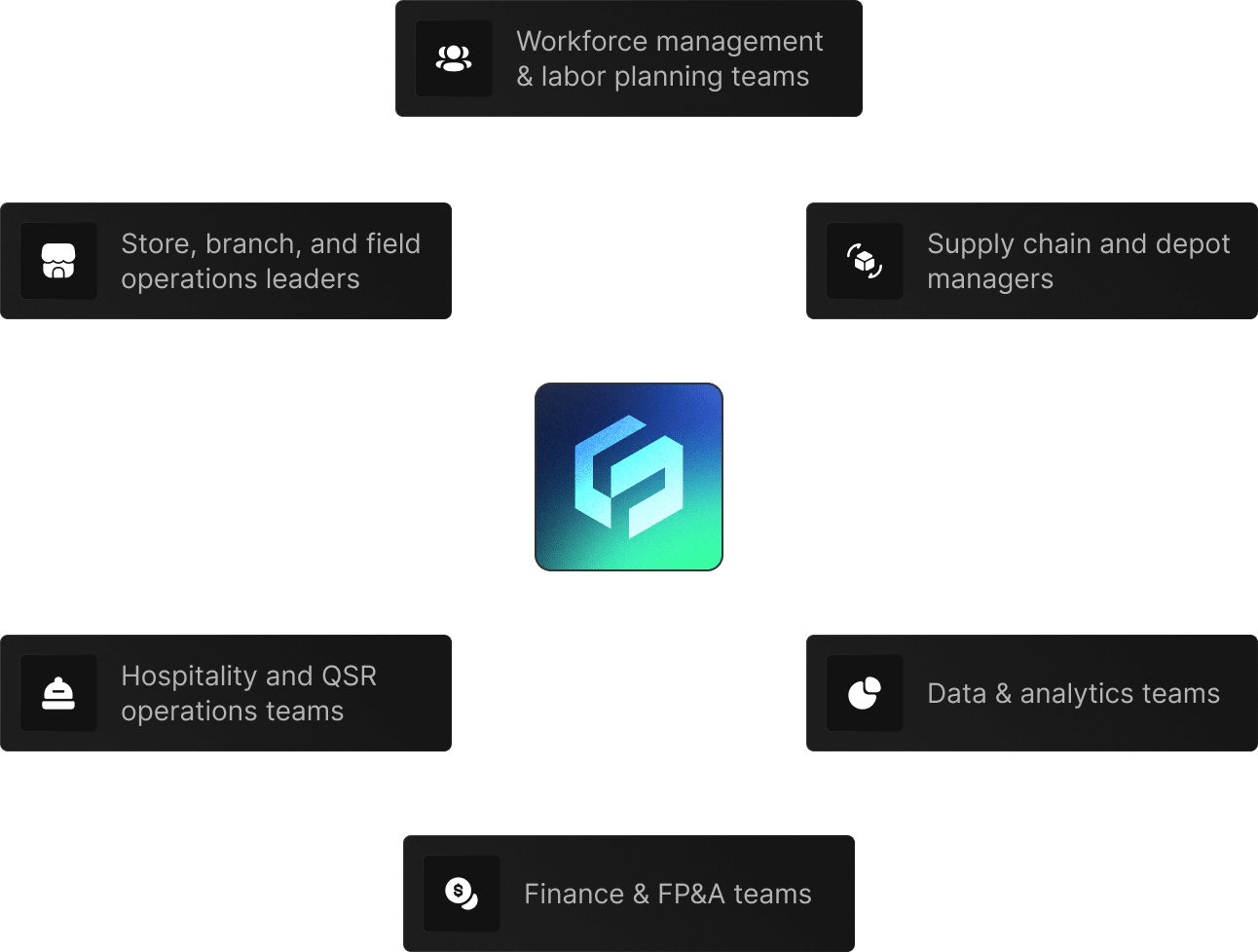
 Workforce management and labor planning teams
=
 Store, branch, and field operations leaders
=
 Supply chain and depot managers
 Hospitality and QSR operations teams
 Data & analytics teams supporting forecasting and planning
 Finance & FP&A teams tracking labor costs and service levels
Choose 50–200 locations (stores, branches, hotels, depots) where staffing is a known pain point.

For example: Mobility + Events + Traffic for QSR and retail, or People + Economic + Retail Sales for branches and service sites.
Use Factori data to propose adjusted curves and coverage, then compare impact on service, sales, and labor variance.
© 2026 Factori. All rights reserved.