Trusted by





Trusted by
Most decisions still lean on:
That makes it hard to see:
Factori adds a simple, outside‑in view to every clinic, hospital, and service area, so you can:
All data is aggregated and privacy‑safe—never patient‑level.
See which communities can realistically reach clinics, urgent care, and hospitals—and where gaps exist.

Match locations, hours, and staffing to local demand patterns and daytime population.

Understand where patients are likely to come from, and how that shifts over time.

Plan staff and services around likely peaks (seasonal, event‑driven, economic) rather than simple averages.
Decide where to add sites, partner with others, or shift services based on local conditions.

You bring EHR, claims, scheduling, and facility data. Factori brings the real‑world layer.
All datasets are designed to be easy for strategy, planning, and analytics teams to understand and join to your locations and geographies.





Which neighborhoods are under‑served by primary care, urgent care, or retail clinics?
How do access and daytime population differ between two sites that look similar on paper?
Where should we extend hours or add capacity based on real movement and community patterns?
Which areas are becoming more stressed economically, and how might that affect demand for services?
Where should we prioritize new sites or partnerships over the next 3–5 years?
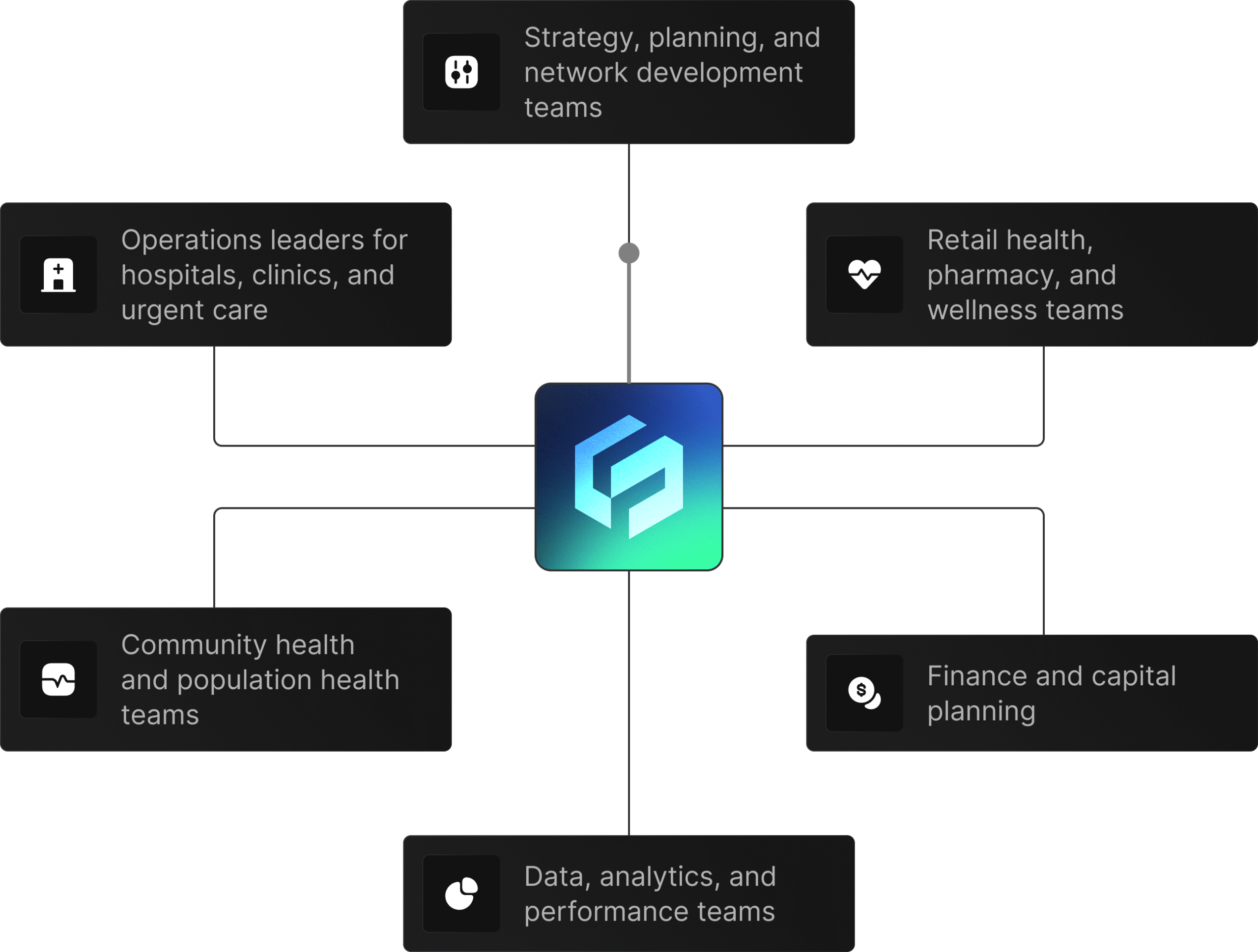
 Strategy, planning, and network development teams
 Operations leaders for hospitals, clinics, and urgent care
 Retail health, pharmacy, and wellness teams
 Community health and population health teams
 Finance and capital planning
 Data, analytics, and performance teams
For example: retail clinic coverage, urgent care access, hospital catchments, or a specific market review.

Common starting point for healthcare: People + Mobility + Economic + Places + Property, then add Traffic, Business, Events, or Retail Sales as needed.
Compare how you view access and performance today with a view that includes Factori data, and decide where to adjust sites, hours, or investments first.
© 2026 Factori. All rights reserved.